Garage Door Maintenance for Trinity's Older Housing Stock
Trinity homes mostly date to 1977, a decade older than the typical build across the wider service area. That gap changes what maintenance actually needs to catch here.
We don't quote a maintenance price here without seeing the door, and we're not going to make one up for this page. What we can tell you is what drives the number up or down: how many moving parts need lubrication versus replacement, whether the opener is original to the house, and whether the track has shifted enough to need realignment rather than just a wipe-down. Trinity's housing skews older than much of the wider High Point service area - the typical home here was built around 1977, versus the broader area's 1976-2002 range centered closer to 1987. A decade matters on a garage door. Springs, rollers, and cable ends don't last 45 years, so a maintenance visit on a 1977 house is more likely to turn up a part that's past due for swap-out, not just grease. That's not a hard sell, it's math - a steel torsion spring rated for a set number of cycles has usually spent most of them by now. We'll tell you flat out if a part is fine for another year or if it's going to fail on you mid-winter.
What the Fix Involves
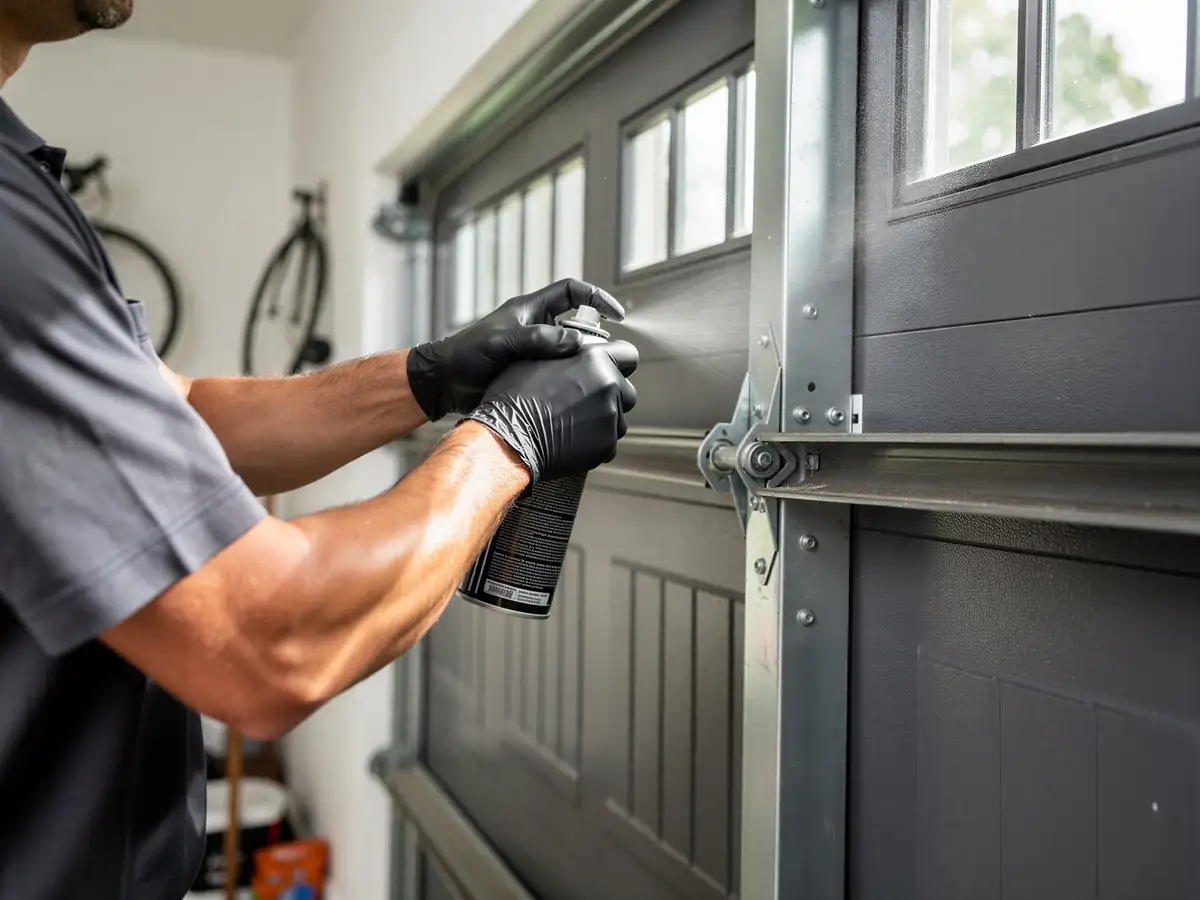
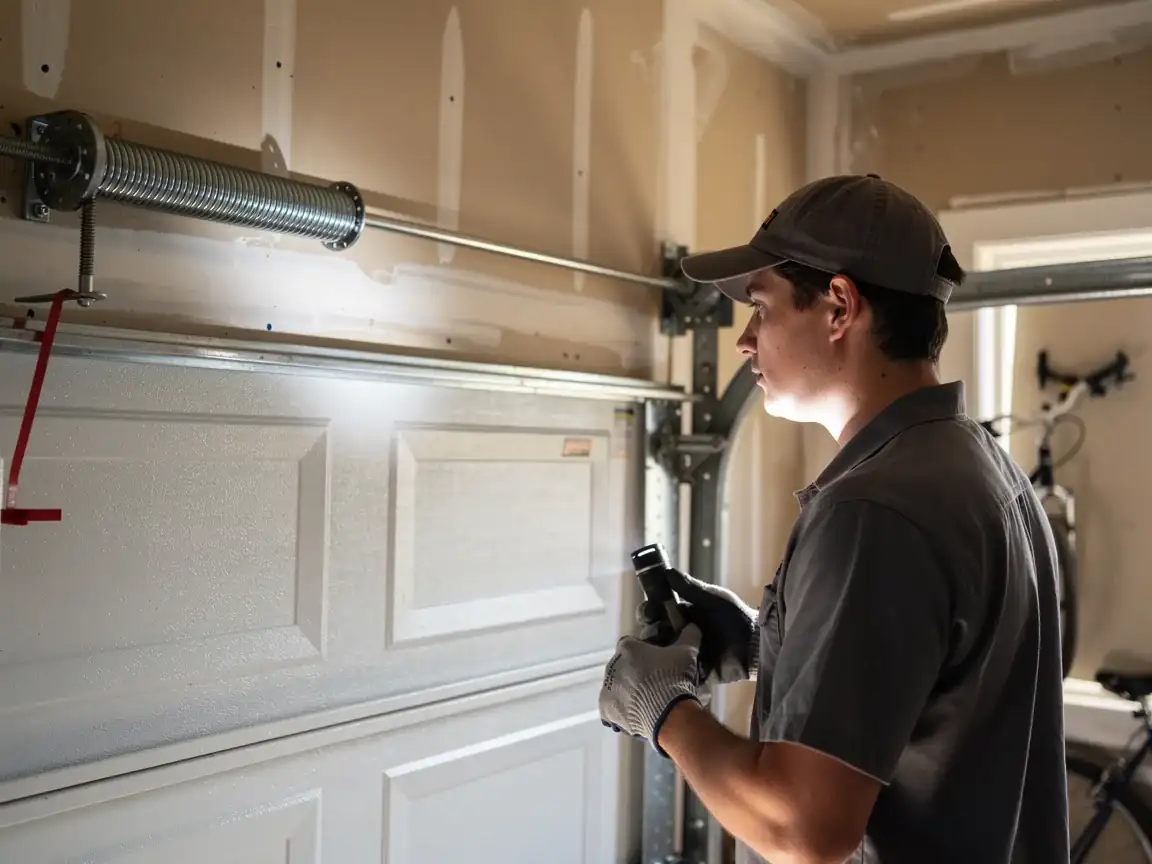
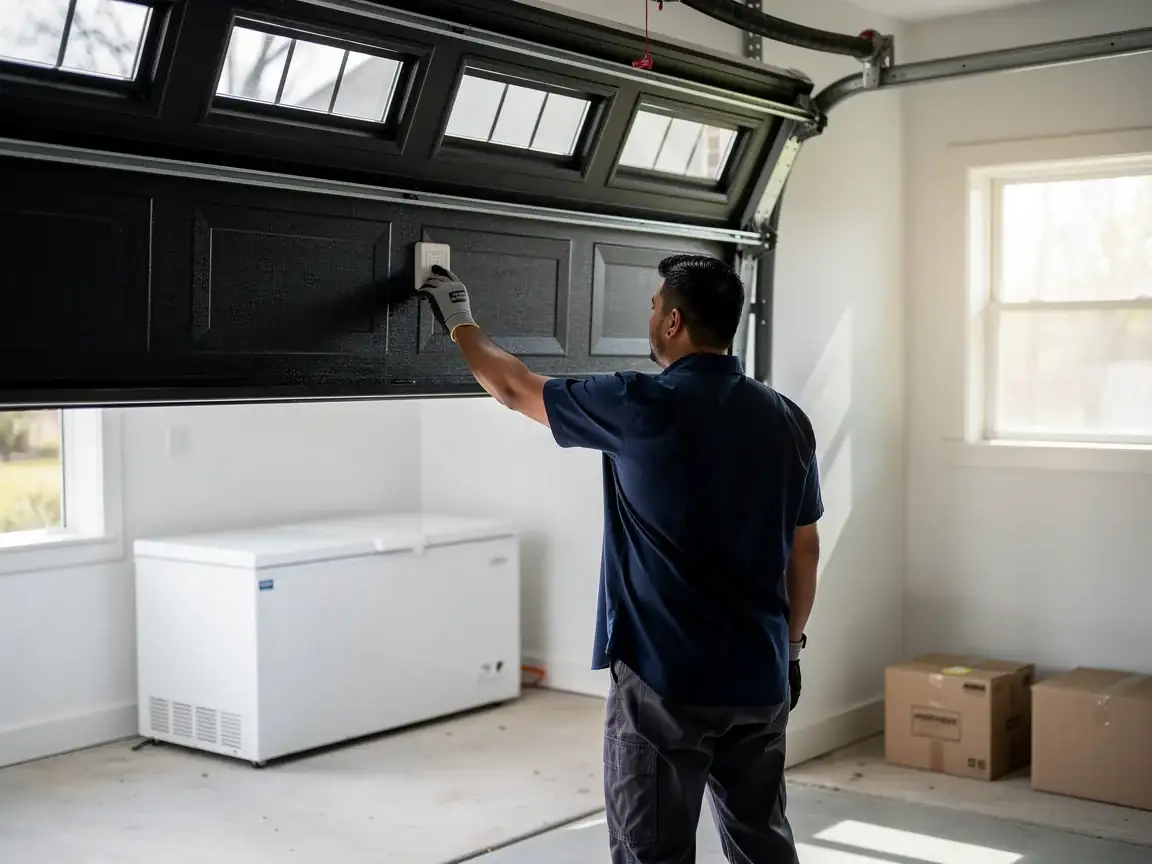
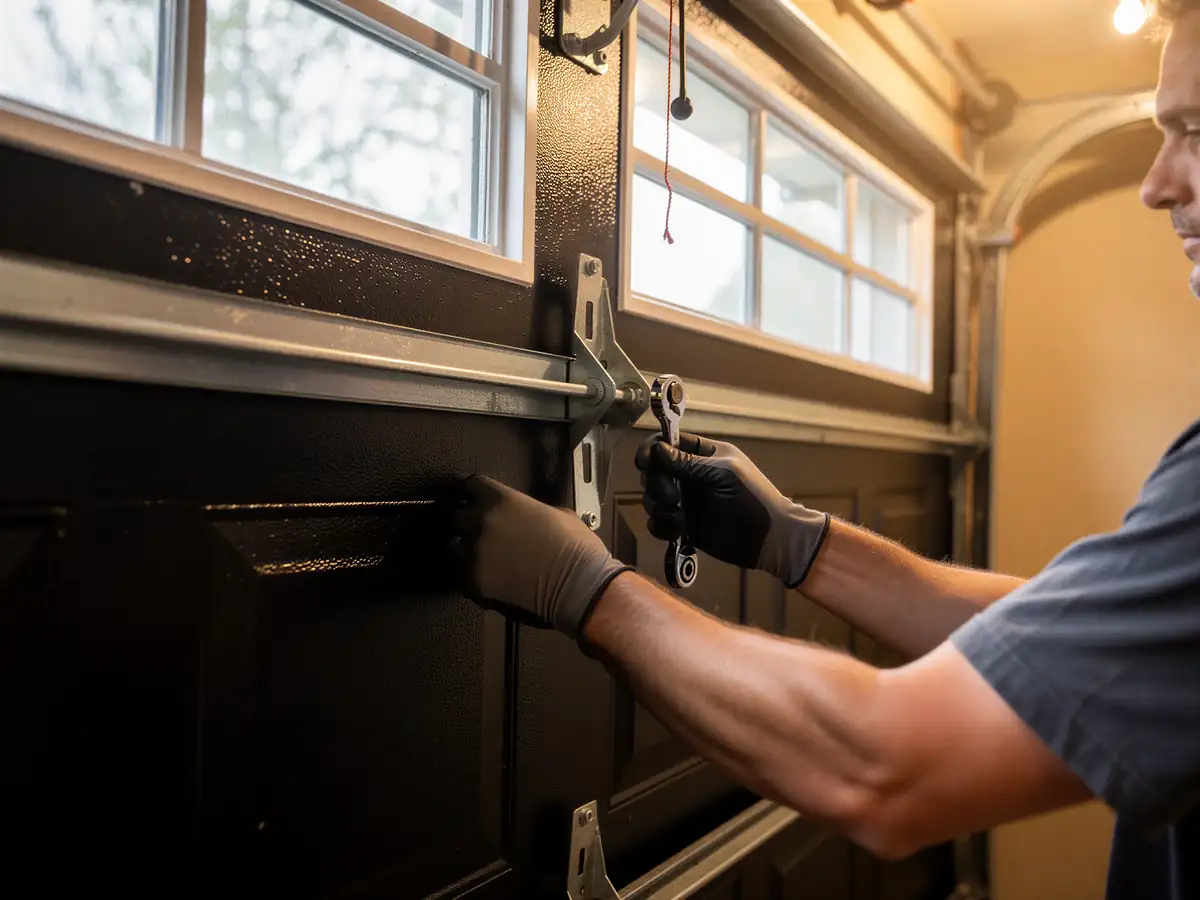
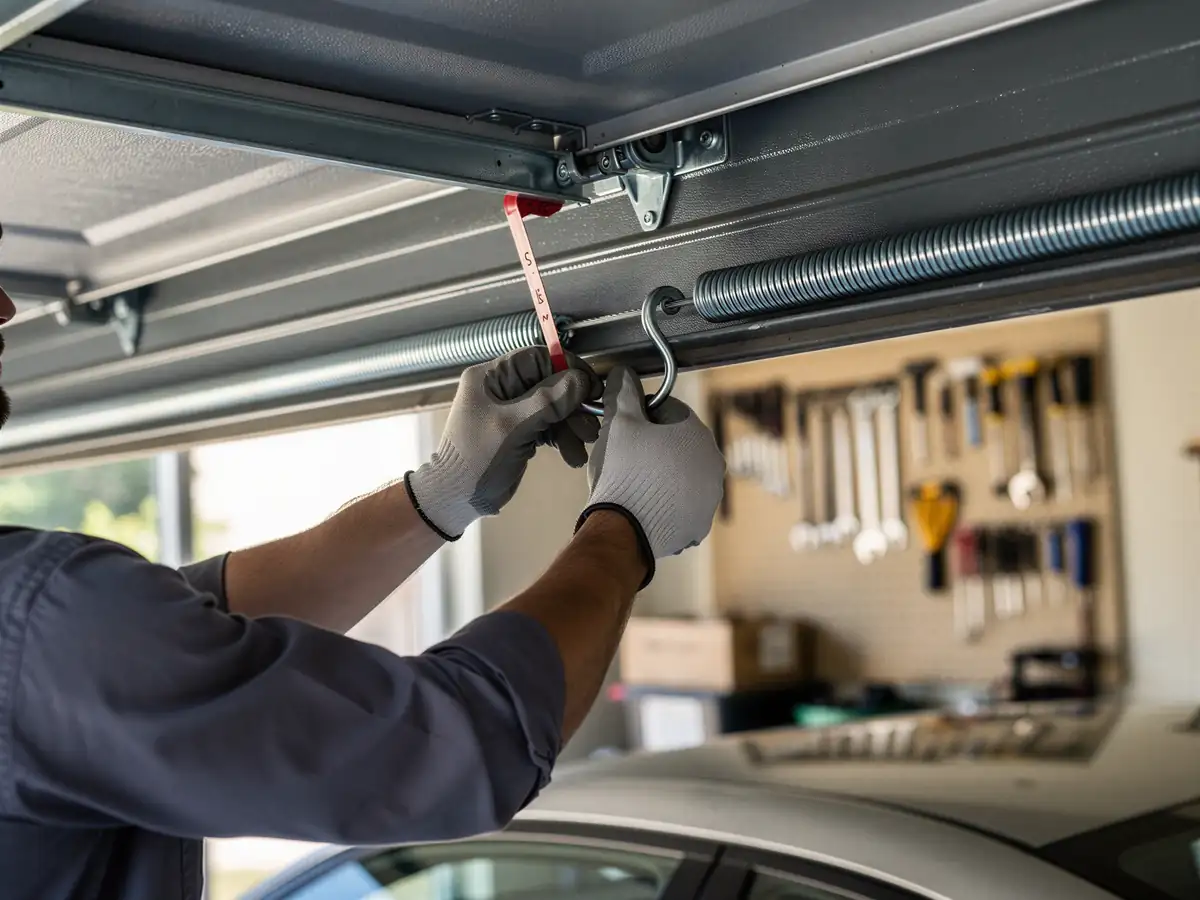
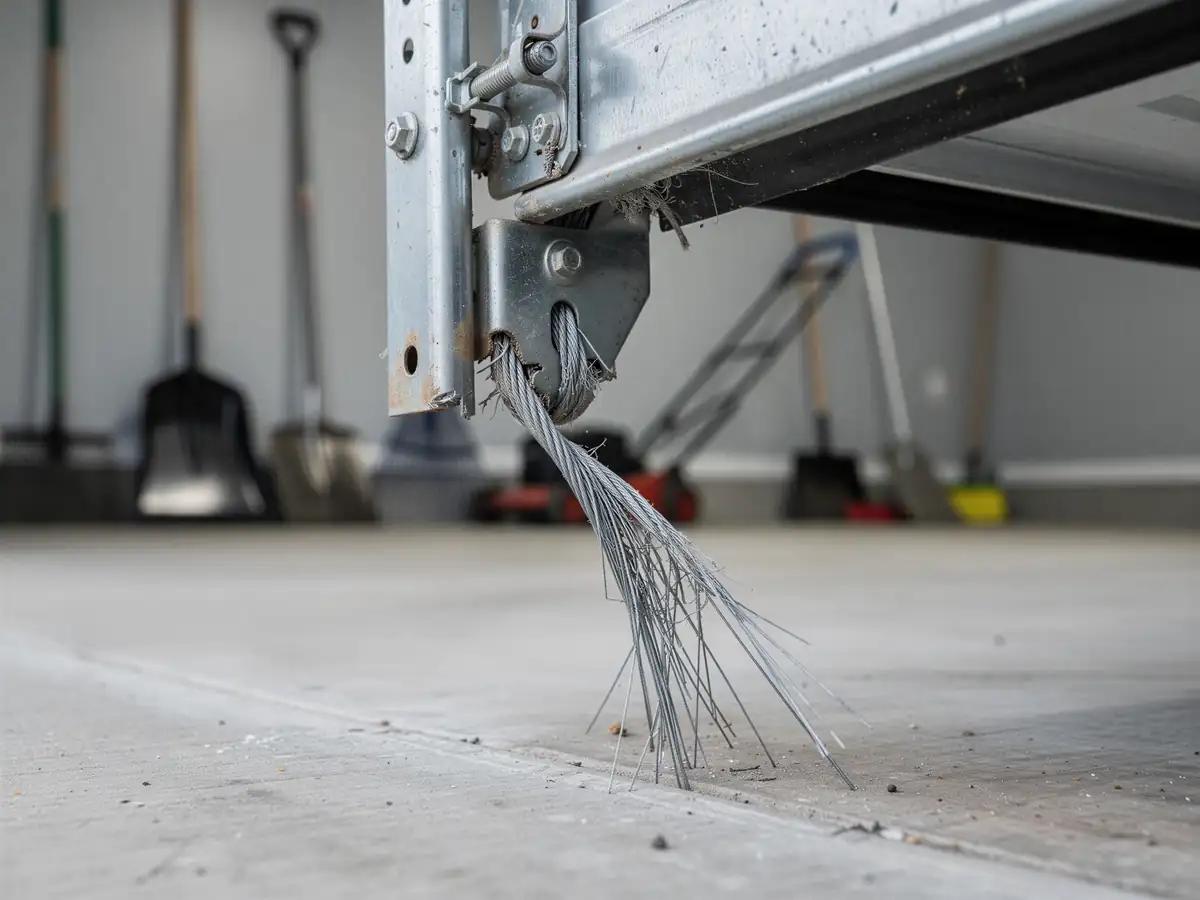
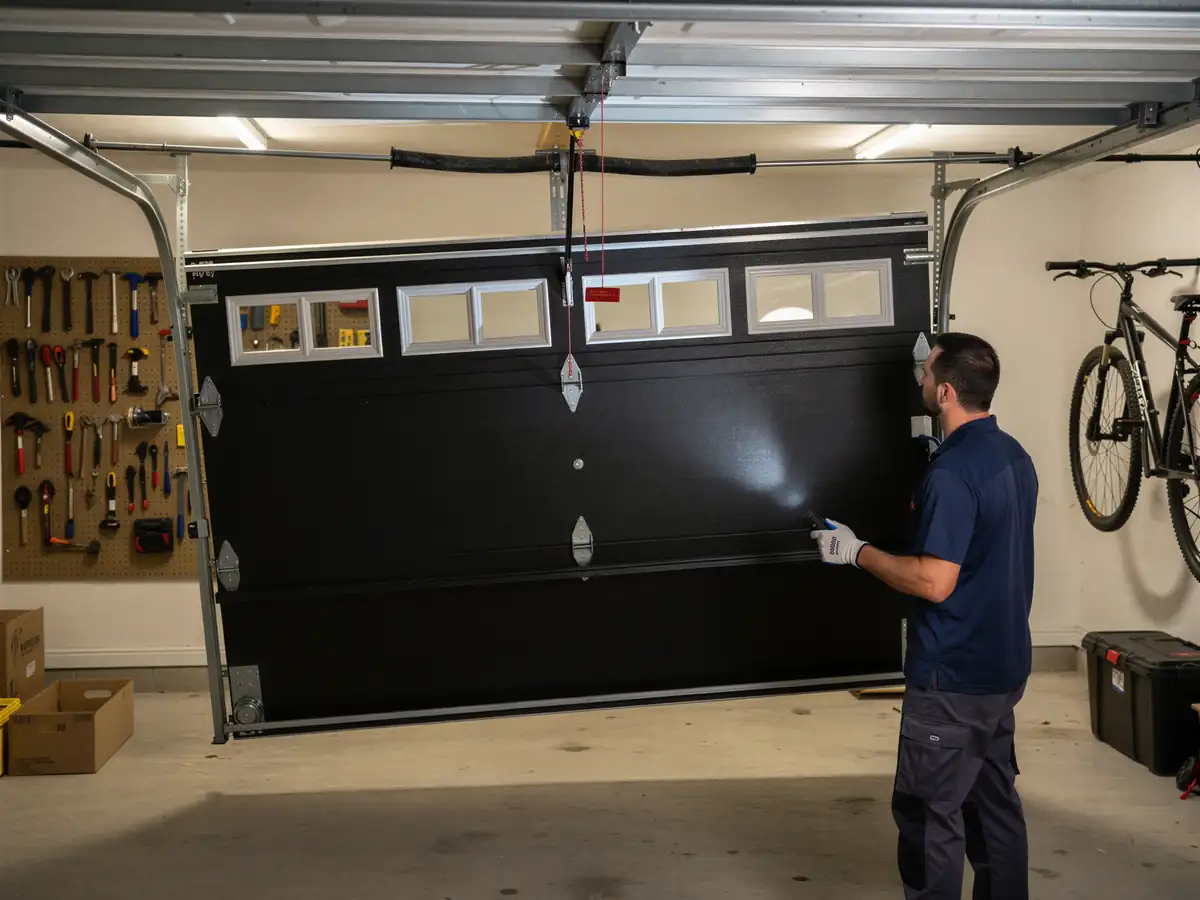
On a house from the late 1970s, maintenance starts with the track and hinge hardware, because that's what was cut corners on at the time - lighter gauge steel, fewer rollers per panel. We check roller wear, hinge pivot play, and cable fraying at the drum, since those wear faster on older track profiles. We test spring balance by hand, not just by opener performance, because a worn spring can still let the opener do the lifting while hiding the fact that it's close to failing. We lubricate hinges, rollers, and the torsion bar, and we check the bottom seal - on a 1977 install, the seal track itself is sometimes original and cracked enough that cold air gets past it, which matters more here given the area sits in a moderate cold climate band. We also check opener force settings, since many older units were set once and never touched again, and that's a safety issue as much as a wear one.
Getting It Booked In
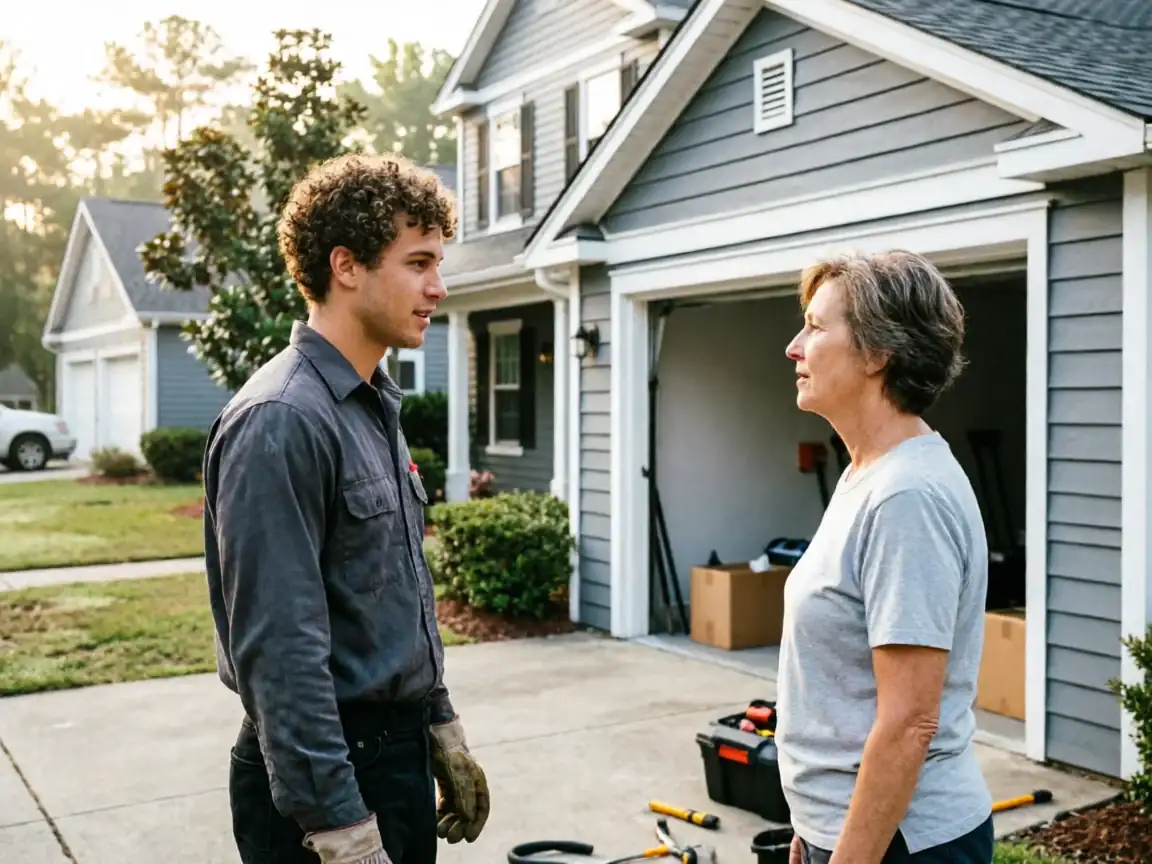
We run out of High Point, about 8 miles from Trinity, and we book maintenance visits on the same route as repair and install calls in this part of the service area. There's no branch or crew based in Trinity itself - we travel in for the appointment, so scheduling is set around the drive, not a local dispatch. That's worth knowing if you're expecting a same-day slot on short notice; it's not impossible, but it's not guaranteed the way it might be for a call closer to our shop. Use the booking link for this town and we'll confirm a window before the truck is on the road.
The Complications
The complication in Trinity isn't the door, it's the parts. A house built in 1977 may have hardware sized or spec'd to a standard that's no longer common - some older track widths and spring winding cones don't match what's on the shelf today. When that happens, the maintenance visit turns into a parts-order situation rather than a same-visit fix, and we'll tell you that up front rather than force a part that's close enough. Income levels in this area run above the regional median, which we mention only because it shapes a real decision homeowners here face more than most: whether to keep repairing original hardware piece by piece or replace the whole operating system at once. There's no universal right answer - it depends on how much of the original hardware is still sound.
Why This Fails Locally
A door built around 1977 fails differently than one built in the 1990s. The common failure we see on houses from this era is a spring that's been re-tensioned or replaced once already, on a drum and cable setup that wasn't designed for today's heavier insulated panels if a prior owner upgraded the door without upgrading the spring to match. That mismatch doesn't show up as noise - it shows up as a door that starts dropping unevenly, one side faster than the other, which looks like a track problem but is actually a spring sized for a lighter door. The area's moderate cold climate band adds a second failure mode: metal contracts, lubrication thickens, and a spring that was marginal in October gives out in January. Maintenance timed before the cold sets in catches both problems while they're still cheap to fix.
Can You Do This Yourself
Lubricating hinges and rollers, checking the bottom seal, and clearing track debris are fine to do yourself, and doing them twice a year will genuinely extend the life of older hardware like what's common in Trinity. What we don't recommend doing yourself is touching the torsion spring or its winding cones - on a door this age, the hardware may not match current tooling, and a spring under tension that lets go is not a minor accident. If you're not sure whether what you're looking at is a spring job or a roller job, that uncertainty is the reason to call rather than guess.
How it works
From “it’s stuck” to “it’s fixed”
01
Tell us what’s wrong
Describe the symptom - won’t open, loud bang, opener runs but the door won’t move.
02
On-site diagnosis
A technician tests the door under power and by hand and finds what actually failed.
03
Clear, up-front plan
You get the fix that’s needed and what drives the cost - before any work starts.
04
Repaired & tested
The repair is done, the door is set true and tested, and the work area left clean.
Not sure which repair your door needs in High Point, NC? Describe what it’s doing - every job starts with a diagnosis.
Straight answers about garage door repair in High Point. Still unsure? Ask us directly.
Why does the age of my house matter for garage door maintenance?
A door's hardware is sized for the panel weight and cycle count it was built with. Trinity homes built around 1977 often have original or once-replaced springs and track that weren't designed for heavier insulated doors installed later, which shows up as uneven movement rather than obvious damage.
Do you have a crew based in Trinity?
No. We work out of High Point, about 8 miles away, and cover Trinity on the same routes as nearby repair and install calls. There's no local branch here, so booking is scheduled around the drive rather than same-area dispatch.
How often should an older door in this area get maintenance?
Twice a year is reasonable for hardware from the late 1970s, ideally once before the cold months since the area sits in a moderate cold climate band where contracted metal and thickened lubricant can turn a marginal spring into a failed one.
Can I replace an old torsion spring myself?
We don't recommend it. Older track and winding cone sizes don't always match current stock, and a spring under tension is dangerous to work on without the right tools. It's one of the few jobs here we tell people to leave to us.