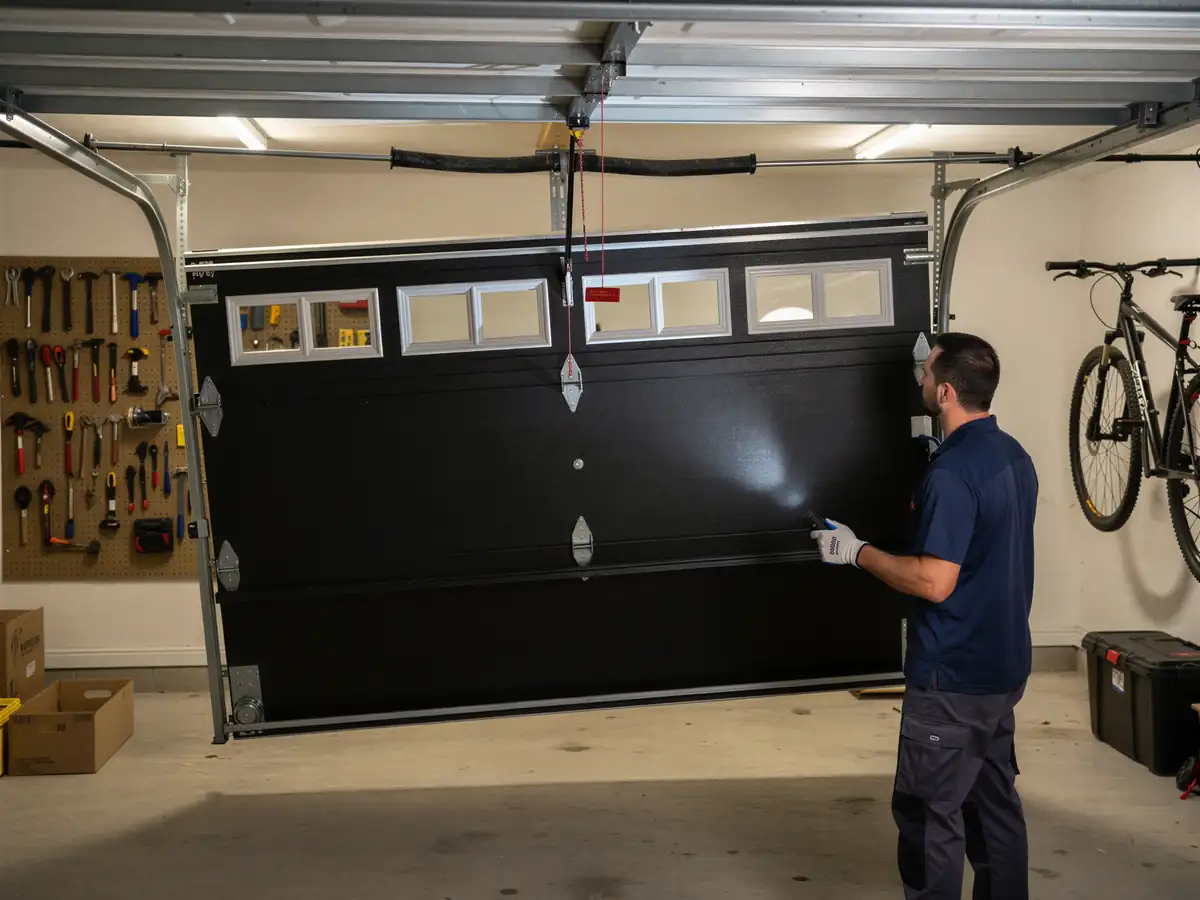
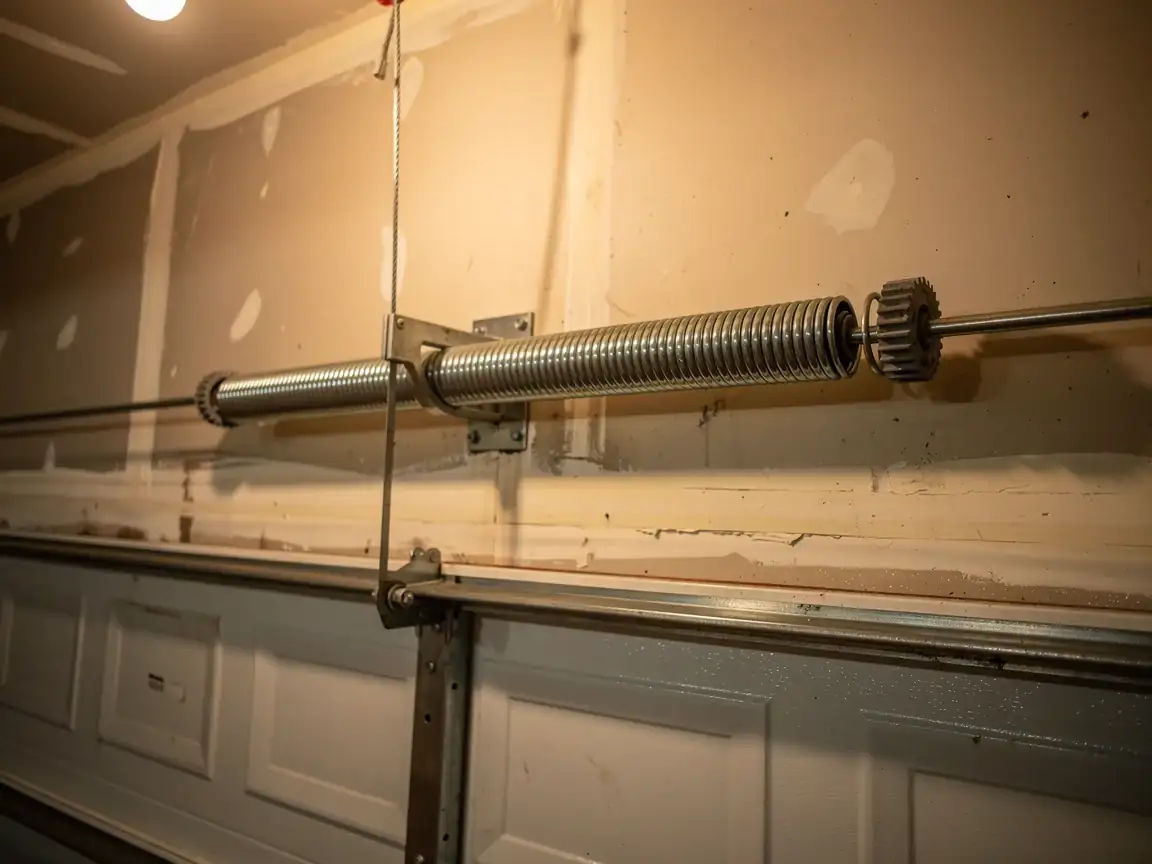
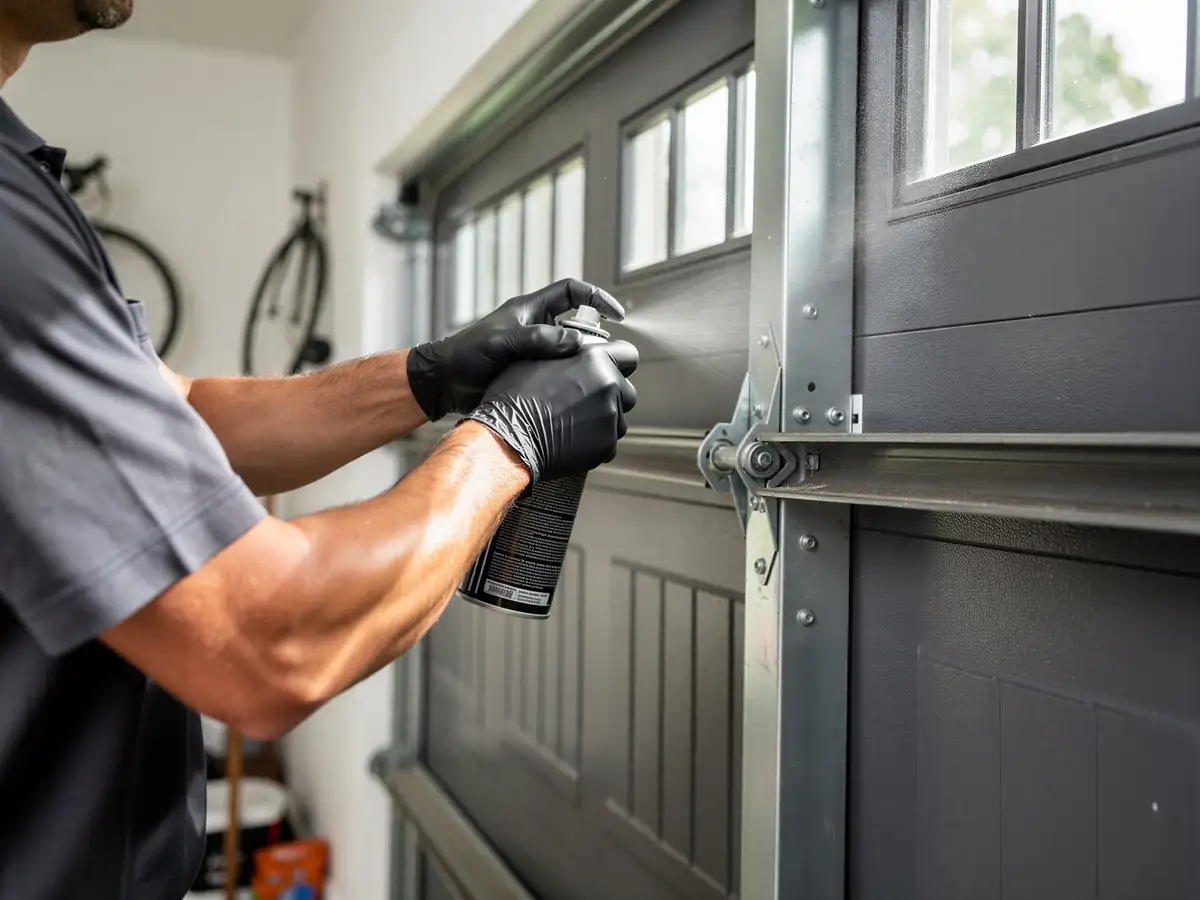
Panel replacement for the 1976-2002 doors common across High Point's service area. We match hardware on steel sectional doors from that build era and get a quote booked fast.
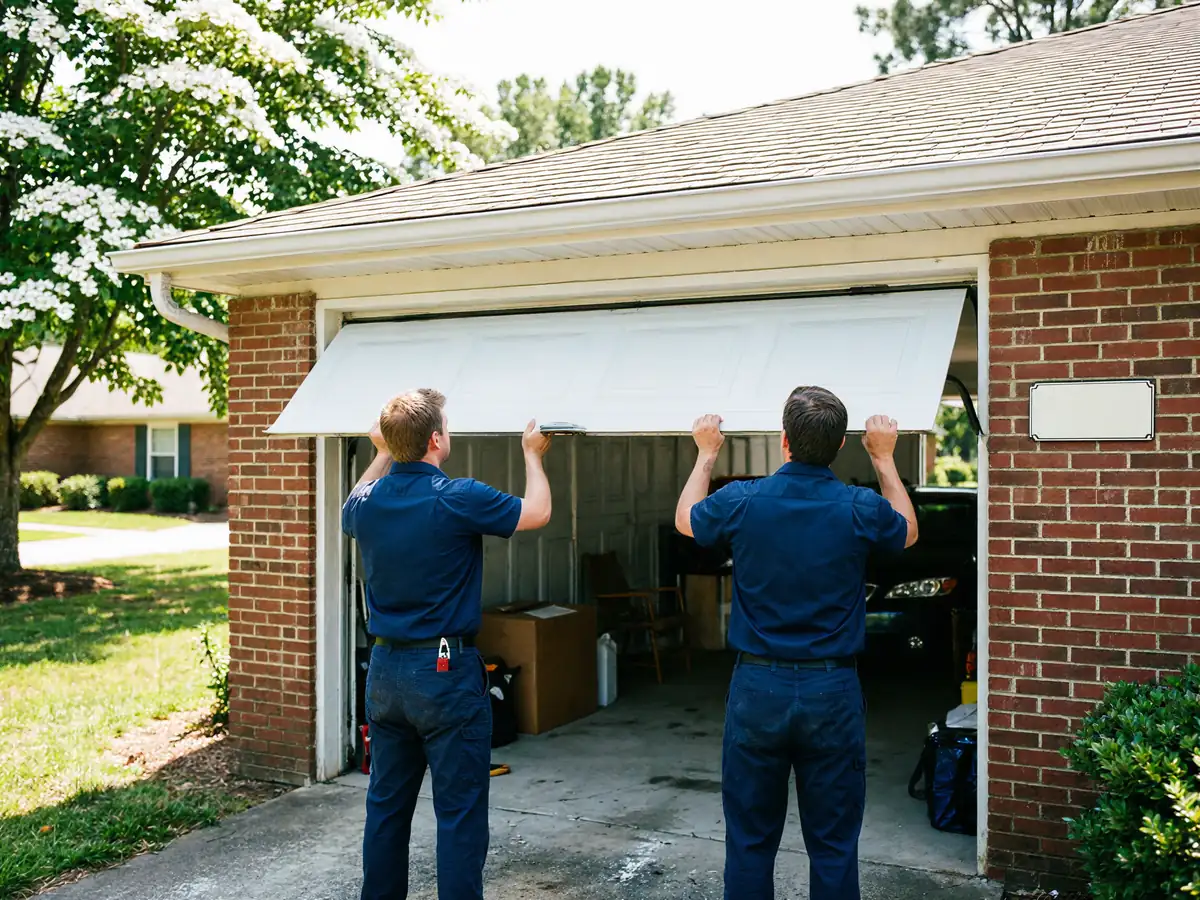
A single dented panel on a sectional door looks like a bolt-on job, and sometimes it is
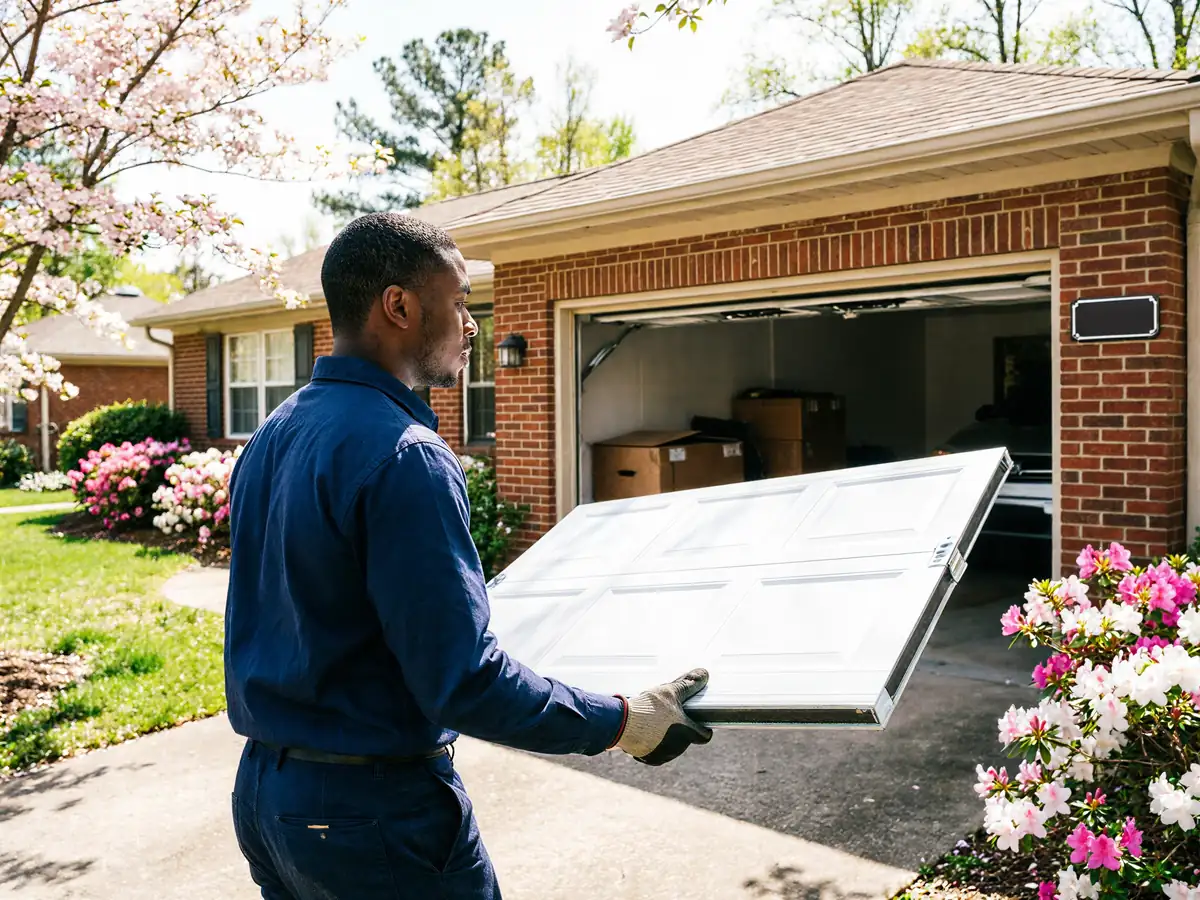
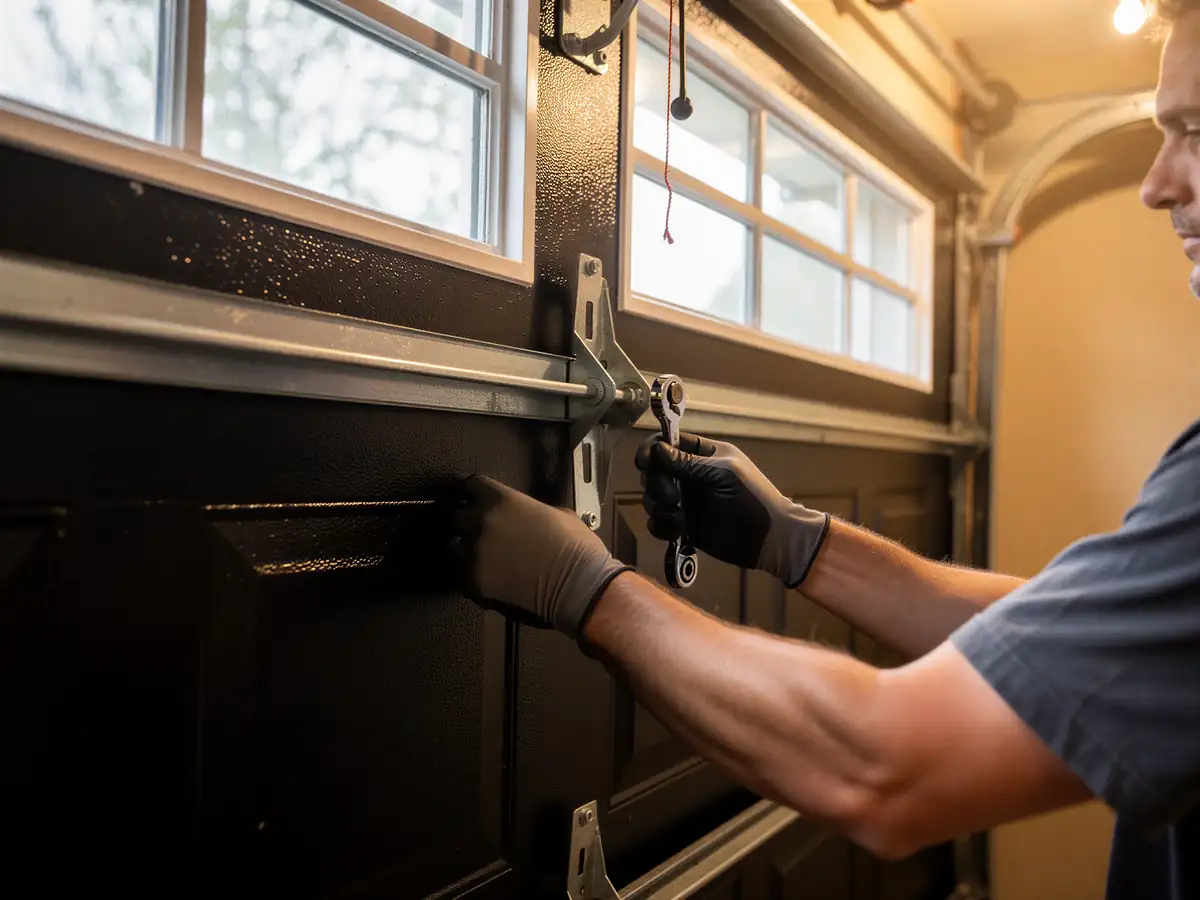
If the door is a few years old and the manufacturer still sells that exact panel profile, you can order it, pull the hinges, swap the section, and reset the rollers in an afternoon with basic hand tools.
02
The catch in this area is age
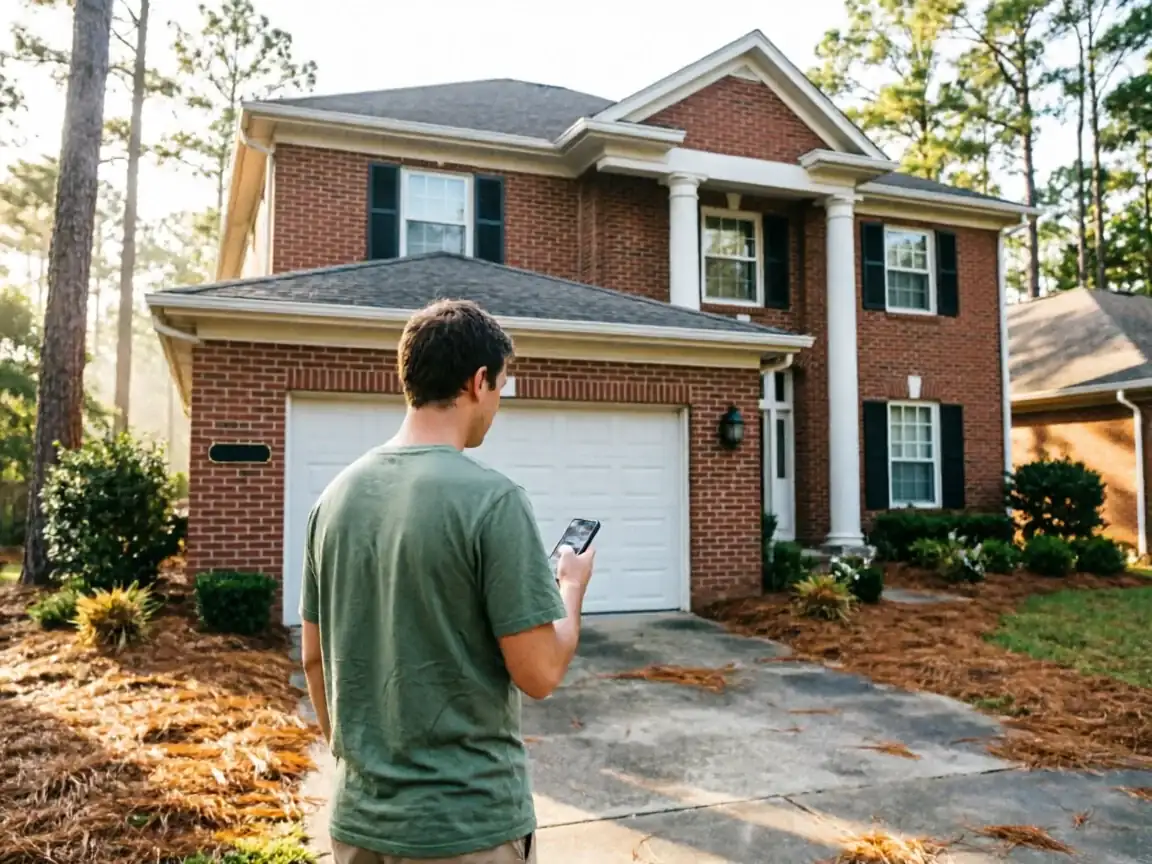
Most of the housing stock across the 13 neighborhoods we cover went up between 1976 and 2002, with a lot of it clustered around 1987. A panel from a door that old is rarely still in the manufacturer's catalog, and the hinge spacing, panel height, and end-stile hardware on doors from that era often don't match what's sold new. You can spend a weekend discovering the replacement panel doesn't line up with your existing track before you call anyone.
13 neighborhoods
03
If your door is newer
Or you've already confirmed the exact model and panel number match, DIY is a fair option. If you're not sure how old the door actually is versus the house, that's the first thing worth checking before you order anything.
The Symptom
The panel on a sectional door that's cracked or caved doesn't usually fail alone. On doors from the late 1970s through the 1990s, the steel gauge is thinner than what's made today, and after enough winters of condensation and temperature swings, the skin around the dent starts to separate from the frame underneath. You'll see the crack spread a little more each season.
In a cold-moderate climate like this one, that steel contracts and expands through freeze-thaw cycles every winter. A panel that was just dented in October can crack clean through by February because the cold makes the steel brittle right at the stress point. Once one panel on a double door is damaged, the door often starts binding on the track because the section is no longer flat, which puts extra load on the rollers and the opener.
If you're hearing a scrape or seeing daylight at the seam where the dent is, that's the track telling you the panel's geometry is off, not just a cosmetic problem.
Getting It Booked In
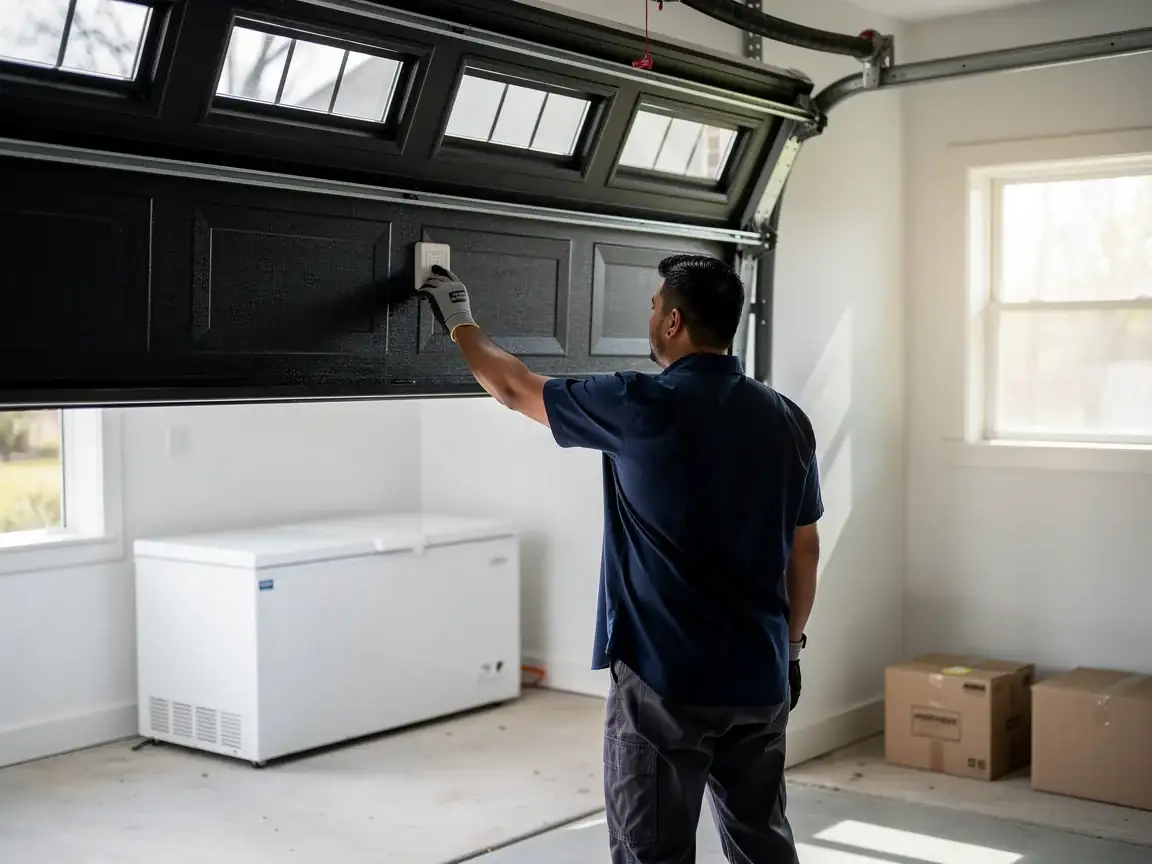
Panel replacement starts with us confirming the door's age and manufacturer before a truck ever rolls, because sourcing the right panel is the part that takes time, not the install. For doors matching the 1976-2002 build era common across this service area, we check whether an exact match panel is still available or whether the practical fix is a matched-color replacement section, since original profiles from that period are often discontinued.
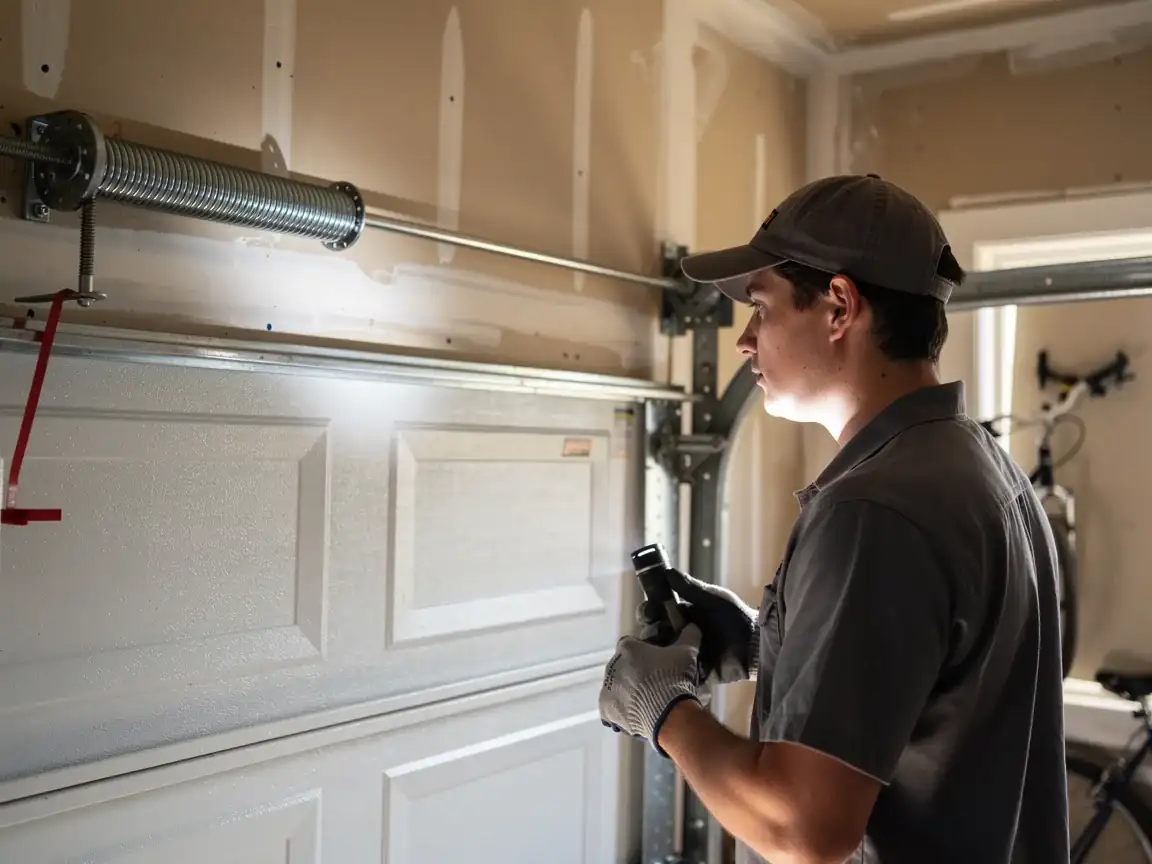
We'll ask for the door's width, panel height, and how many sections it has, along with a photo of the damage and the brand label if you can find it inside the garage. That lets us quote a panel versus a full door replacement before we're standing in your driveway, which saves you a second visit.
One limitation worth knowing up front: if the exact panel profile is discontinued and a close match would leave a visible color or texture mismatch on a street-facing door, we'll tell you that before ordering anything, rather than let you find out after it's installed.
Why This Fails Locally
01
This isn't a generic wear-and-tear story
Across the roughly 28,580 owner-occupied houses in the broader service area, a large share were built in the 1980s and 90s, which means a large share of the original garage doors from that construction wave are now 25 to 45 years into a cold-moderate climate they weren't built to shrug off forever.
28,580 owner-occupied
45 years
02
Steel panels from that production era used thinner gauge steel than current code-era doors
And the baked-enamel finish from the 1980s and 90s chips more easily than today's coatings, which exposes bare steel to the freeze-thaw cycle every winter. Once moisture gets under a chip near a dent, the panel rusts from the inside out, and what looked like a cosmetic ding becomes a structural soft spot within a season or two.
03
That's the pattern we see on panel calls across this area
Not one bad door, but a whole housing wave built in the same decade hitting the same failure point around the same age. It's a service-area-wide issue, which is why we keep parts knowledge for this build era on hand rather than treating each call as one-off.
How it works
From “it’s stuck” to “it’s fixed”
01
Tell us what’s wrong
Describe the symptom - won’t open, loud bang, opener runs but the door won’t move.
02
On-site diagnosis
A technician tests the door under power and by hand and finds what actually failed.
03
Clear, up-front plan
You get the fix that’s needed and what drives the cost - before any work starts.
04
Repaired & tested
The repair is done, the door is set true and tested, and the work area left clean.
Not sure which repair your door needs in High Point, NC? Describe what it’s doing - every job starts with a diagnosis.
Straight answers about garage door repair in High Point. Still unsure? Ask us directly.
How do you know if my garage door panel can be replaced instead of the whole door?
It depends on whether the manufacturer still produces that panel profile and whether the rest of the door is in good shape. Doors from the 1976-2002 era often have discontinued profiles, so we check sourcing before quoting a panel versus a full door swap, since a full replacement can sometimes cost less than a hard-to-find single panel.
Will a replacement panel match the rest of my door's color?
Not always exactly. Paint and coating processes have changed since the 1980s and 90s, so a new panel next to 30-plus-year-old faded steel can show a visible difference, especially on a street-facing door. We'll point this out before ordering so you can decide if it matters to you.
Why did my panel crack in winter when the dent happened months earlier?
Cold-moderate winters put steel through repeated freeze-thaw cycles, and a dent is a stress point. The metal contracts in cold weather, and a panel that was just bent before can crack clean through once the steel gets brittle enough in a hard cold snap.