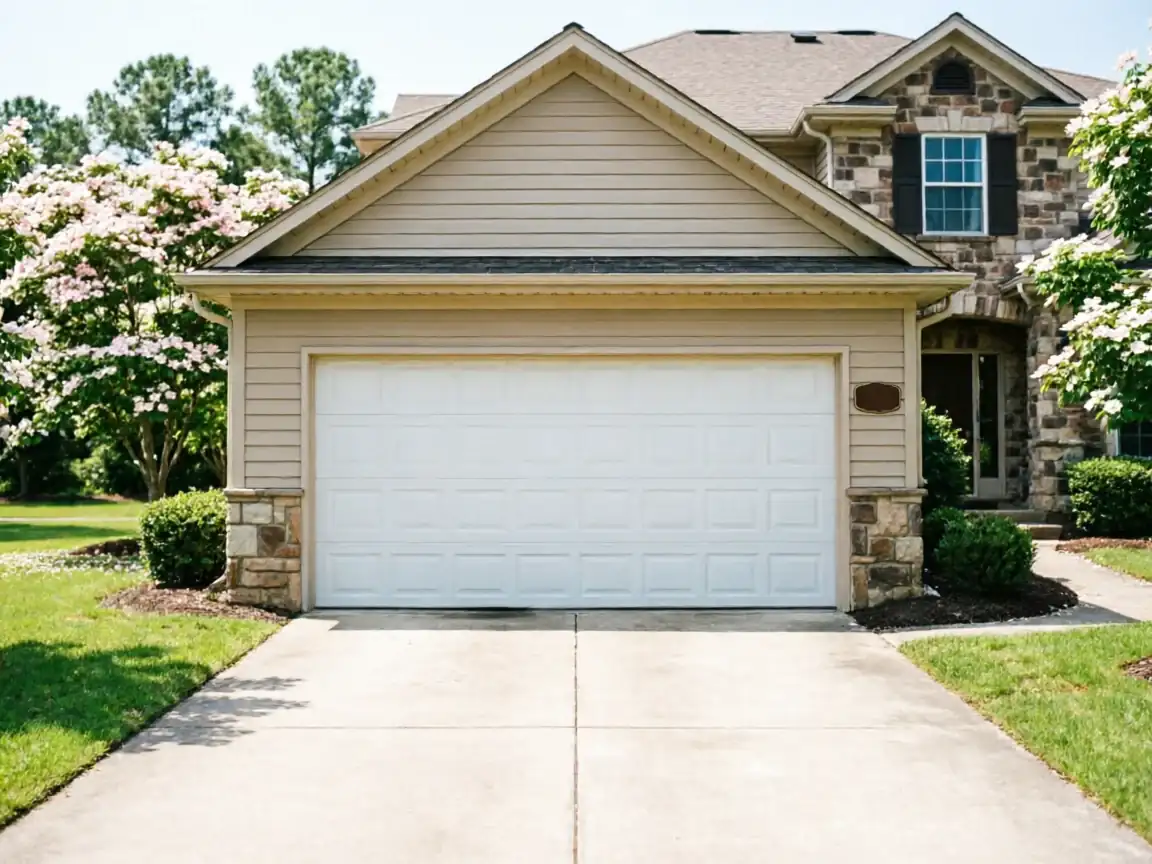
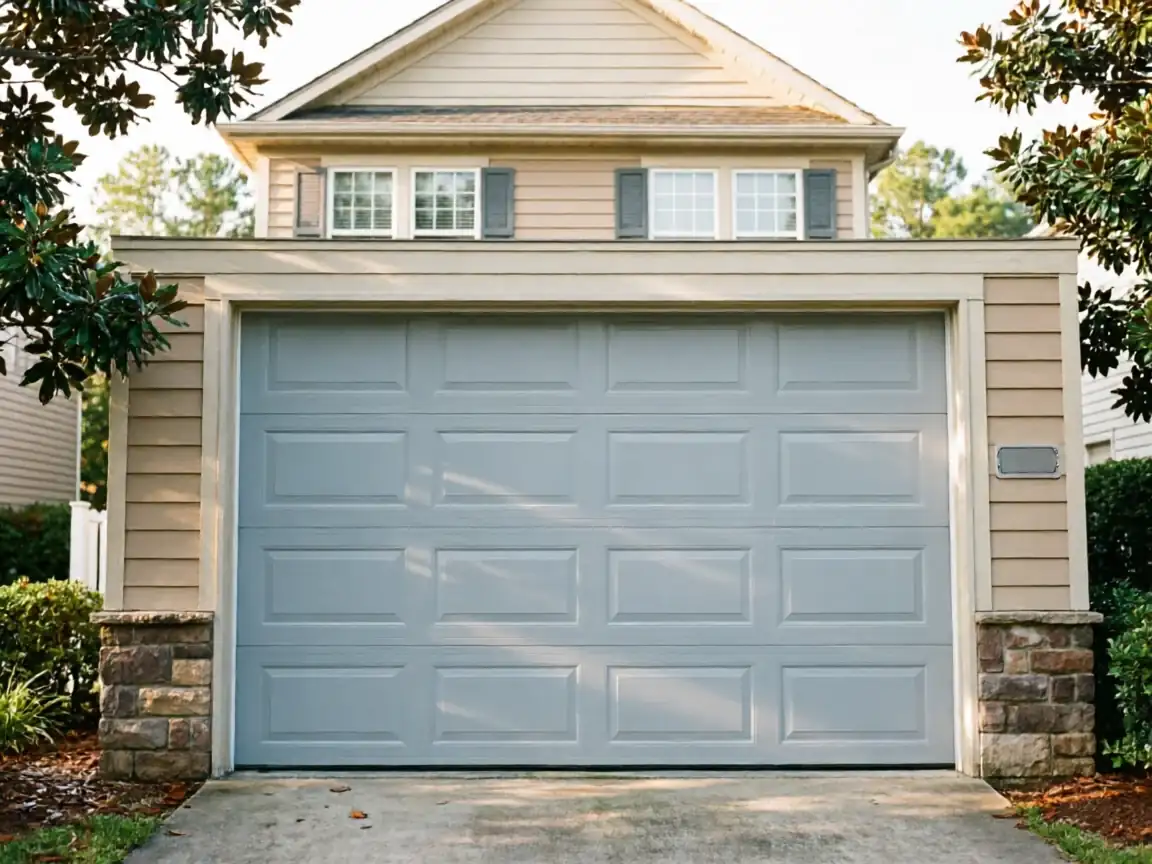
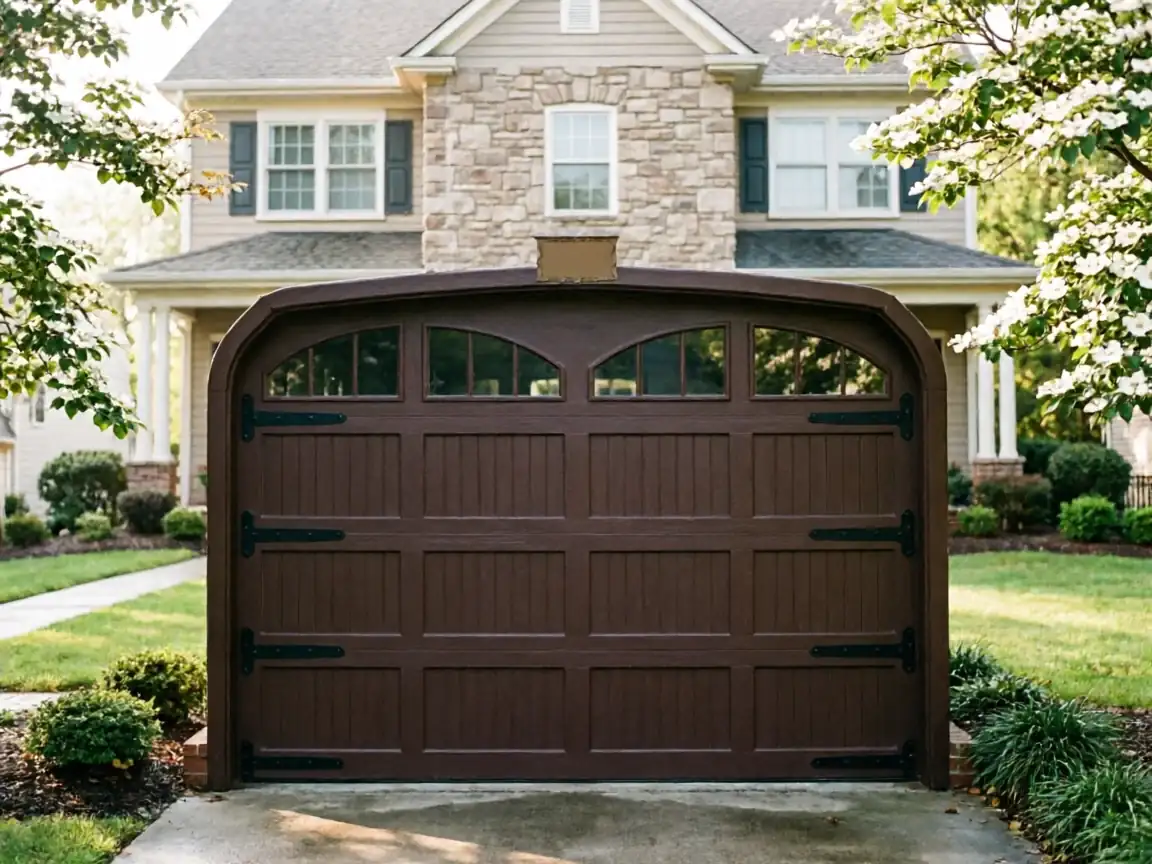
Garage door maintenance for High Point homes built 1976-2002, where original hardware is hitting 35-45 years old and cold-season stress finds the weak points first.
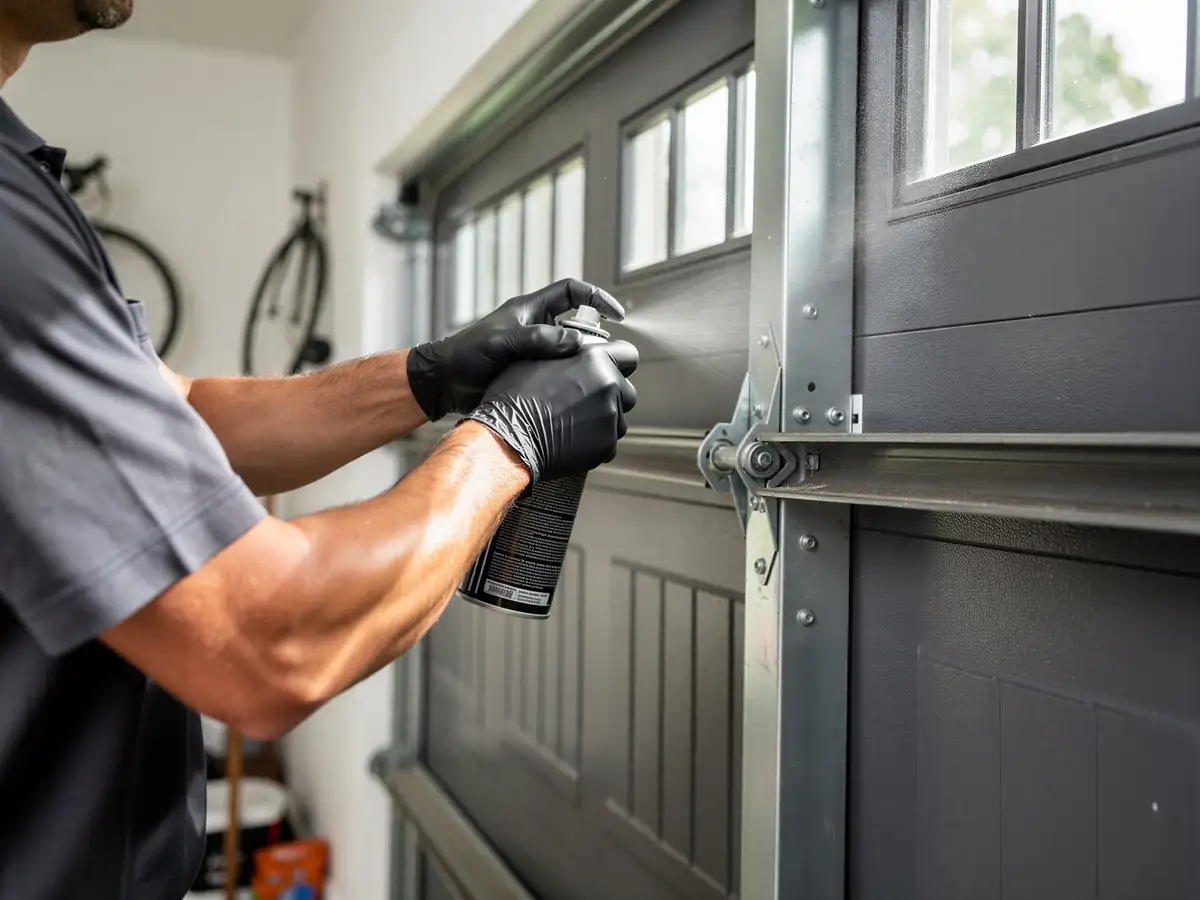
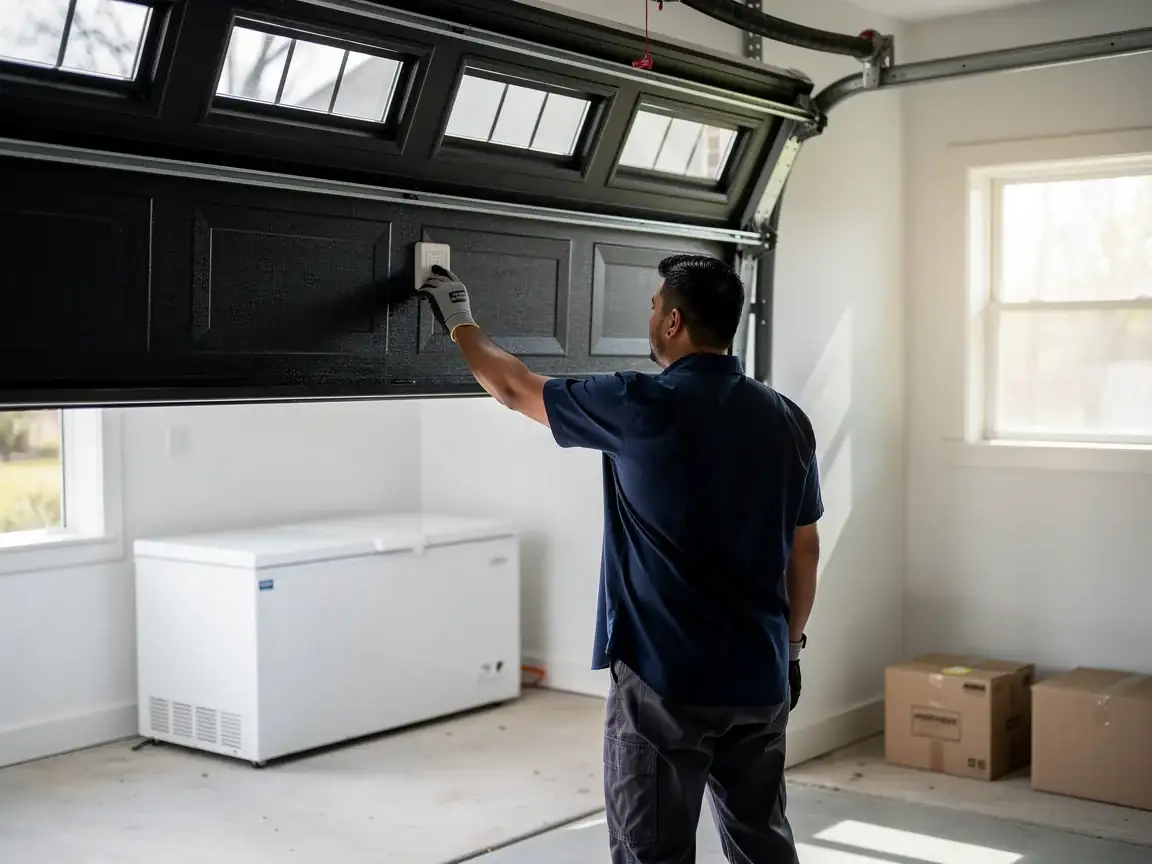
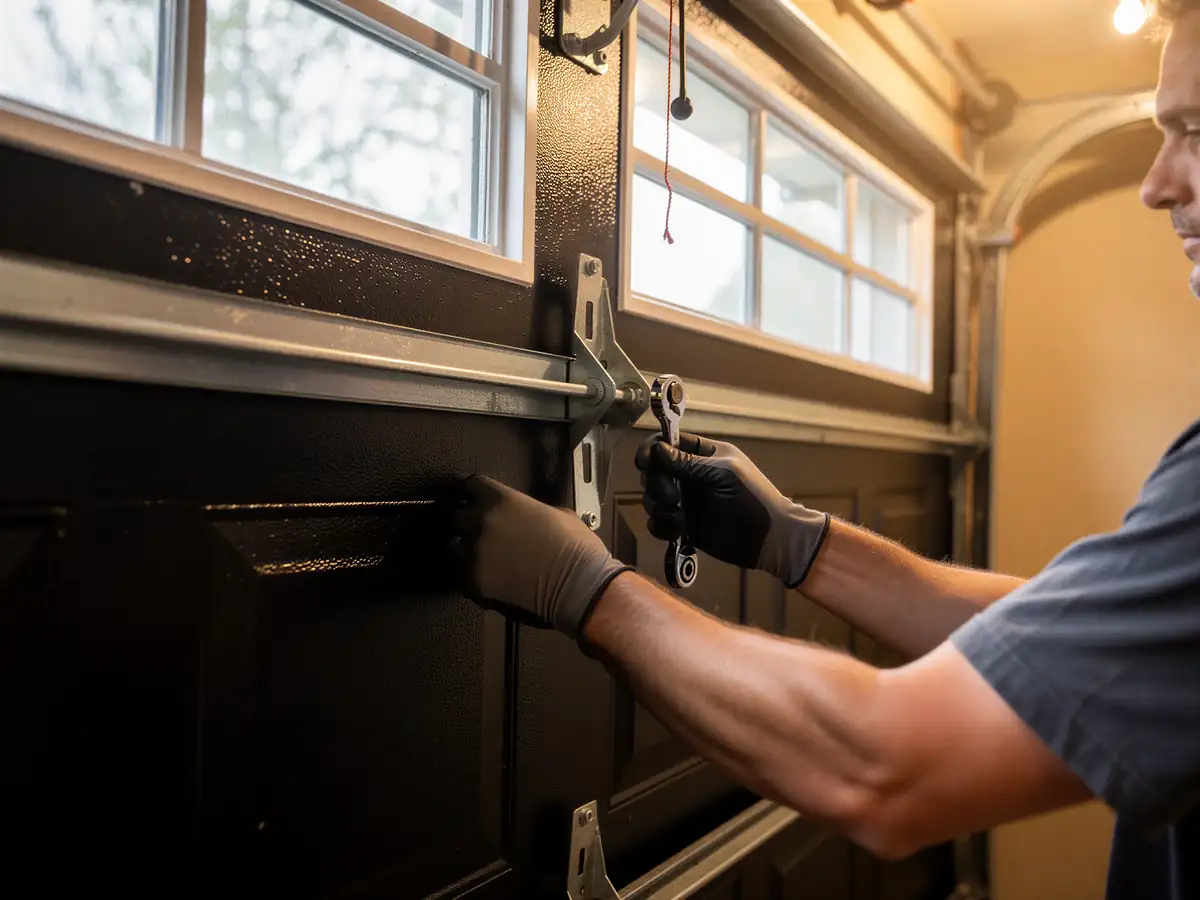
You can wipe down tracks, check that the photo-eye sensors are clean and aligned, and look at the weatherstripping along the bottom panel for cracking. You can also tighten loose bolts on the track brackets with a wrench - they work loose over years of vibration and it's a five-minute job.
02
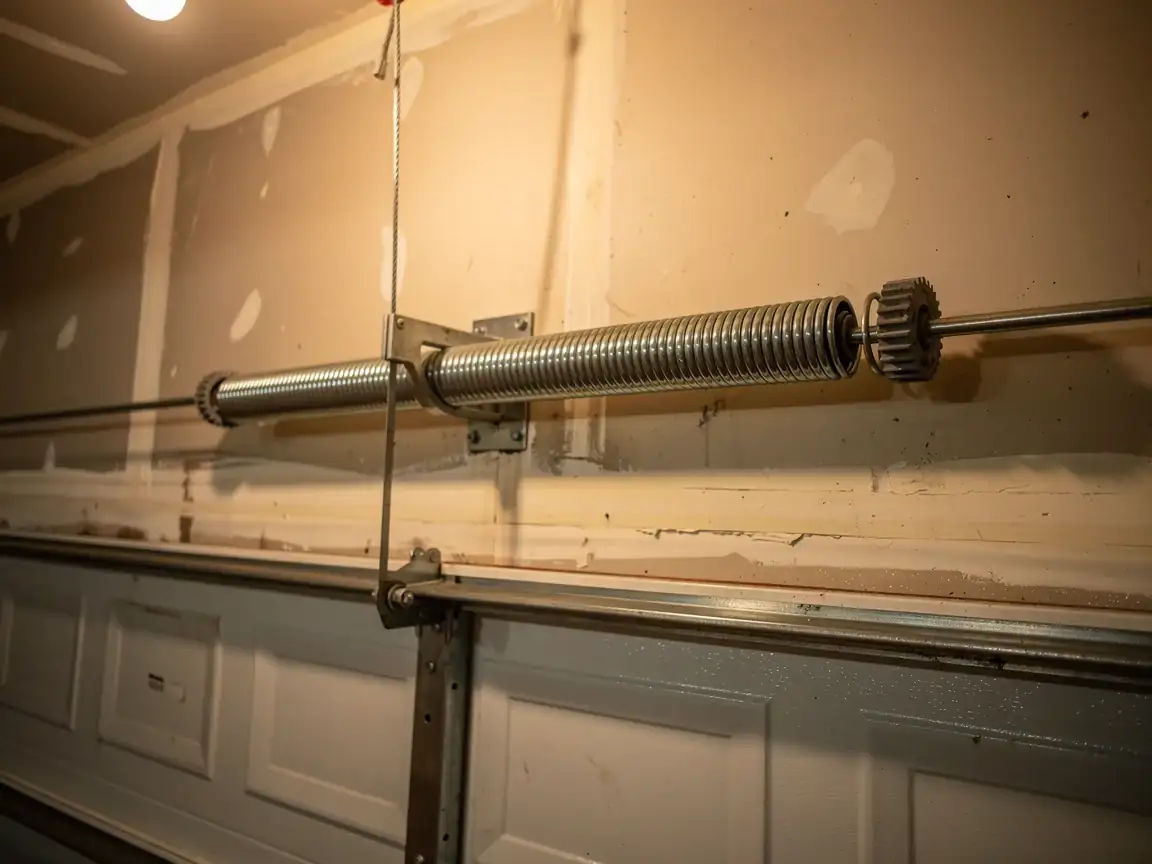
What you shouldn't touch is the torsion spring system
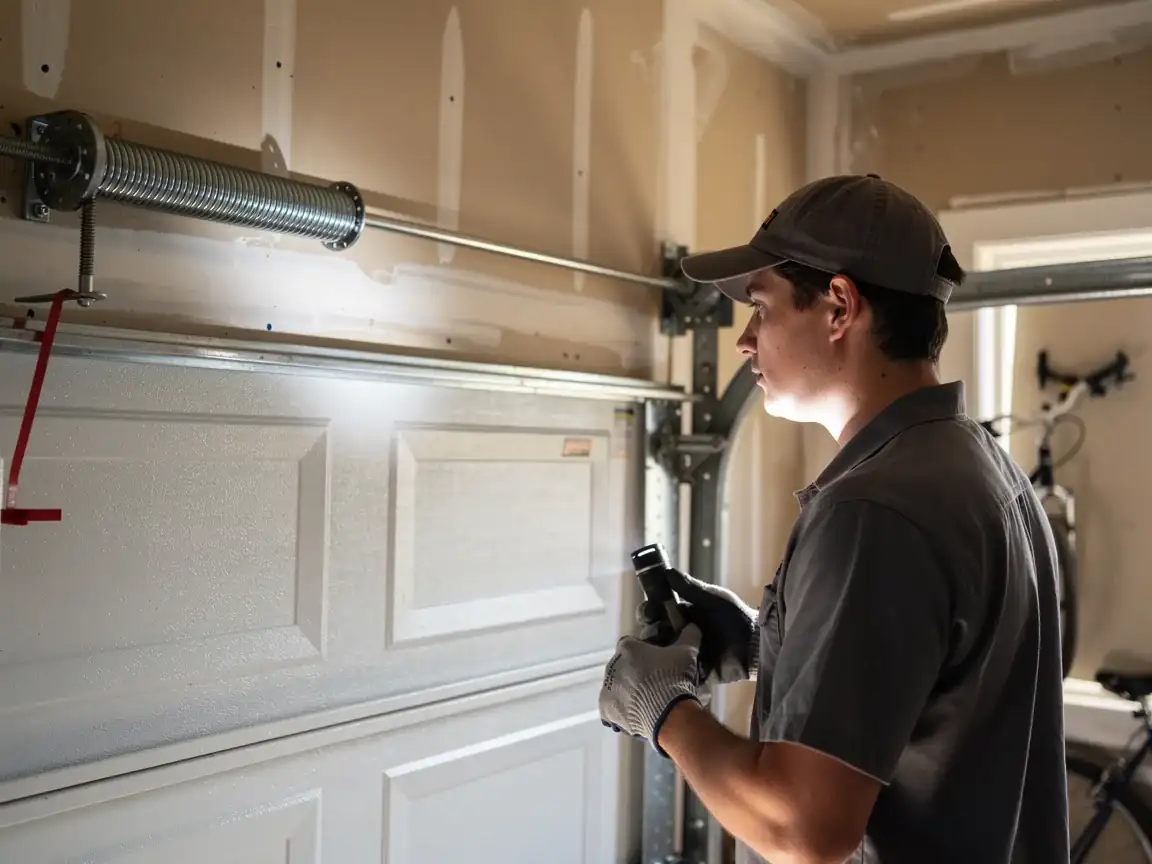
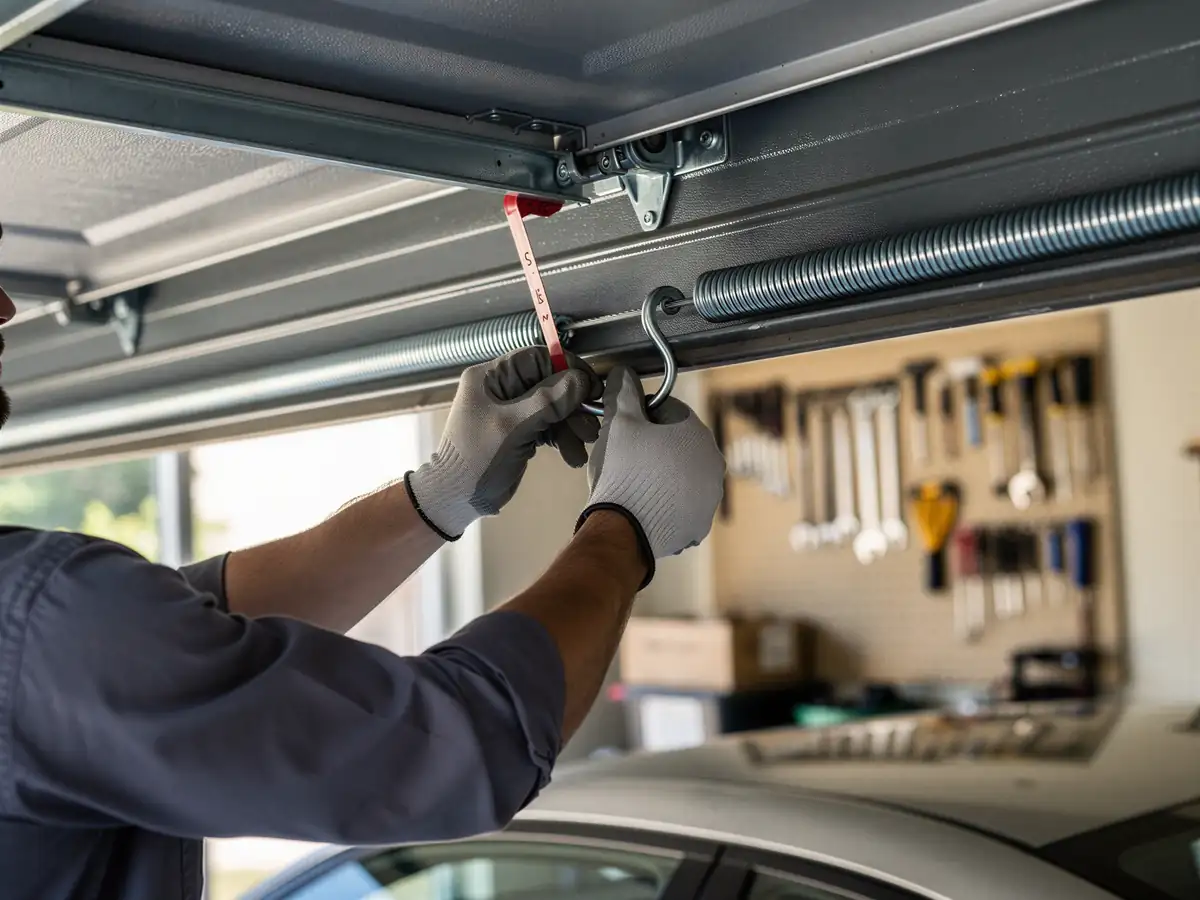
It's under enough tension to cause serious injury, and on the double-wide doors common in this area the springs are sized heavier to match the wider panel, so there's more stored force if something lets go. Lubrication of rollers and hinges is fine for a homeowner with a ladder and ten minutes, but spring adjustment, cable inspection, and opener force-setting are jobs where a mistake costs more than the service call would have.
03
If your door is original to a house built in the 1980s or 90s
Which describes a large share of the stock across this service area, the hardware is old enough that "just tighten it" sometimes isn't an option - parts fatigue at that age in ways a visual check won't catch.
The Symptom
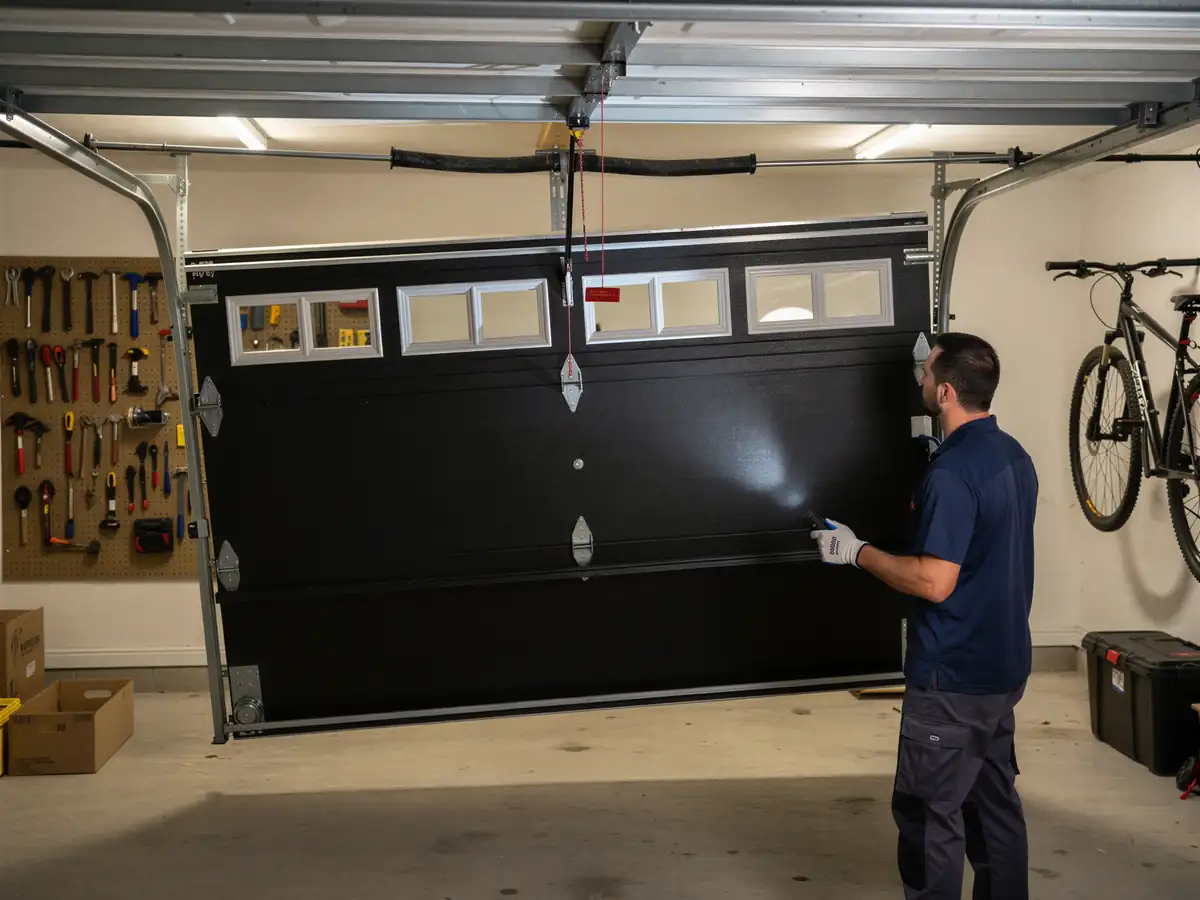
The complaint we hear most isn't a dead opener, it's a door that's gotten noisy or jerky over a season and the owner assumes that's just what garage doors do after 30-plus years. It usually isn't. A door that shudders partway up, or one spring arm that visibly sags lower than the other, means the torsion spring is losing tension unevenly, and that's a maintenance-catchable problem before it becomes a snapped-spring emergency.
In a cold-moderate climate like this one, steel hardware contracts in winter, and grease that was fine in August turns stiff and gummy by January. Rollers bind, the opener works harder to compensate, and the extra strain shows up first at whichever part was already weakest - usually the spring or the bottom hinge roller on a door that's been running dry for a year or two. On housing stock from the 1976-2002 era, that weak point is frequently original equipment nobody's touched since the house was built.
If you're hearing a grinding noise specifically on the way down rather than the way up, that's worth flagging separately - it points at a roller or track issue rather than a spring issue, and it's a different fix.
Getting It Booked In
Maintenance visits don't need to wait for a symptom, but if you're already hearing noise or seeing uneven movement, that's the point to call rather than wait another season. We cover the service area out to Jamestown, Archdale, Trinity, Thomasville, Kernersville, Wallburg, Oak Ridge, Pleasant Garden, Walkertown, Summerfield, Welcome, Randleman, and Stokesdale, along with the areas closer.
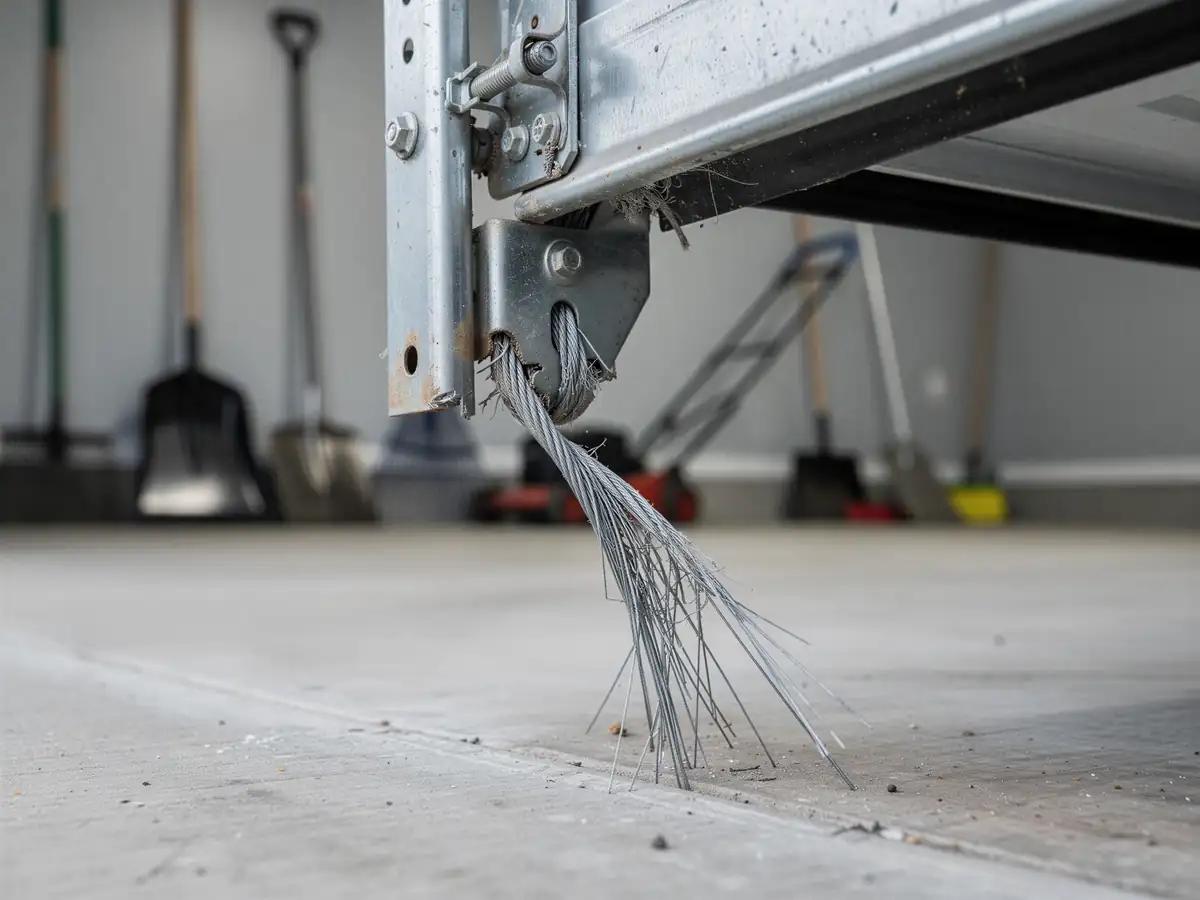
A standard maintenance check covers spring tension, cable wear, track alignment, roller condition, opener force and travel limits, and the weatherstripping. For a door that's original to a house from the 1980s or 90s, we're also looking harder at hardware that wasn't designed to last indefinitely and may be due for replacement parts rather than just a tune-up.
We don't stock every spring size or every opener logic board on the truck - some parts for older, discontinued openers take a few days to order. If that's your situation, we'll tell you upfront rather than stall on-site.
Why This Fails Locally
01
This isn't a generic wear-and-tear story
Across the service area, most of the housing went up between 1976 and 2002, with the bulk clustered in the 1980s and 90s across the 13 named communities we work in. That means a very large share of the doors we see are carrying original torsion springs and original rollers that are now 25 to 45 years old - well past the point where lubrication alone fixes anything.
45 years
02
Pair that age with a cold-moderate climate and you get a predictable failure pattern
Grease stiffens every winter, steel fatigues a little more each freeze-thaw cycle, and the spring that was already near the end of its rated cycle count finally lets go on a cold morning. It's not bad luck. It's an old part meeting a cold snap at the same time, year after year, across a housing stock that's largely the same age.
03
That's the case for maintenance on a schedule rather than waiting for a failure
On a door this age, a tune-up is catching a part near the end of its life, not fixing something that's still got decades left in it.
How it works
From “it’s stuck” to “it’s fixed”
01
Tell us what’s wrong
Describe the symptom - won’t open, loud bang, opener runs but the door won’t move.
02
On-site diagnosis
A technician tests the door under power and by hand and finds what actually failed.
03
Clear, up-front plan
You get the fix that’s needed and what drives the cost - before any work starts.
04
Repaired & tested
The repair is done, the door is set true and tested, and the work area left clean.
Not sure which repair your door needs in High Point, NC? Describe what it’s doing - every job starts with a diagnosis.
Straight answers about garage door repair in High Point. Still unsure? Ask us directly.
How often should I get my garage door serviced in High Point
Once a year is reasonable for most doors, but if your house was built in the 1980s or 90s and the hardware is original, twice a year - once before winter - catches problems before the cold makes them worse. Original springs and rollers that age don't fail gently.
Why does my door get noisy specifically in winter
Grease that moved fine in summer stiffens up in cold weather, so rollers and hinges bind slightly and the opener strains against it. On hardware that's already decades old, that extra strain often finds the weakest point first, which is usually a spring or roller.
Is it worth maintaining an old door or should I just replace it
Depends on the hardware's condition. If the springs and rollers are original to a 1980s or 90s build and already showing uneven wear, a tune-up can extend things a couple more years, but if the track is bent or the opener's logic board is failing too, replacement often costs less over time than repeated service calls.