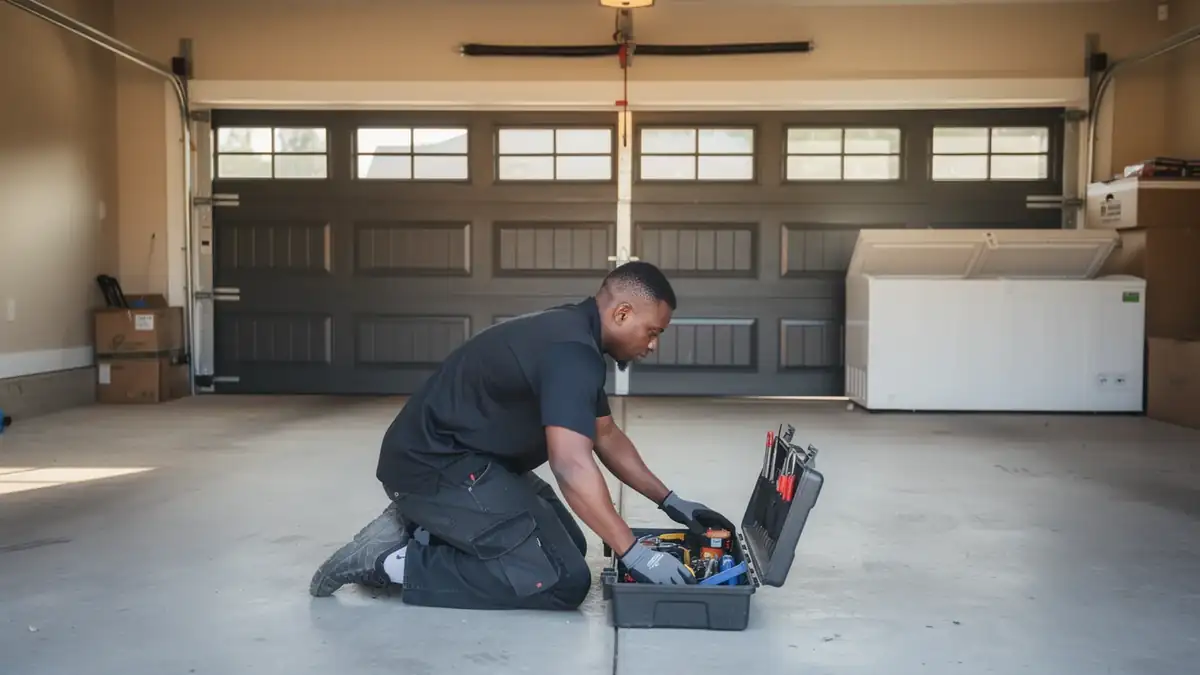
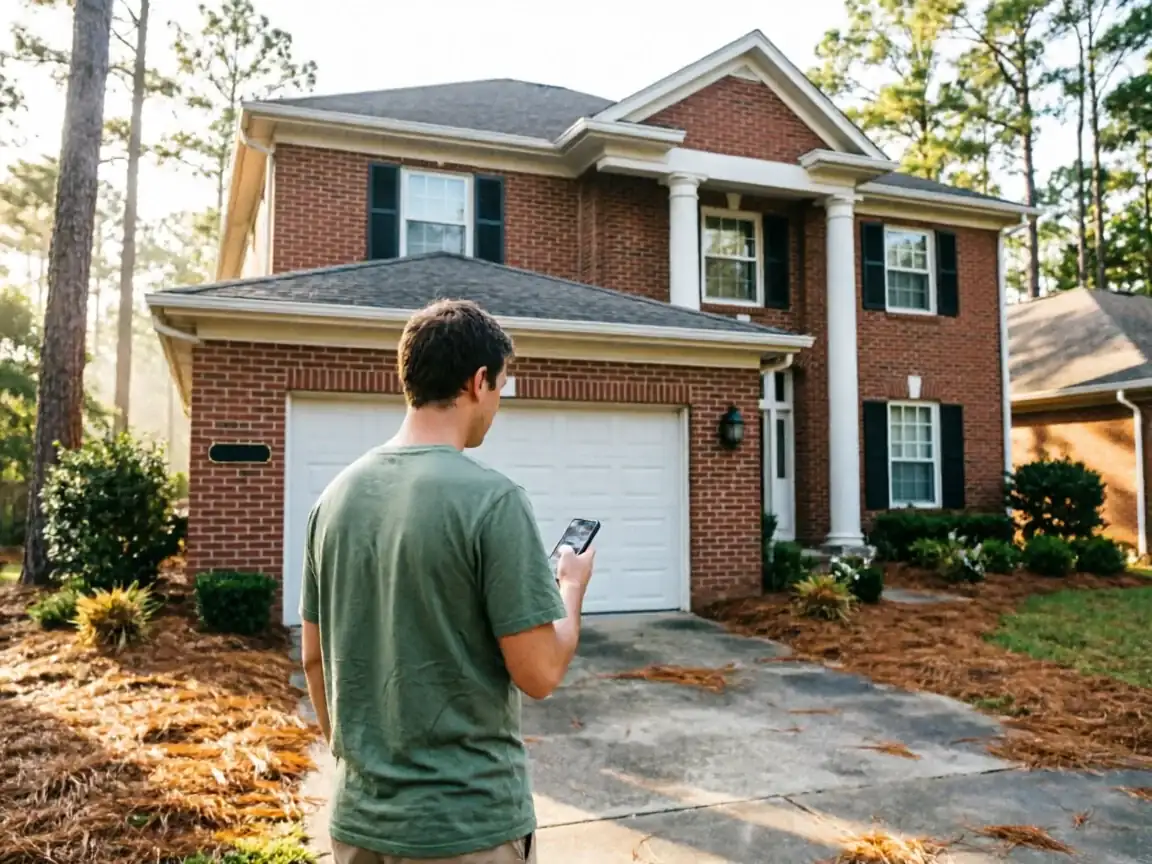
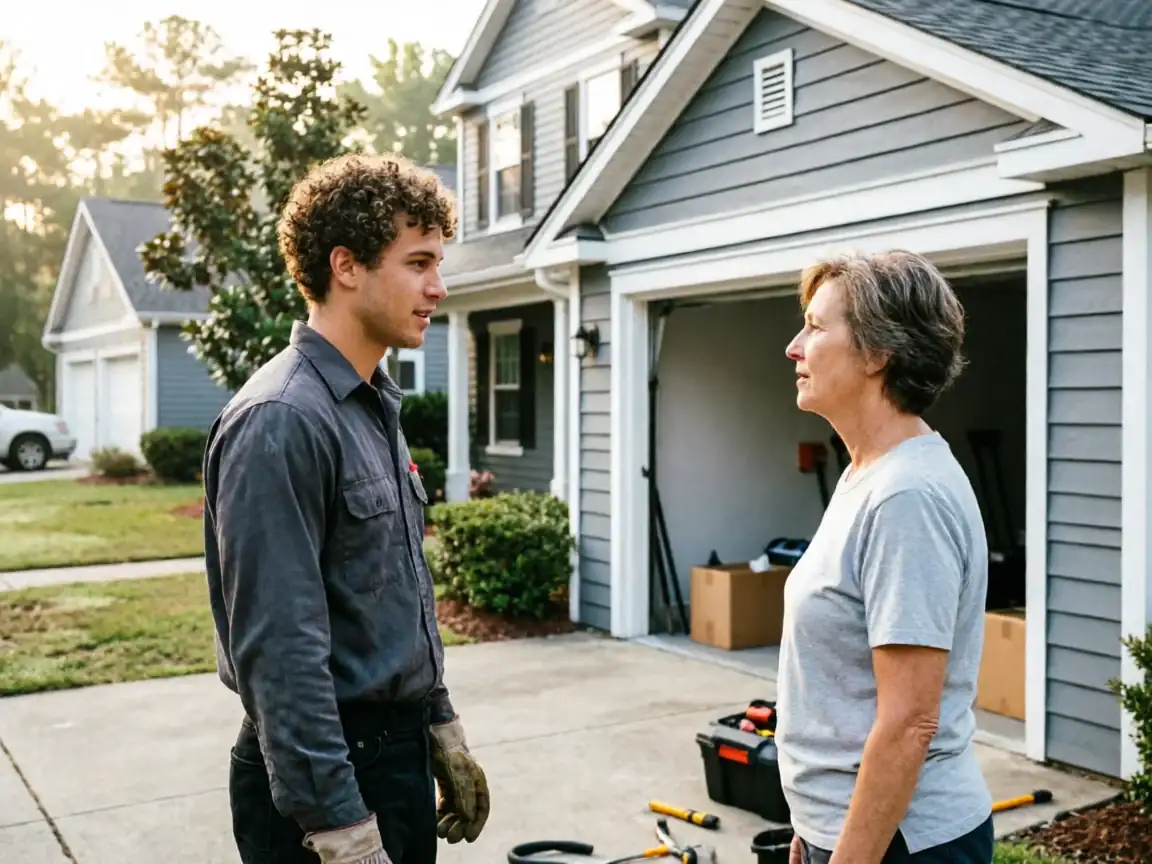
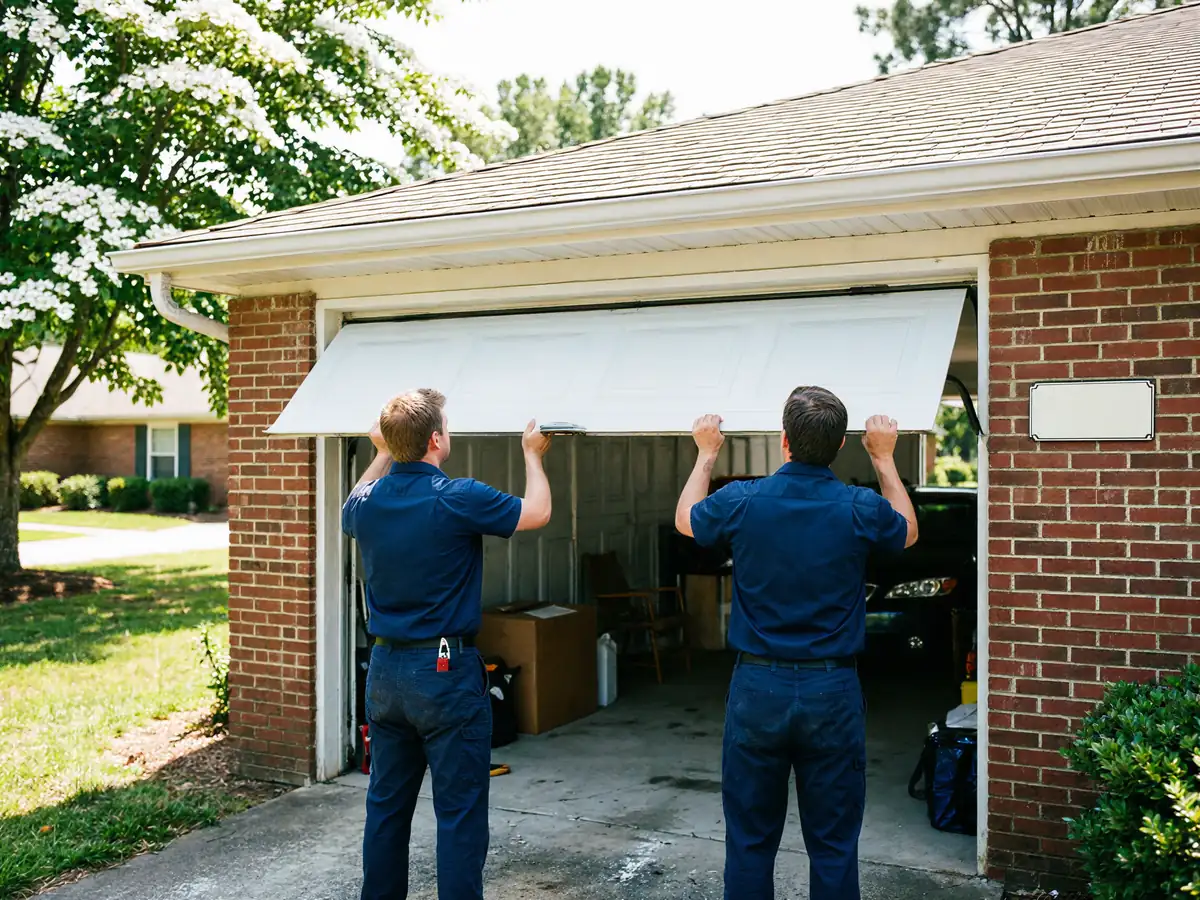
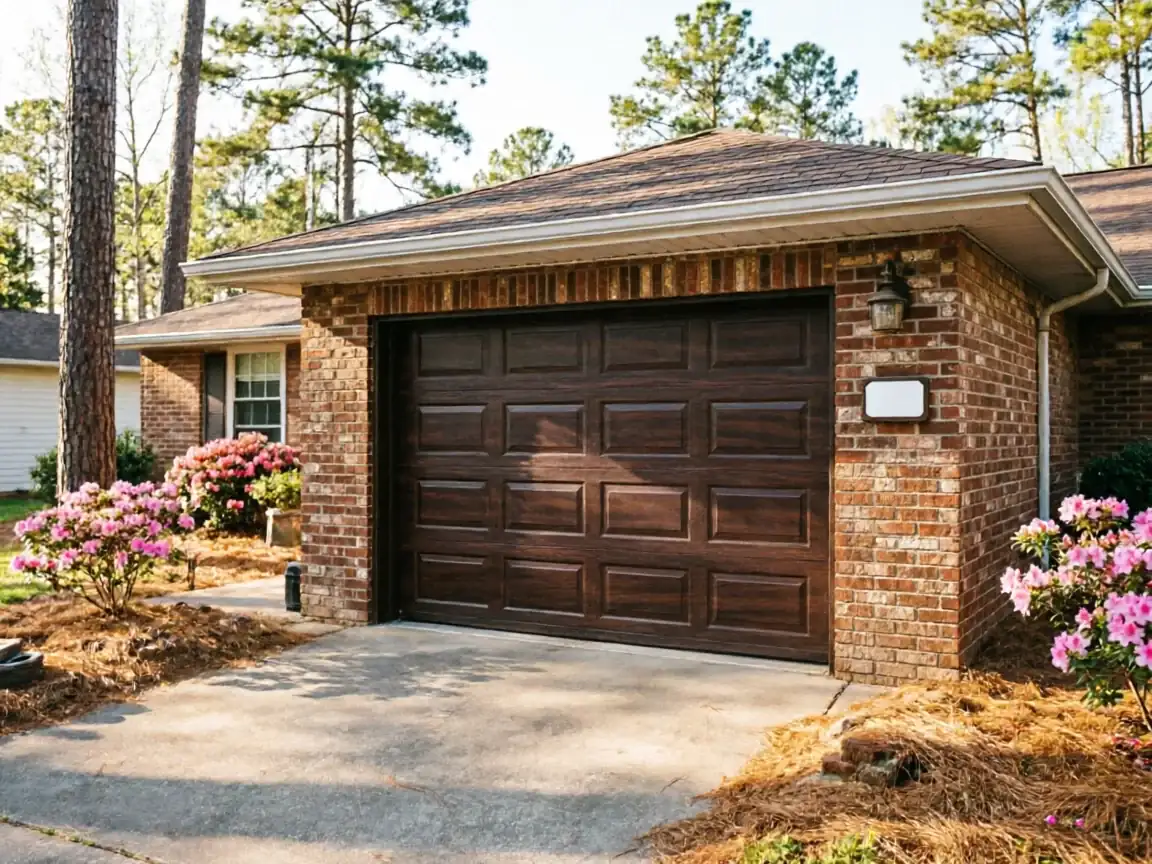
Most of the houses a High Point service call turns up were built between 1976 and 2002
Which means the opener is the original chain-drive unit or a mid-90s replacement, not one of the belt-drive units that have been standard for the last decade. Across the 13 named areas we run calls in - from Jamestown and Archdale through Trinity and Thomasville - the housing stock skews 1980s-90s, so panel width, track spacing, and header clearance all follow builder specs from that era rather than current code minimums.
02
High Point sits in a cold-moderate climate band, not a desert or coastal one
So the wear we check for is winter-driven: shrinking rubber seals, stiff rollers that haven't been lubed since fall, and torsion springs that lose tension faster in cold steel. We don't see the heat-warp or salt-corrosion problems a different climate band would produce, so a call here doesn't waste time looking for those.
The Problem
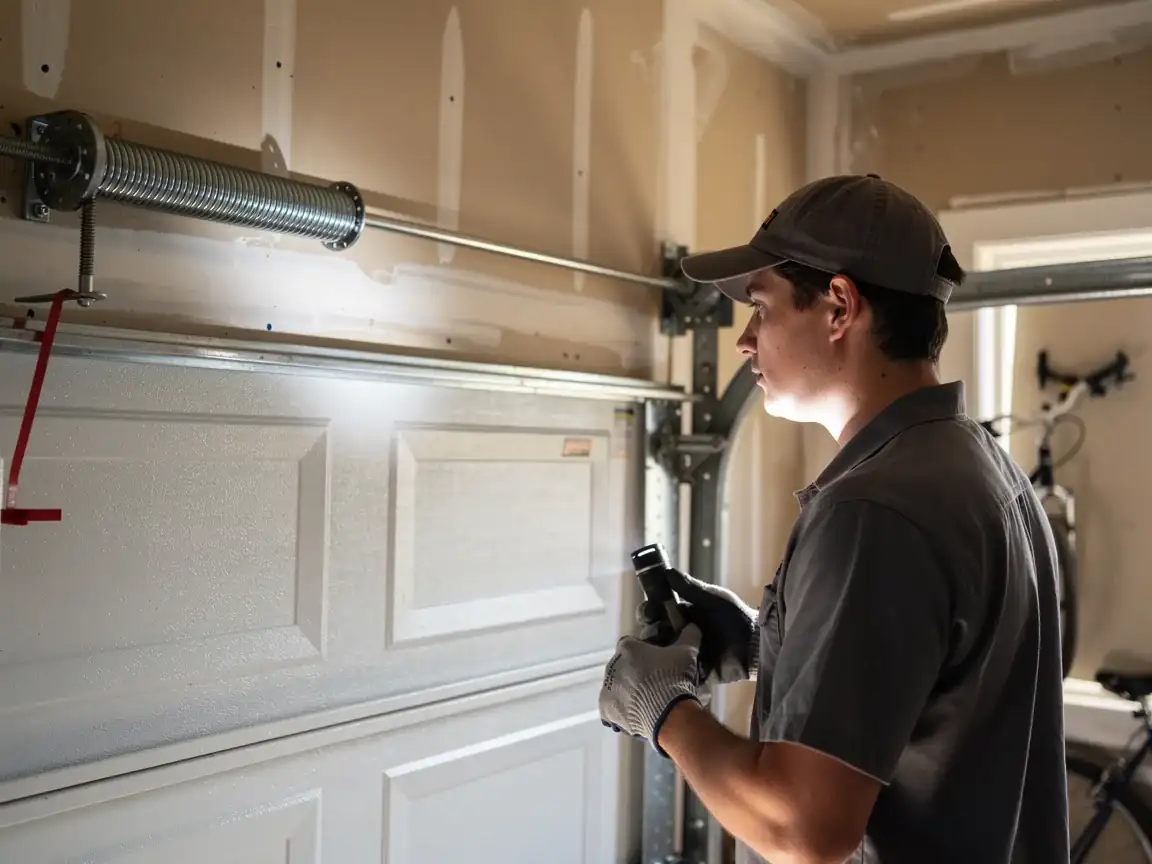
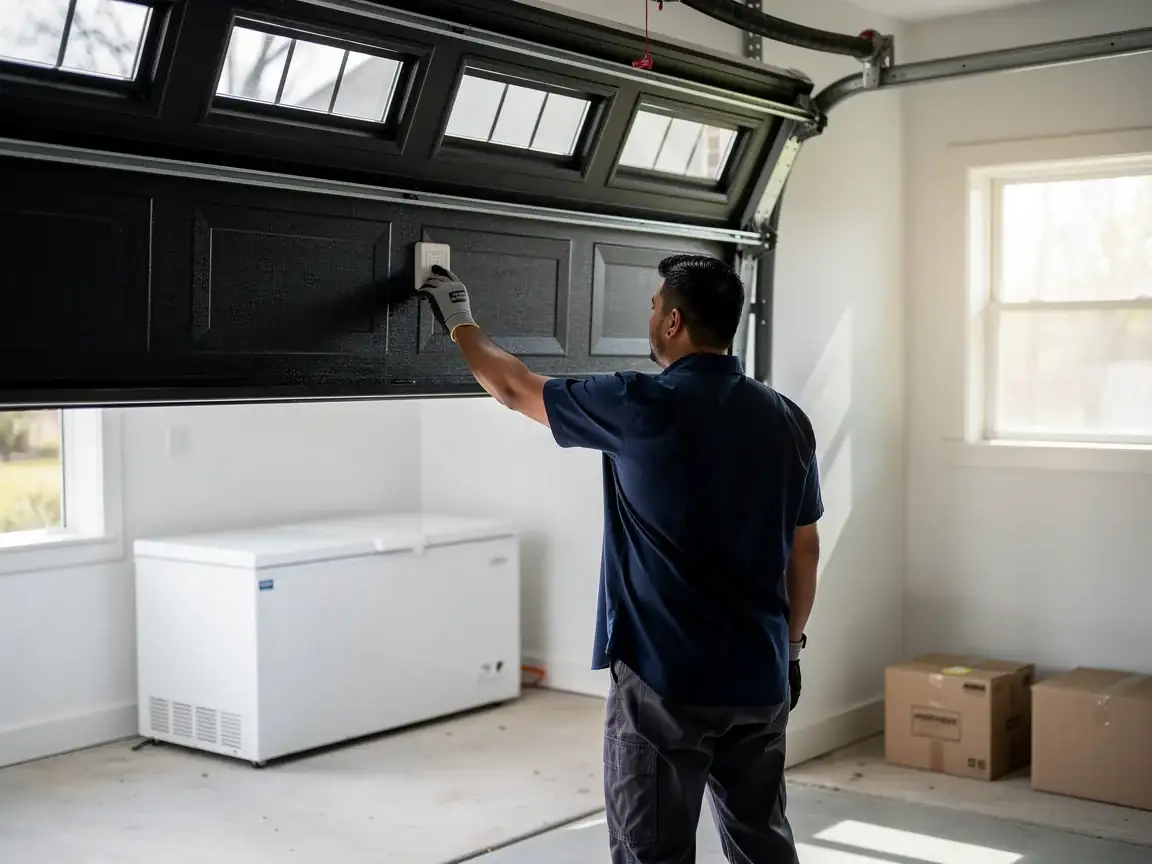
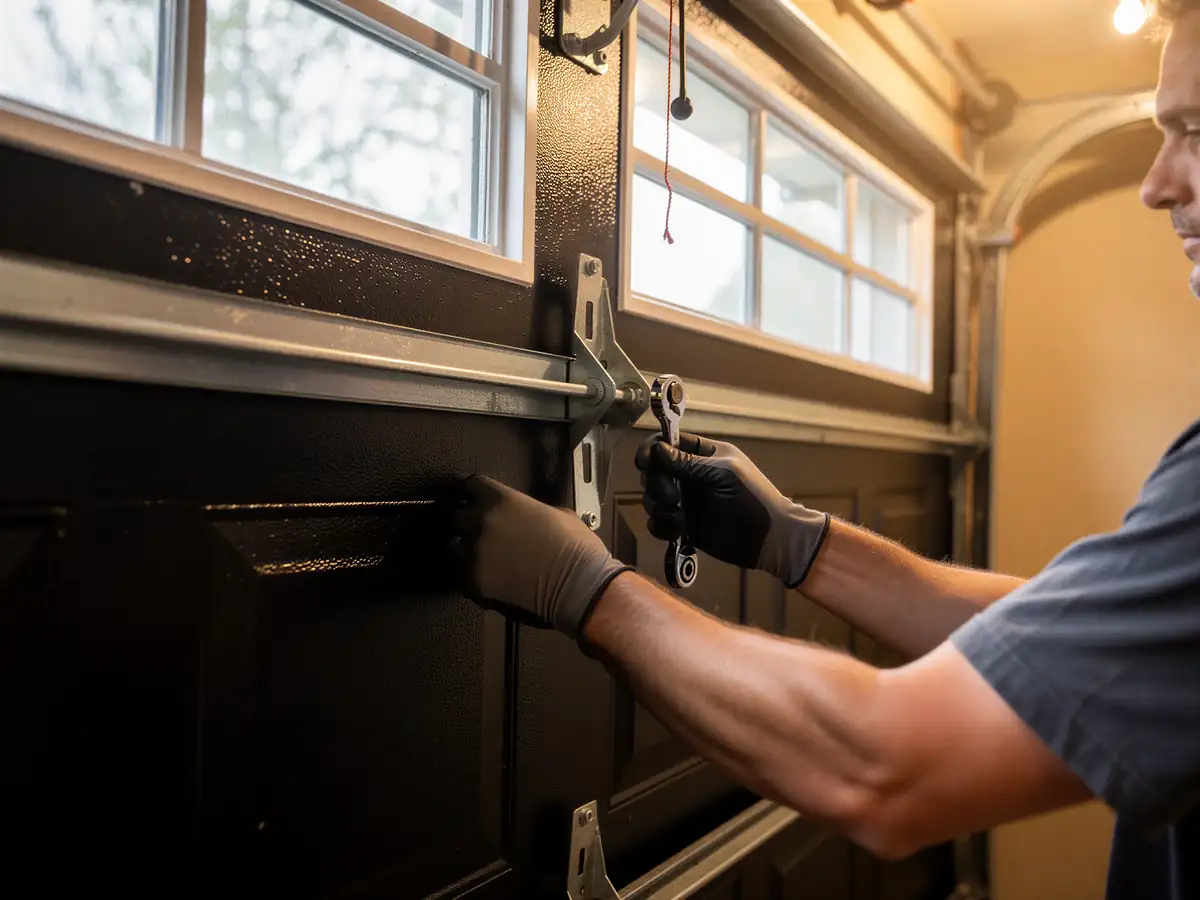
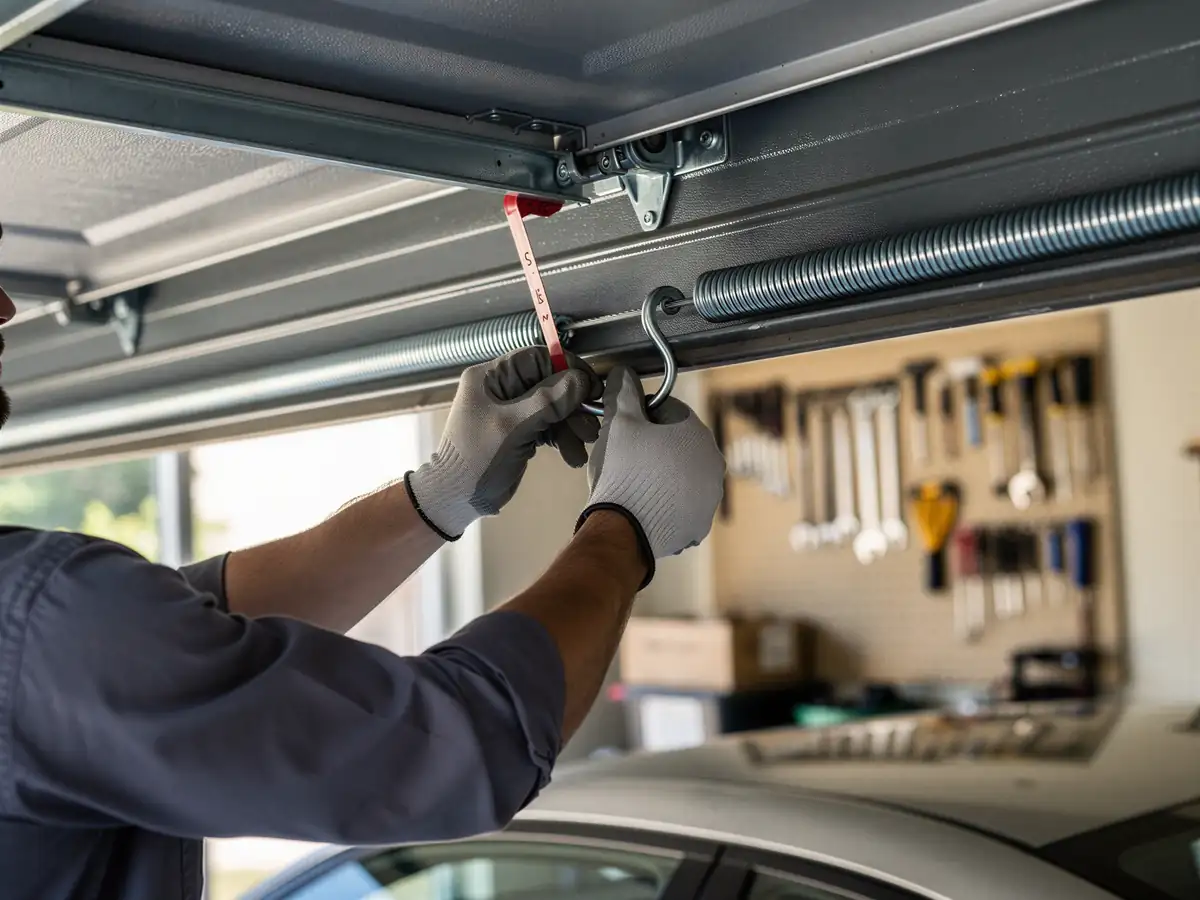
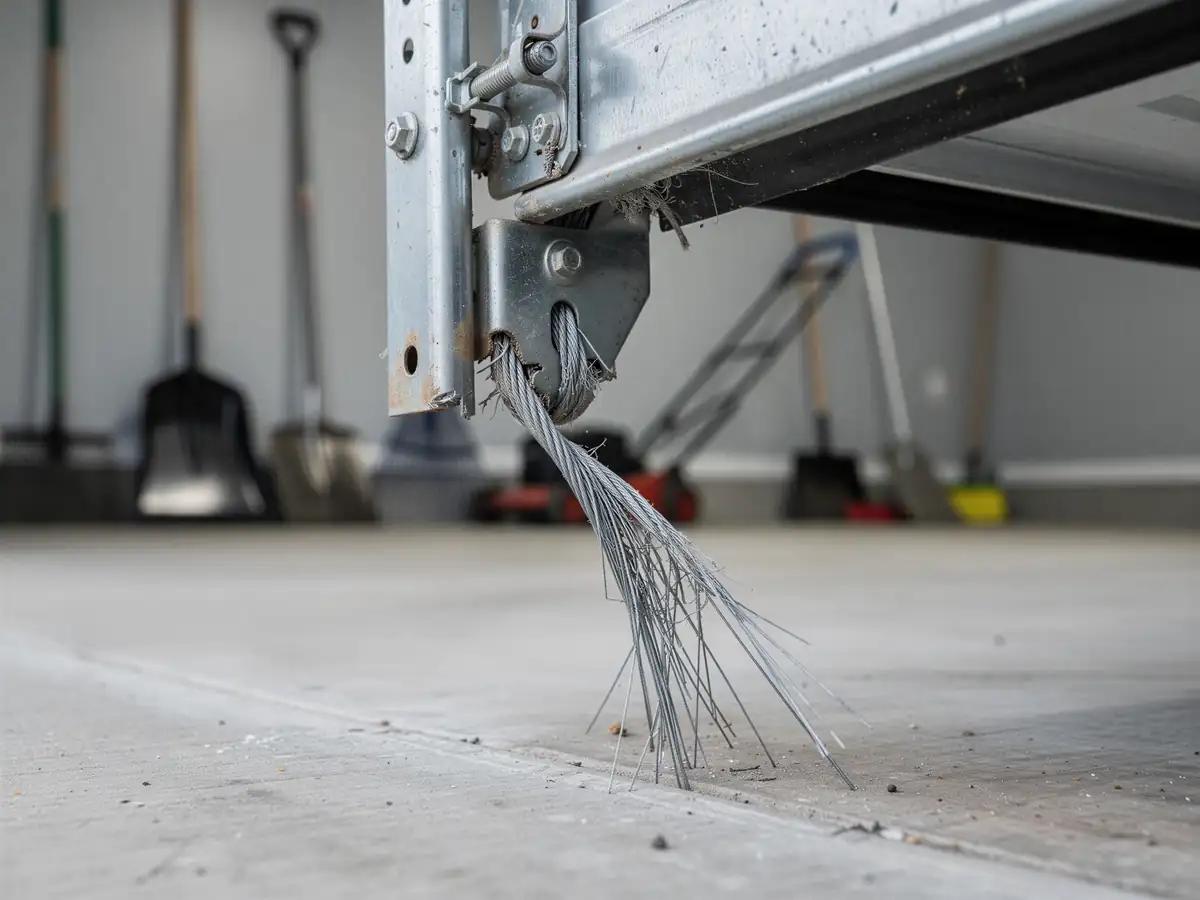
On a house from the 1976-2002 window, the door itself is usually fine - steel sections from that period were built heavy. What fails first is almost always moving hardware: rollers worn past their bearing life, a torsion spring that's done its 10,000 to 15,000 cycles, or cables starting to fray at the drum. With 28,580 owner-occupied houses across the service area and most of that stock in this same build window, the pattern repeats call after call rather than varying house to house.
The second most common issue is the opener's sensor alignment, usually knocked off by someone bumping a parked car or a bike into the track bracket. It's a five-minute fix once we're there, but it's also the thing a homeowner can't diagnose by looking at the door - the door looks and moves fine right up until the safety reverse doesn't trigger.
What It Costs
We don't have a flat number to quote here, and we're not going to make one up. What a call costs depends on whether it's a spring, a cable, a roller set, or an opener board, and whether the part is still stocked for a door that age. What we can tell you is what drives the cost: labor time on-site, the part itself, and whether the job is a repair or whether the door's hardware is far enough gone that replacement parts cost more than a new section.
Households in this service area have a median income of $80,349, which tells us something about what people expect to spend on a repair versus a full replacement - most want the door fixed, not swapped, if the fix holds. That's usually the right call on a door from the 1976-2002 era, since the steel itself is still sound even when the hardware isn't.
When It Stops Being a DIY Job
01
A homeowner can lubricate rollers, tighten loose bolts, and clear a sensor's line of sight without calling anyone
What they shouldn't touch is the torsion spring - on a door built in the 1976-2002 window, that spring is under enough tension to break a bone or worse, and the winding cones on older hardware don't match what's sold today, which makes the job harder, not easier, for someone doing it once.
02
Cables under load are the same story
If a cable's frayed near the bottom bracket, the door is one more open-close cycle from dropping. That's a call, not a weekend project, no matter how handy the owner is.
03
Our honest limitation
If the opener board is obsolete and the manufacturer's stopped making the part, we may need to source a universal replacement rather than an exact match, and that can add a day or two to the job.
How it works
From “it’s stuck” to “it’s fixed”
01
Tell us what’s wrong
Describe the symptom - won’t open, loud bang, opener runs but the door won’t move.
02
On-site diagnosis
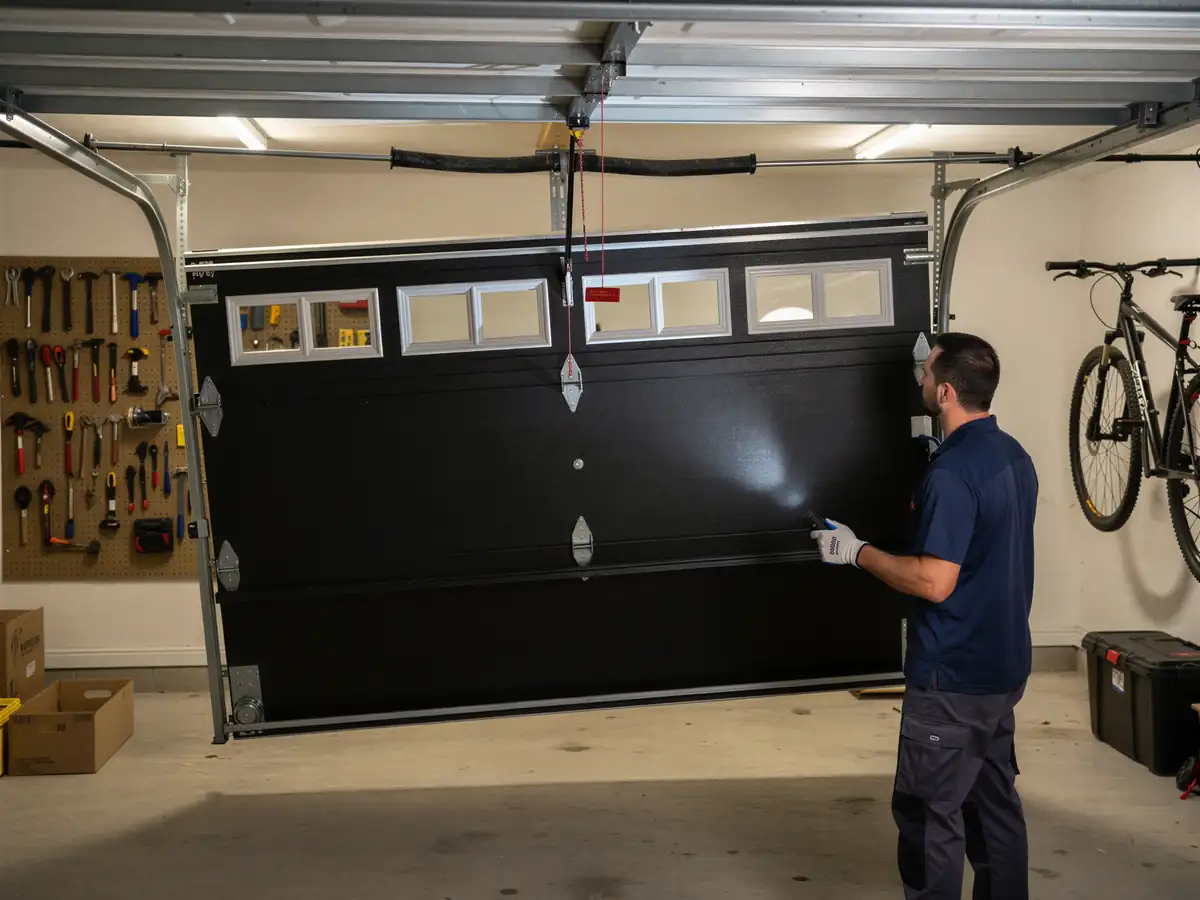
A technician tests the door under power and by hand and finds what actually failed.
03
Clear, up-front plan
You get the fix that’s needed and what drives the cost - before any work starts.
04
Repaired & tested
The repair is done, the door is set true and tested, and the work area left clean.
Not sure which repair your door needs in High Point, NC? Describe what it’s doing - every job starts with a diagnosis.
Straight answers about garage door repair in High Point. Still unsure? Ask us directly.
Why does my opener look original but the door panels look newer?
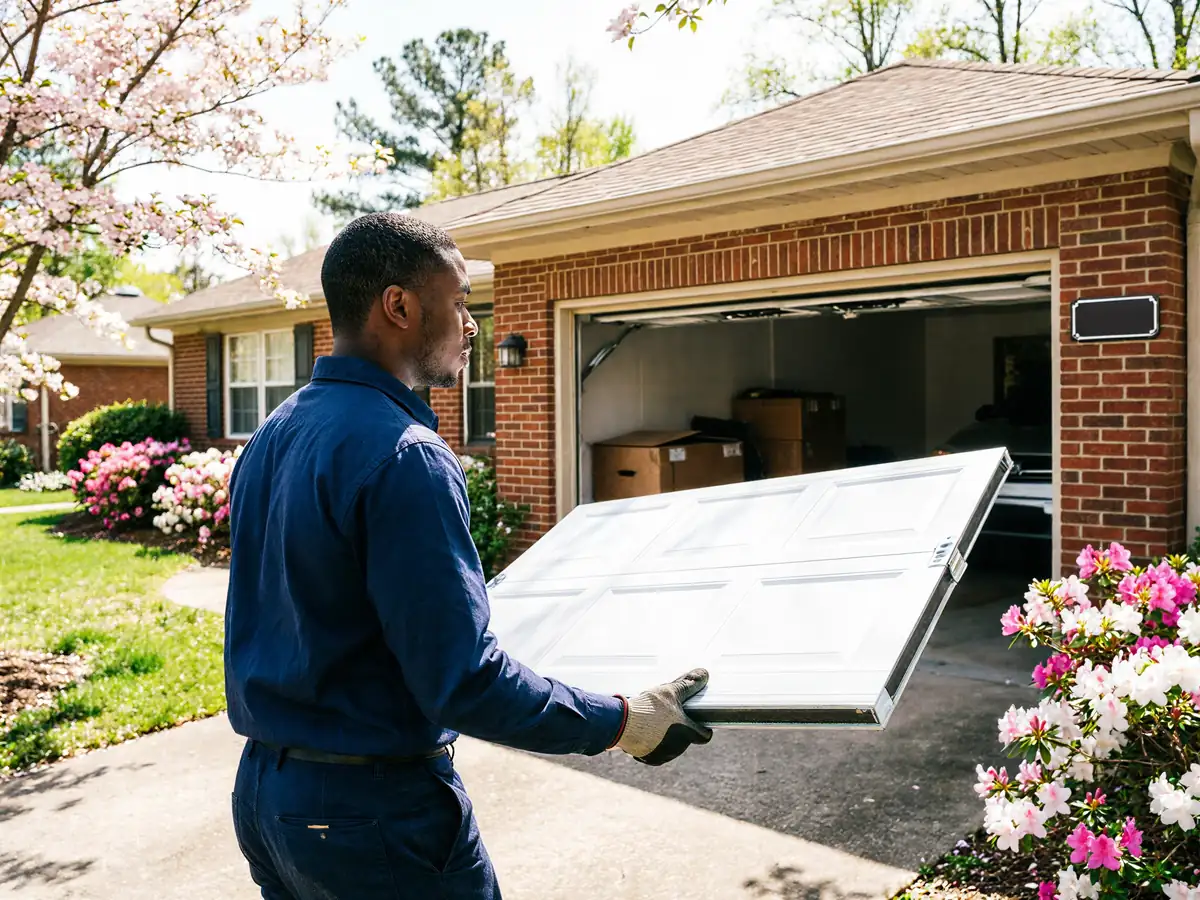
On houses built in the 1976-2002 window, it's common for a panel or two to get swapped after storm damage while the opener keeps running. If the opener is the original chain-drive unit, parts availability is more limited than for a belt-drive system, so a repair call may take a bit longer to source the right board or sensor.
Does High Point's winter weather affect my garage door?
Yes. We're in a cold-moderate climate band, so the issues we see most in winter are shrinking bottom seals, stiffened rollers, and torsion springs that lose tension faster in cold steel. It's not the heat-warp or coastal corrosion problems you'd get in a different climate, so a winter call usually focuses on seals and spring tension first.
Is it cheaper to repair or replace an older door?
For most houses in this service area, built between 1976 and 2002, the steel panels themselves are still sound even when hardware fails. Repair usually makes sense unless the spring, cables, rollers, and opener are all failing at once - at that point, parts cost can approach what a new door section would run.