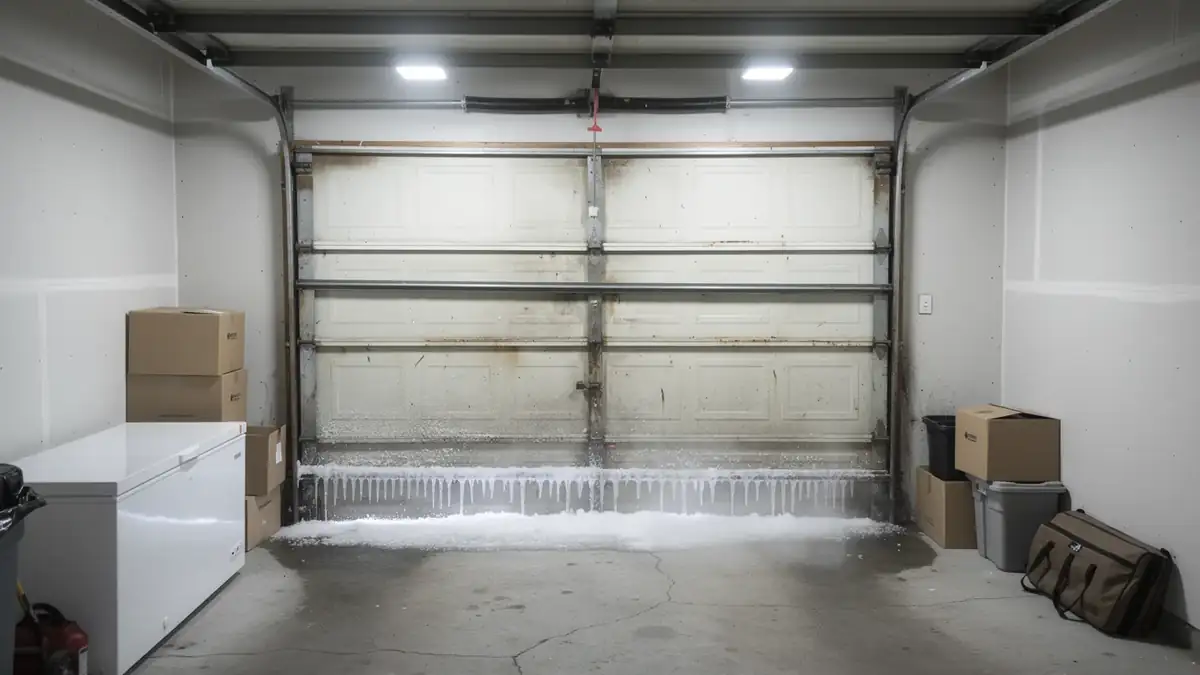
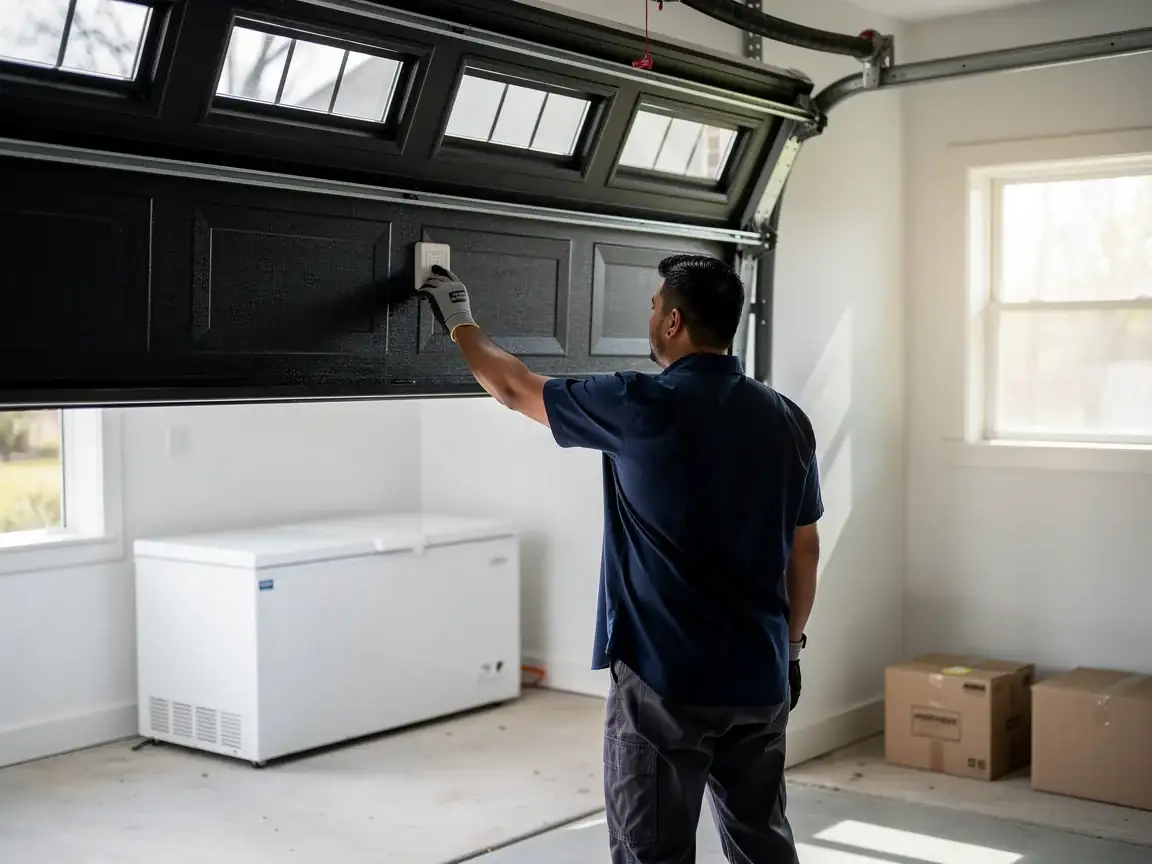
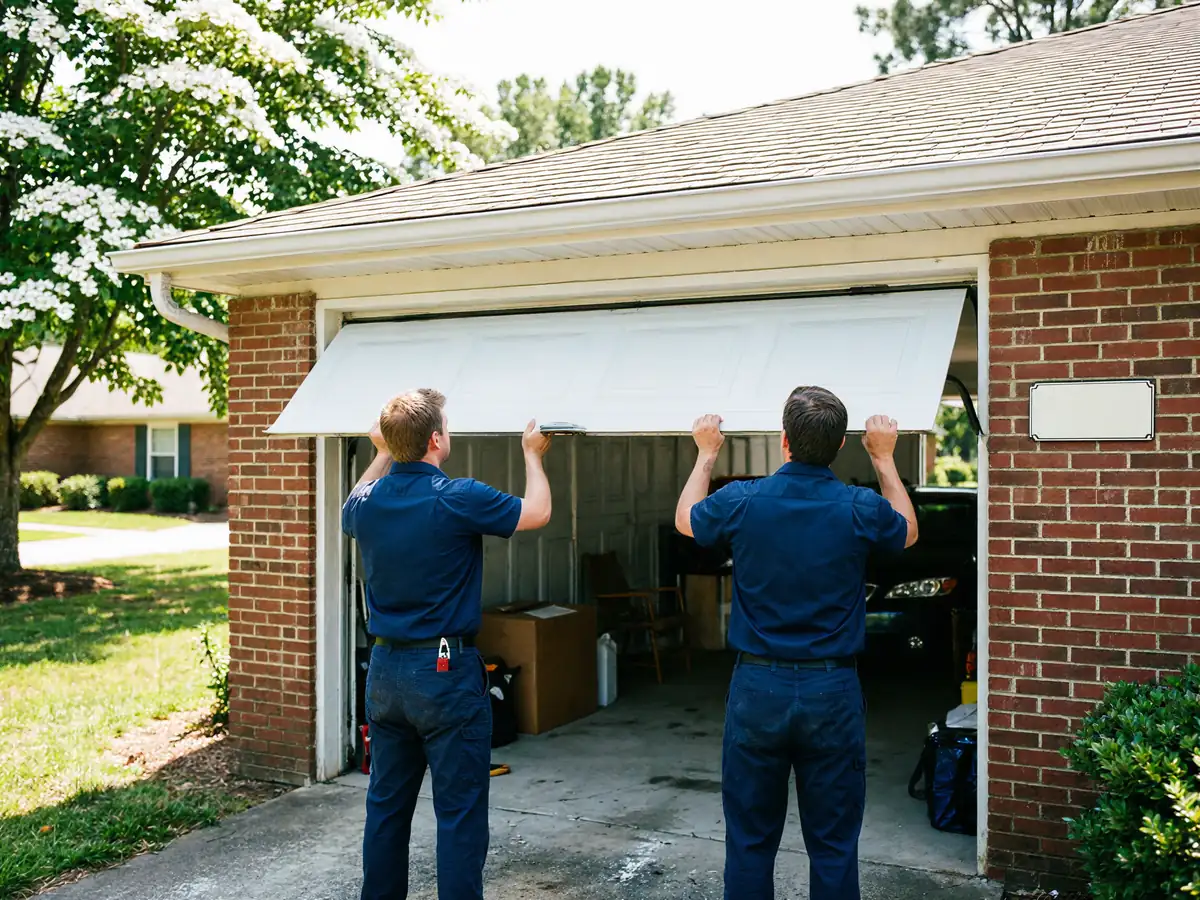
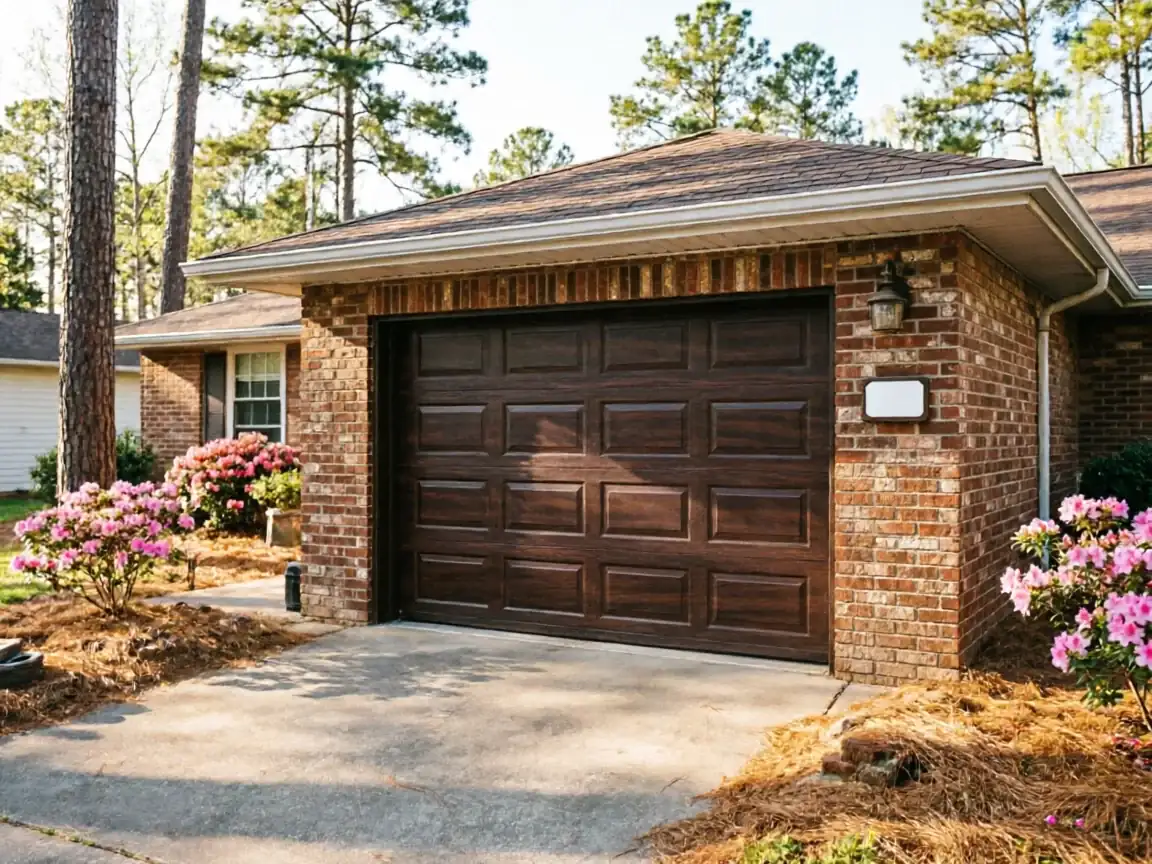
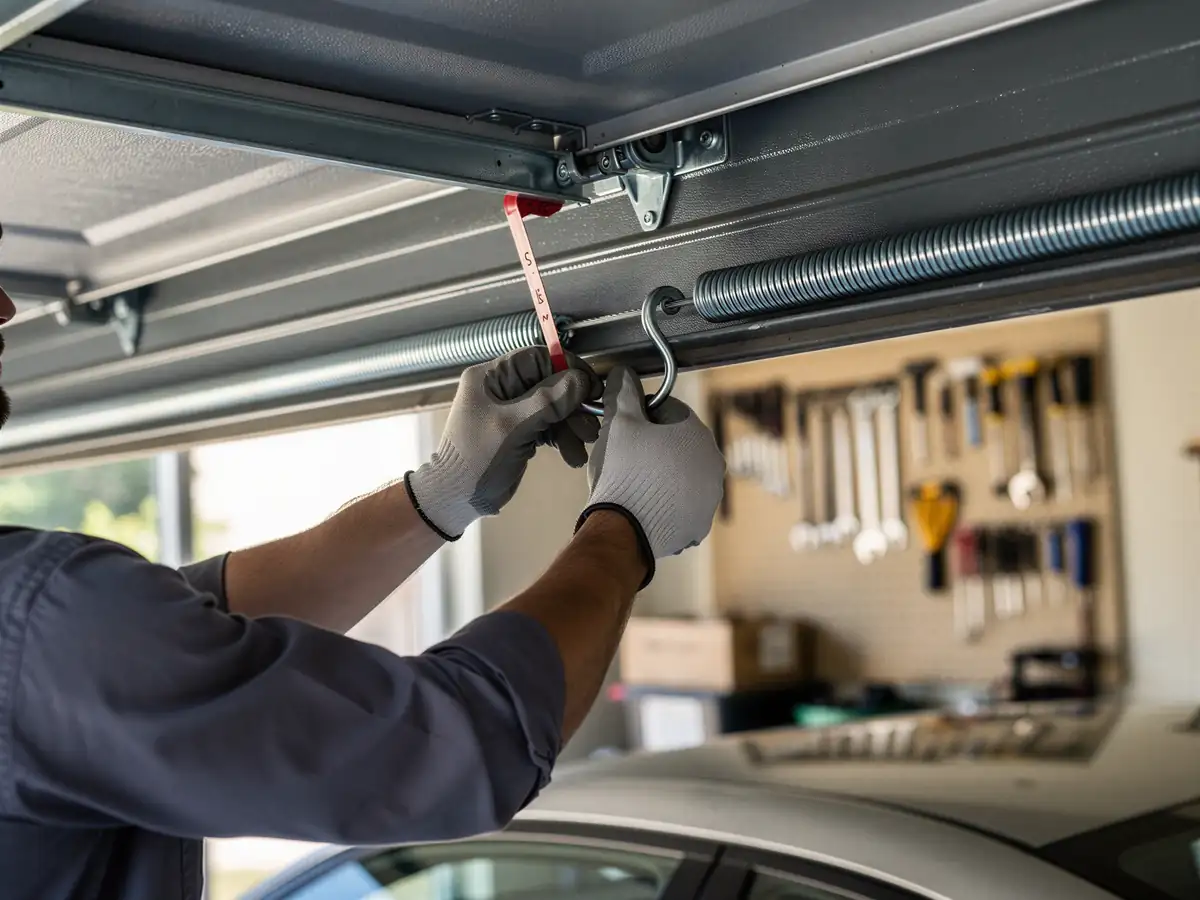
High Point sits in a cold-moderate climate band, which means the door on your garage goes through real seasonal swing - not brutal winters, but enough freeze-thaw cycling that steel torsion springs and track hardware tighten up in January and loosen again by May. That cycling matters more here than it would in a place with a flat climate, because a spring wound to summer tension can bind or snap when cold metal contracts. Across the 13 named areas that make up most of the local housing stock, homes went up between 1976 and 2002, with the bulk clustered in the 1980s and 90s. That's a specific window: it means most of what we see on a service call is original steel-panel doors on torsion hardware that's now pushing 30-40 years old, or a first-generation chain-drive opener that was swapped in once already. Houses near Jamestown and built in that same era, run the same pattern - the climate stresses the spring, the age of the hardware decides whether it holds.
The Problem
A door built or installed during the 1976-2002 run usually has a torsion spring sized to the lighter steel panels of that period, not to any insulated retrofit panel that may have gone on since. When a homeowner upgrades to a heavier insulated door but keeps the original spring and drums, the opener starts working harder than it should, and that shows up as slow travel, a grinding start, or an opener that trips its own safety reversal. Openers from that same build era, especially ones still on their original install, often predate photo-eye safety sensors required under later code, which means a retrofit sensor kit was bolted on later and can be misaligned or wired loose. We also see a lot of single-layer steel panels from this window with no vapor barrier, which isn't a defect - it's just what building code allowed through most of the 80s and 90s - but it does mean condensation and panel rust show up earlier than on a newer insulated door. None of this is unique to one house; it's the pattern across the stock built in this stretch.
What It Costs
We don't have a flat number to quote here, because cost on a 1980s-90s door depends on what's actually failed - a single broken torsion spring on a double door is a different job than a dead opener logic board on hardware old enough that the manufacturer no longer stocks the part. What we can say is that age drives the cost more than brand does: a door built in this window often needs a spring sized to its actual panel weight rather than a stock replacement, and that sizing step takes longer than a straight swap. If the opener is original to a house built in the 1976-2002 range, parts availability is the real variable - some gear kits and logic boards for that generation are still made, some aren't, and that's the thing that moves a bill up or down more than labor does. We'd rather tell a homeowner we need to look at the specific spring and opener before naming a number than guess.
When It Stops Being a DIY Job
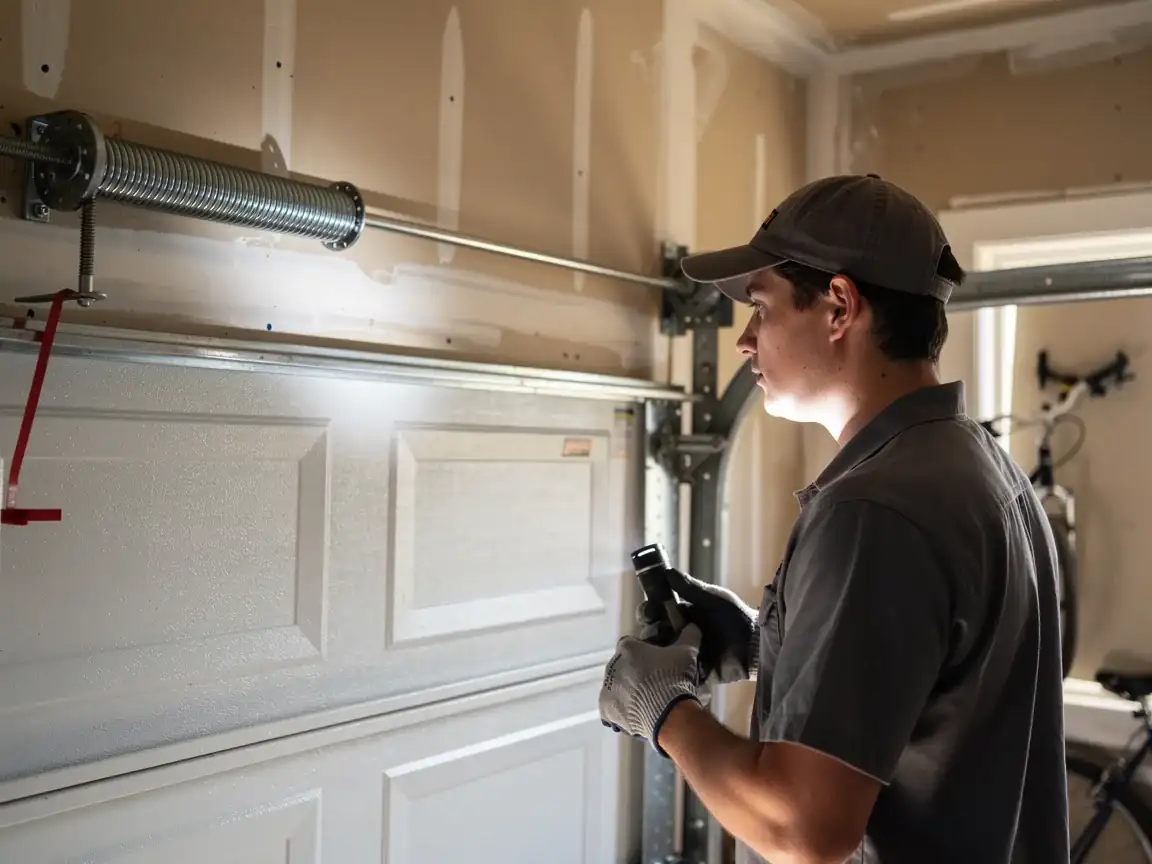
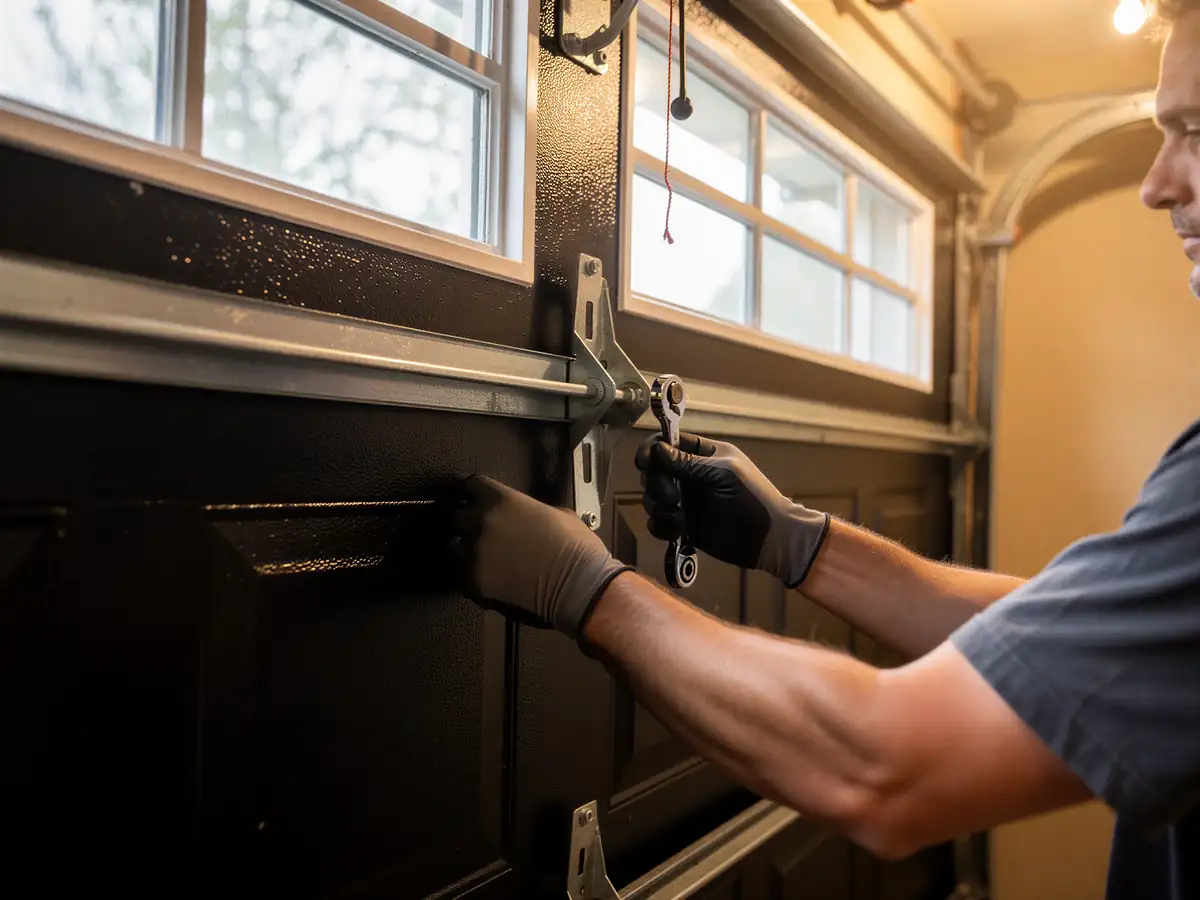
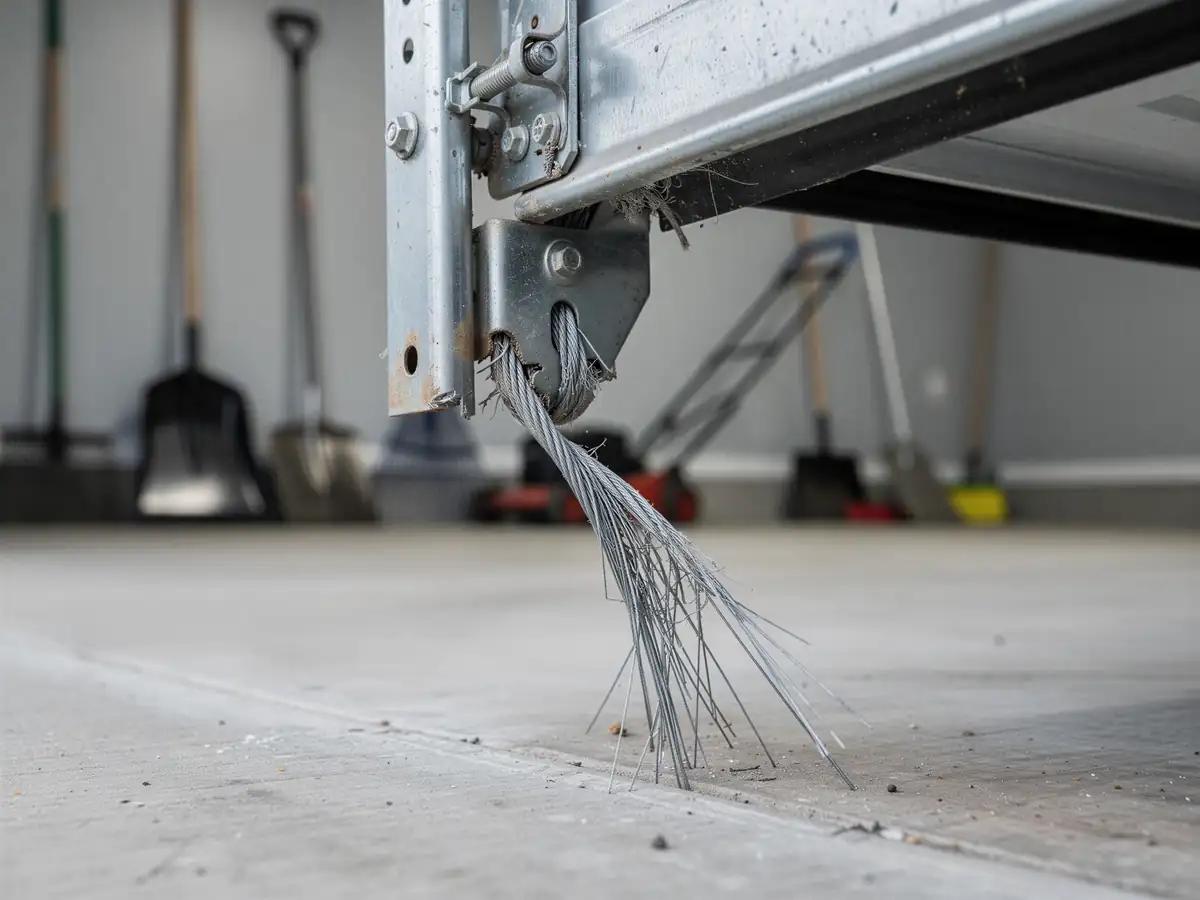
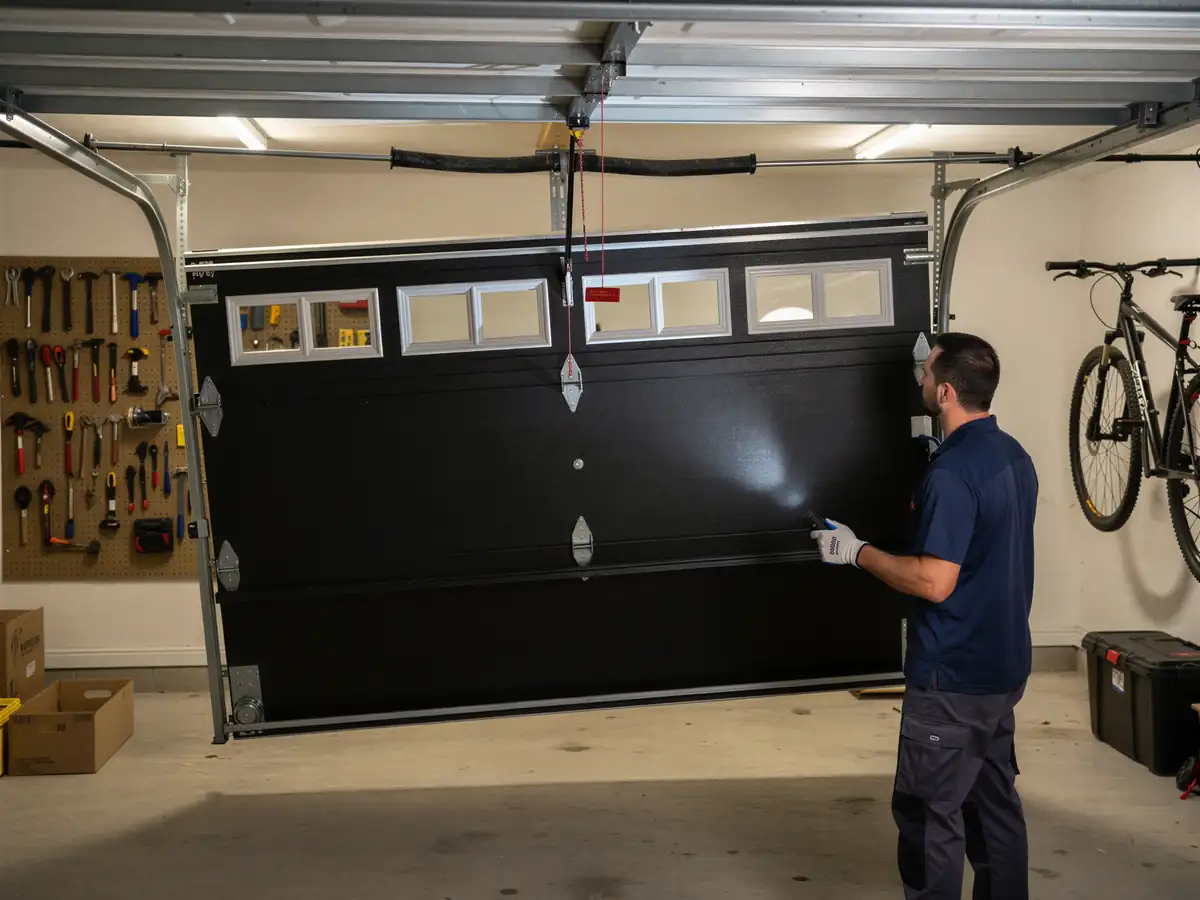
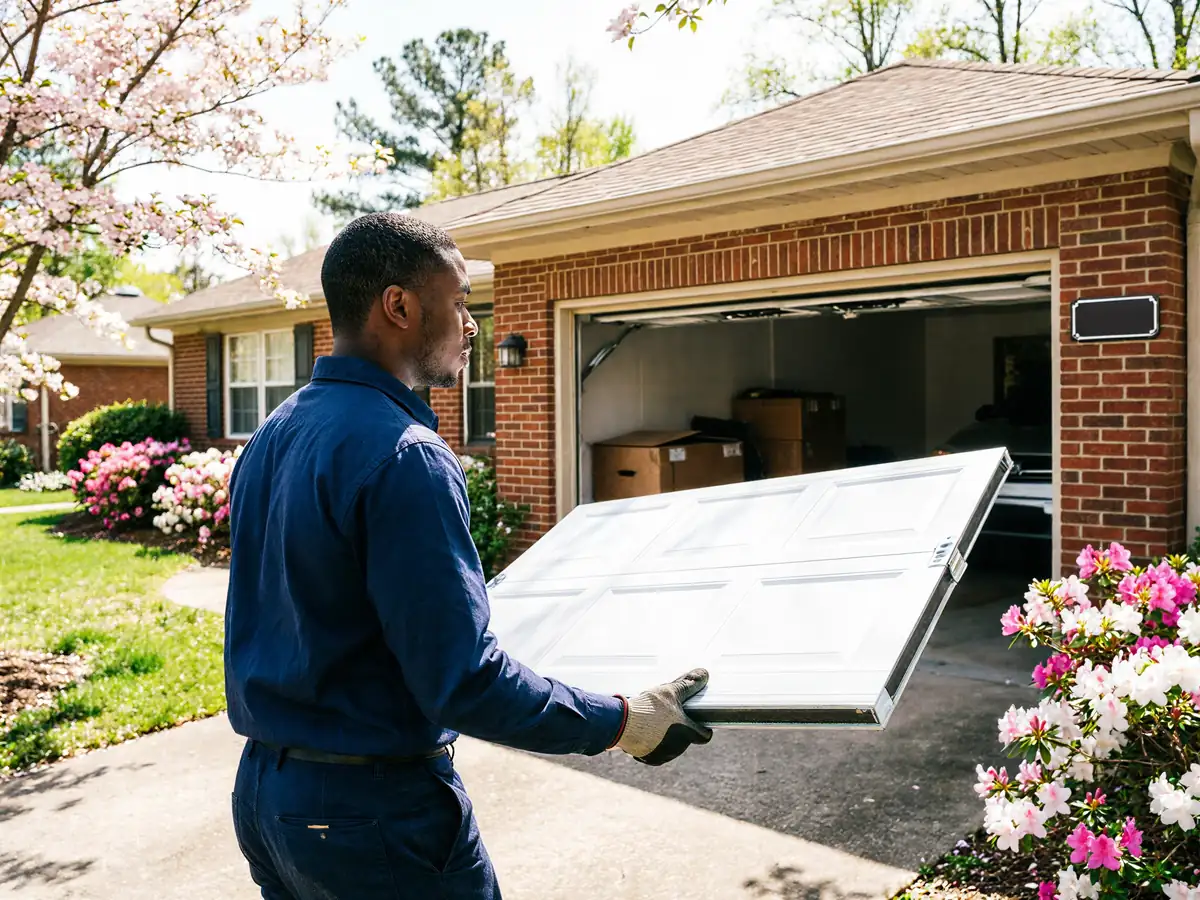
Winding or unwinding a torsion spring on a door from this era is not a safe DIY step - the spring is sized for the original panel weight, and a lot of these doors have had panels swapped or added insulation since, which changes the tension without changing the spring. If the door drops unevenly, or one cable looks frayed, stop and call; that's a wound-spring system under load, and it can take a hand off. Where DIY is reasonable: tightening loose roller brackets, lubricating hinges, or replacing a worn weatherstrip at the bottom panel - all common on a door that's been in service since the 80s or 90s. Our honest limit: if a door from this build window has a cracked wood-composite panel or an opener logic board that's no longer made, repair stops making sense and replacement is the straighter path, even though that's not the answer every homeowner wants to hear.
How it works
From “it’s stuck” to “it’s fixed”
01
Tell us what’s wrong
Describe the symptom - won’t open, loud bang, opener runs but the door won’t move.
02
On-site diagnosis
A technician tests the door under power and by hand and finds what actually failed.
03
Clear, up-front plan
You get the fix that’s needed and what drives the cost - before any work starts.
04
Repaired & tested
The repair is done, the door is set true and tested, and the work area left clean.
Not sure which repair your door needs in High Point, NC? Describe what it’s doing - every job starts with a diagnosis.
Straight answers about garage door repair in High Point. Still unsure? Ask us directly.
Why does my garage door spring keep breaking even though I replace it?
If your house was built in the 1976-2002 window common across this area, the original spring was likely sized for the panel weight of that period. If panels were upgraded or insulation added later without resizing the spring, it runs over-tensioned and fails again. The fix is matching spring size to current door weight, not just swapping in the same part.
Is my opener too old to repair?
It depends on the model and whether parts are still made. Openers original to homes built in the 1980s or 90s sometimes have logic boards or gear kits no longer stocked by the manufacturer. We'd need to look at the specific unit before telling you whether repair or replacement makes more sense.
Does High Point's climate affect my garage door?
Yes - High Point sits in a cold-moderate band, so torsion springs and track hardware go through real seasonal tightening and loosening. It's not extreme cold, but enough cycling that a spring tensioned for summer can bind or break in winter, especially on older hardware.