Garage Door Off Track: Why It Happens Here and What To Do
Garage door off track in High Point? Houses built 1976-2002 on standard steel track are prone to this. We explain why and how booking works across the service area.
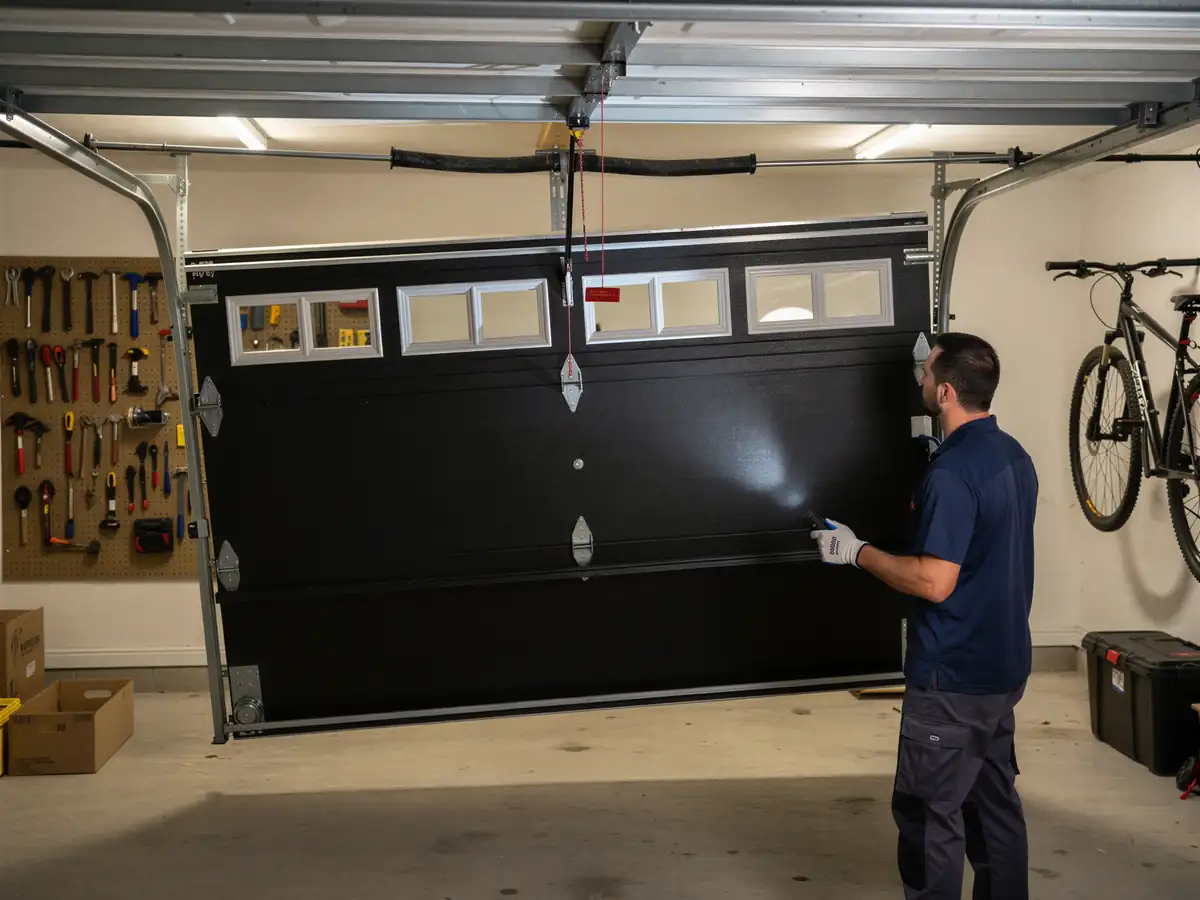
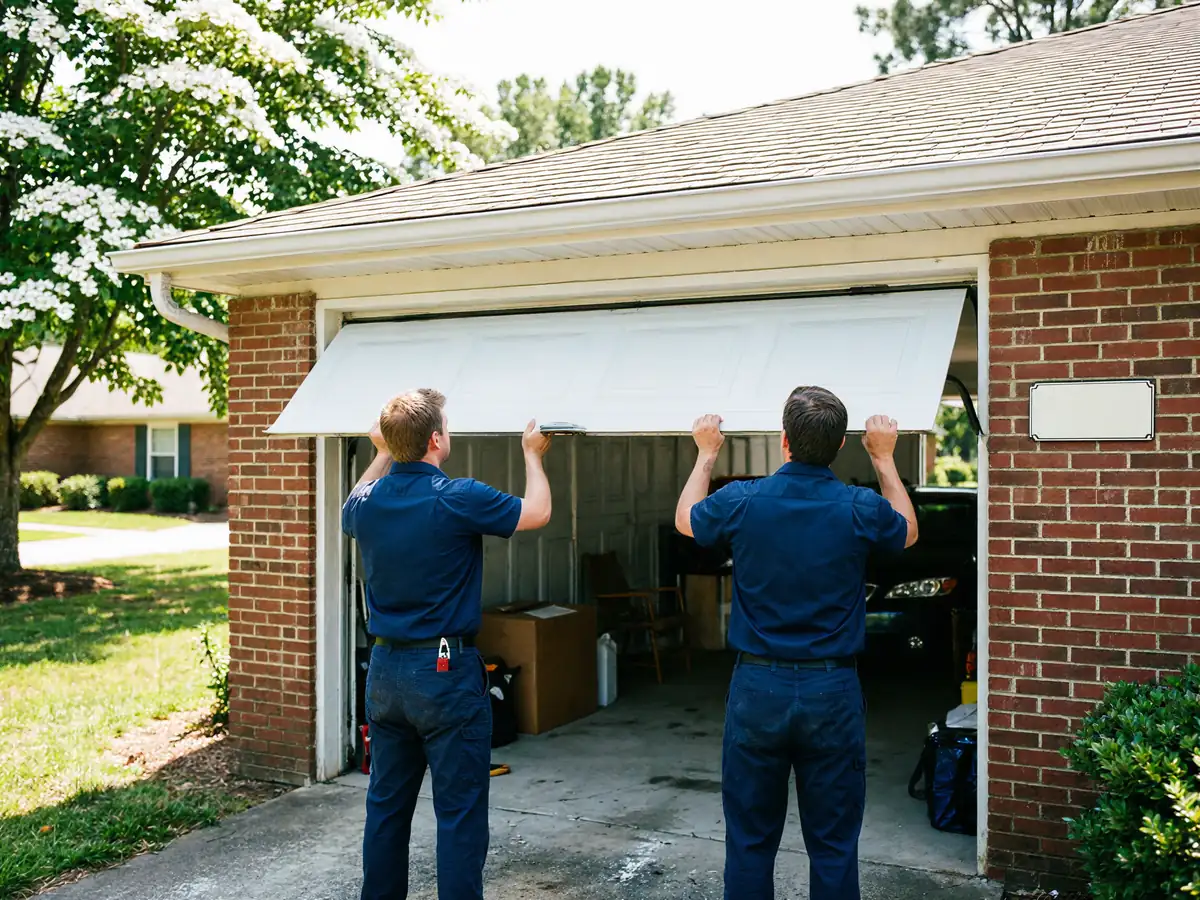
If the door is off track but still sitting mostly inside the opening
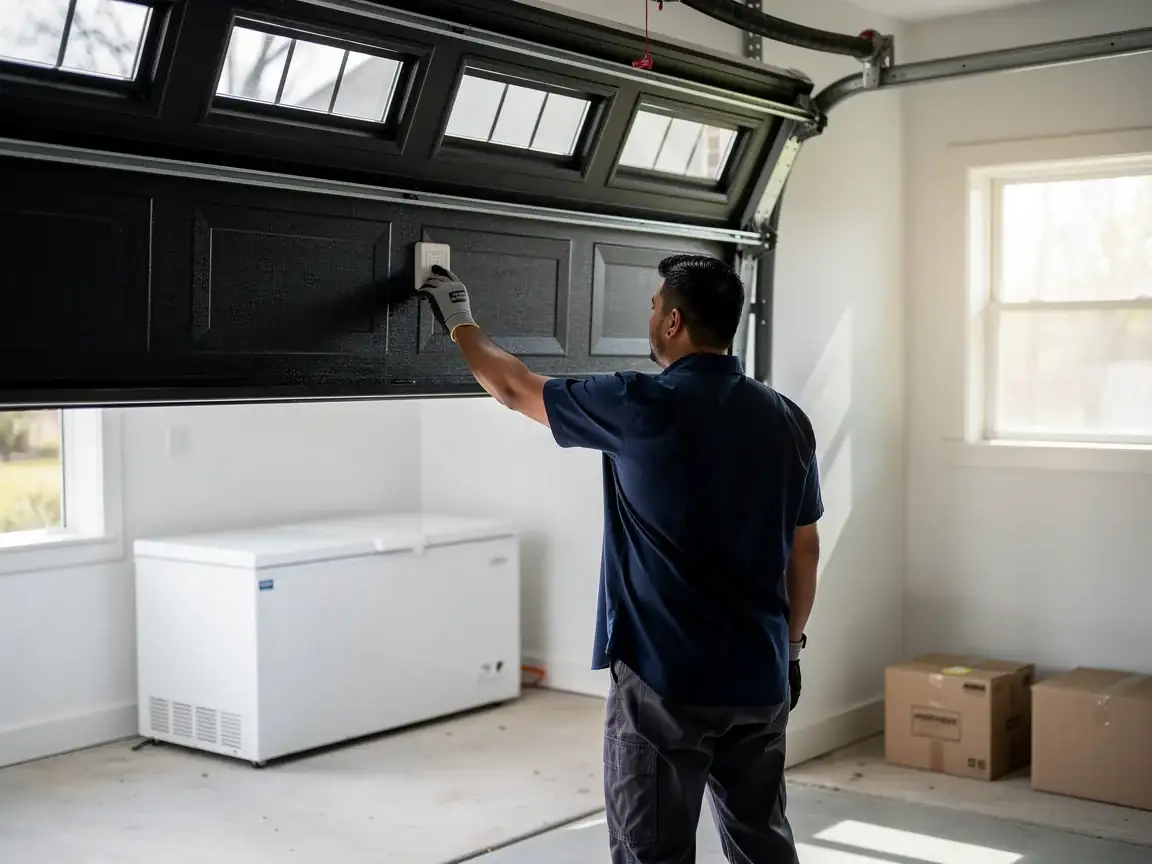
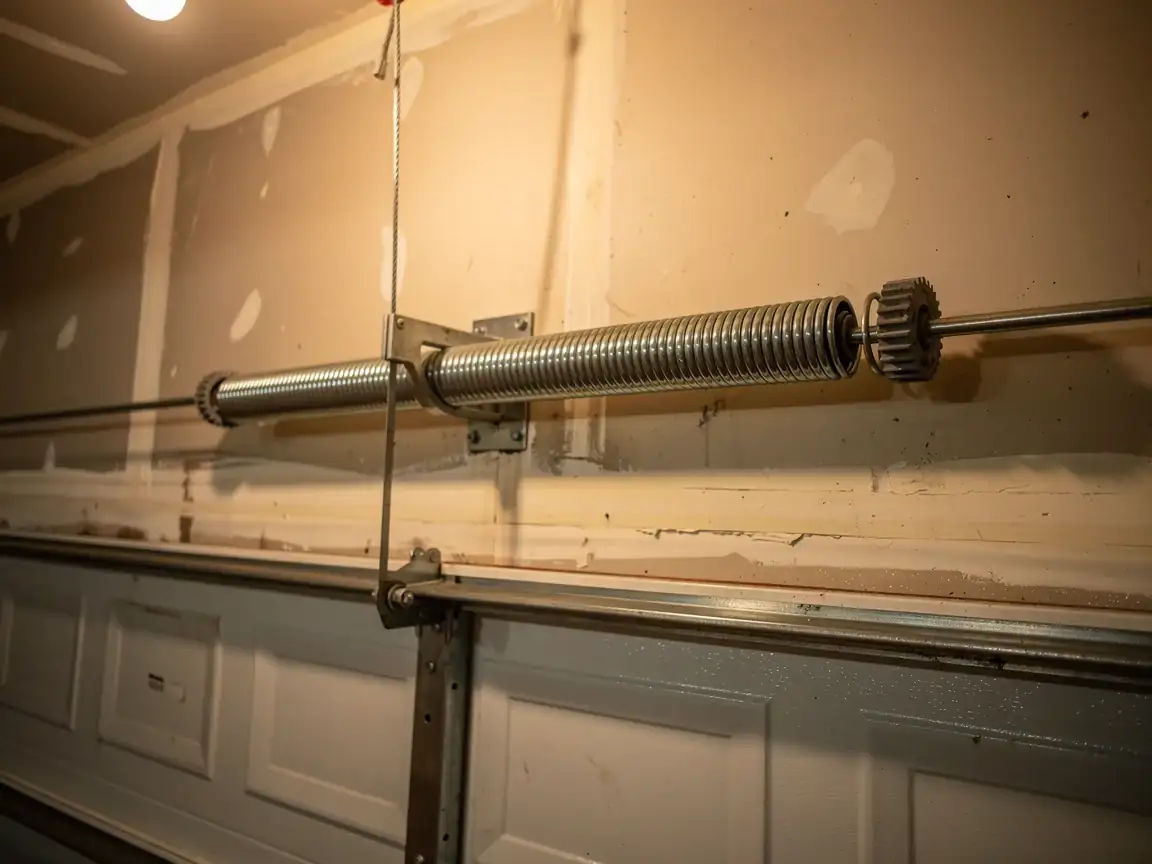
You can sometimes get it to limp along by hand - don't run the opener. Pulling the release cord and trying to muscle the door back into the rollers is the part where people get hurt or bend the track worse. The cable and spring are still under load even when the door looks like it's just sitting crooked.
02
What you can safely check
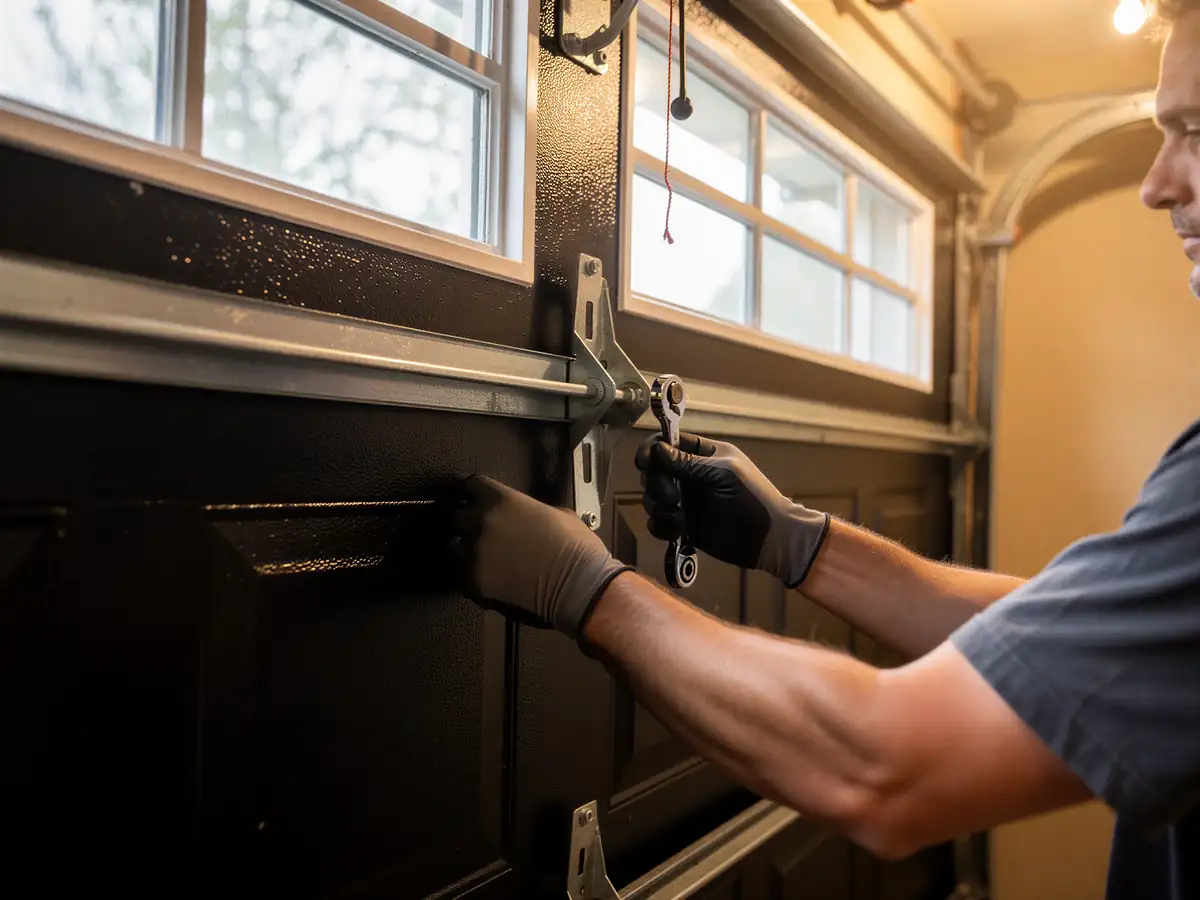
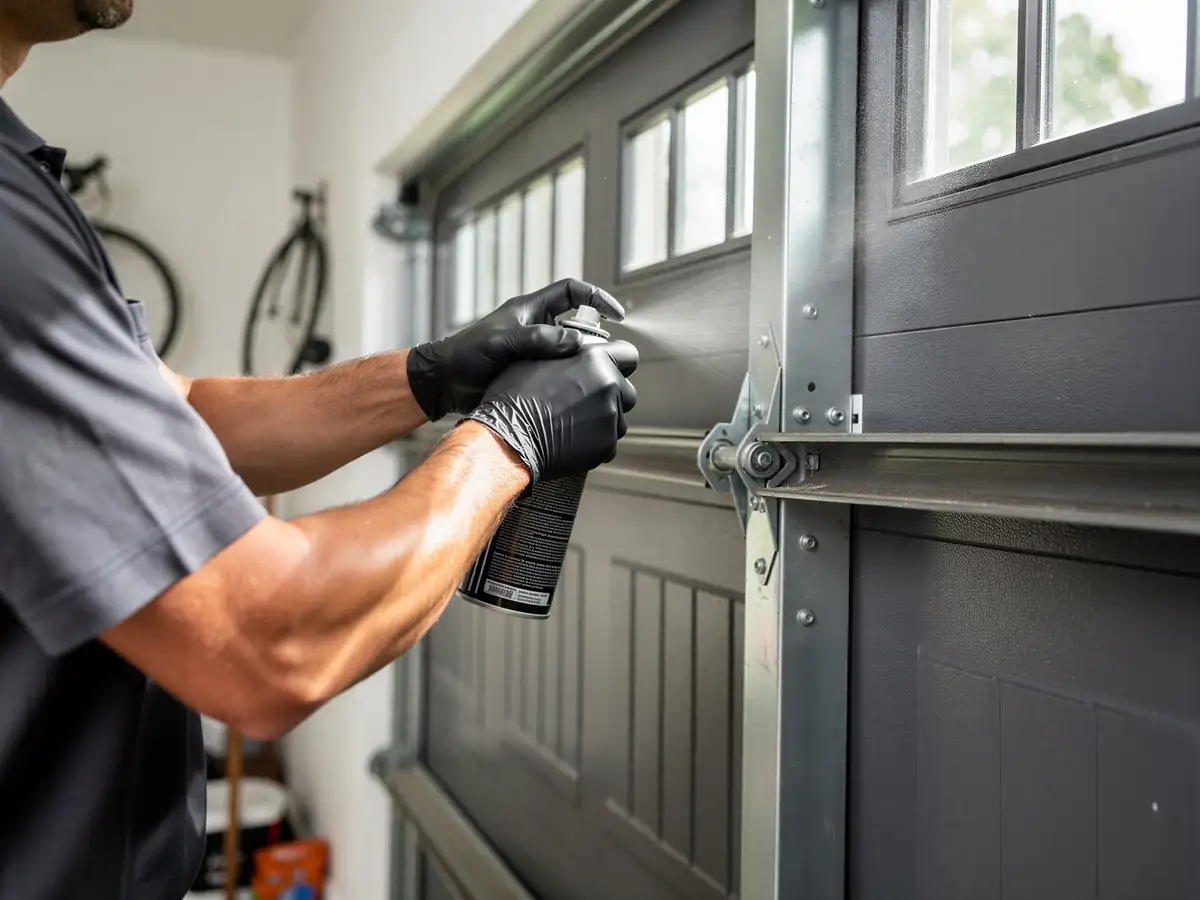
Whether the bottom bracket has pulled loose from the panel, whether a roller has popped clean out of the track, and whether the track itself is bent or just knocked out of alignment at a bracket. If the track is bent, that's a parts job, not an adjustment - bent steel doesn't bend back true, and trying to force it usually cracks the panel it's attached to.
03
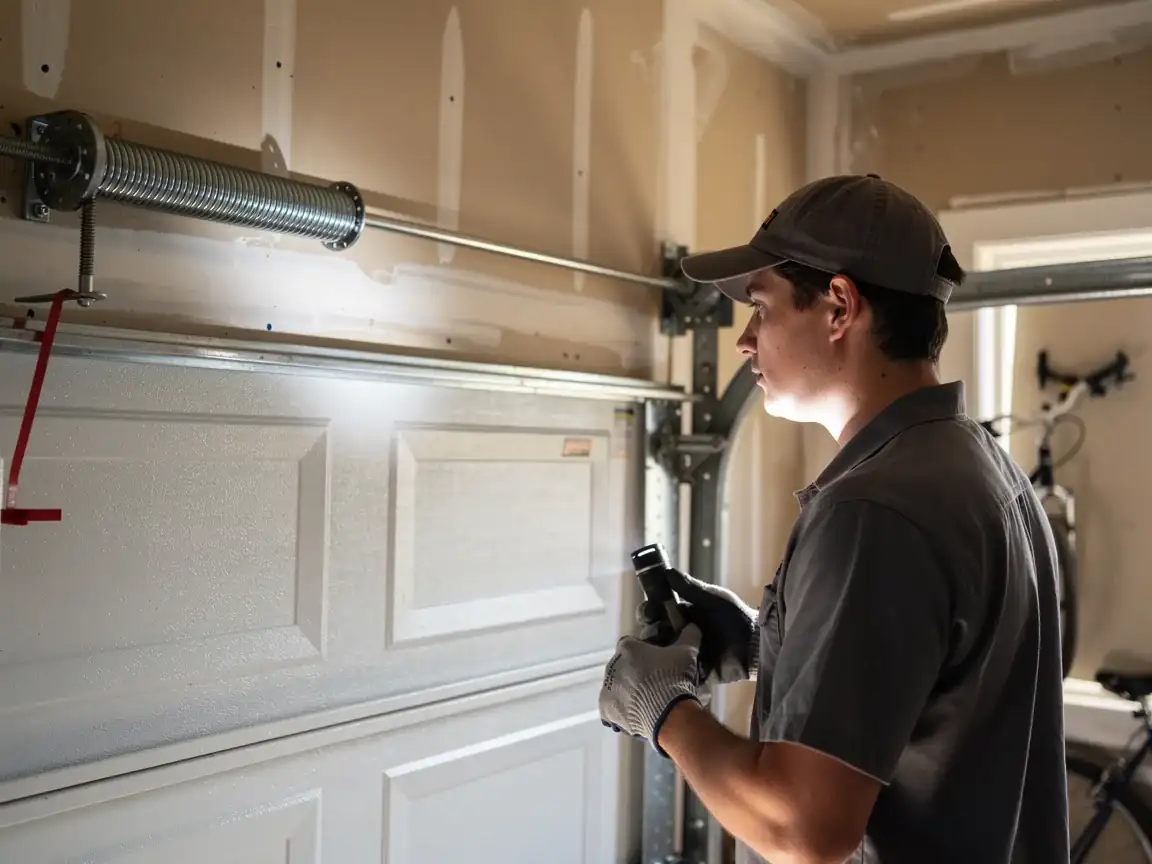
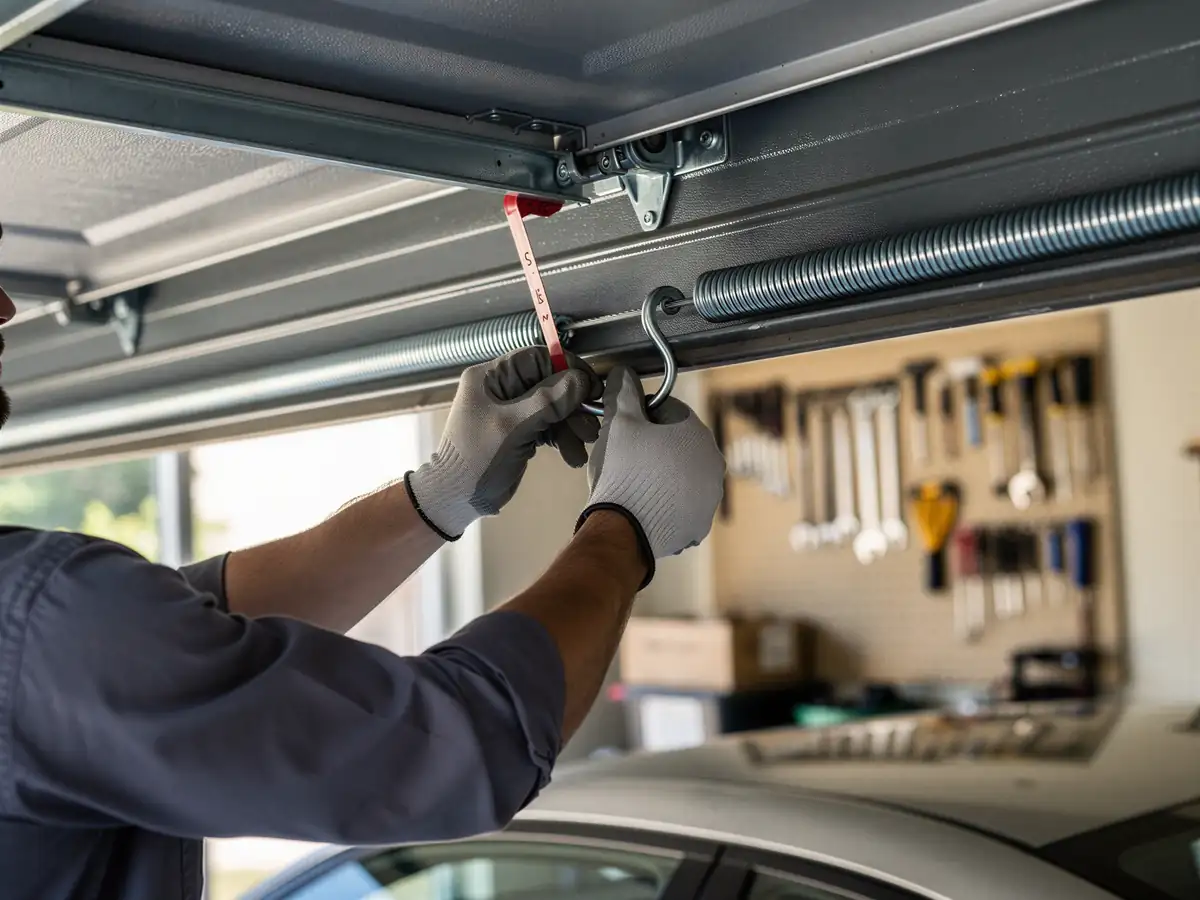
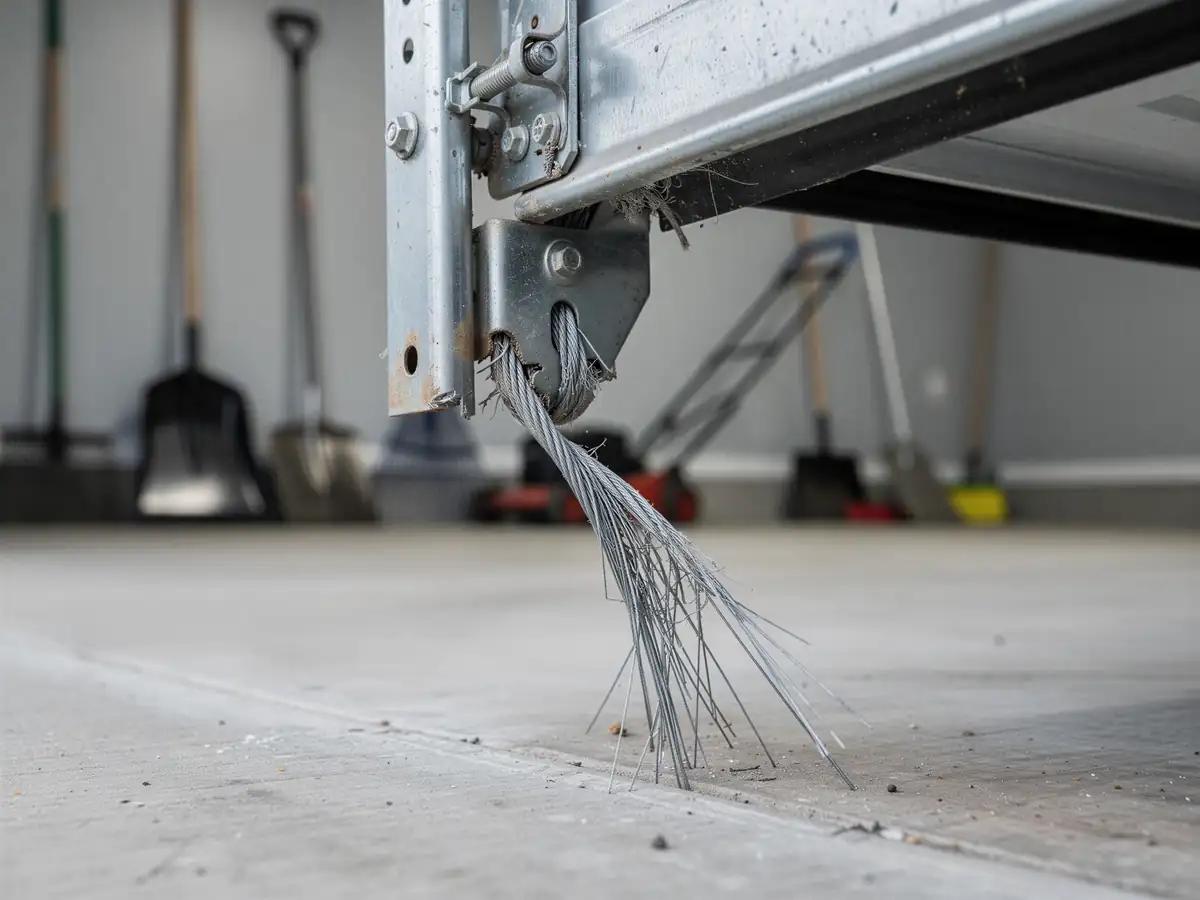
One honest limit: if a cable has jumped the drum or the spring is broken along with the track coming off
That's a torsion-side repair under load. That's not a DIY afternoon regardless of how handy you are - the spring can take fingers. Call it in at that point rather than working around it.
The Symptom
A door off track shows up a few ways: it hangs crooked in the opening, one bottom corner sits lower than the other, it binds and grinds partway up, or a roller is visibly sitting outside the track rail instead of inside it. Sometimes the opener still runs but the door barely moves, straining against a track it's no longer riding in correctly.
Most of the time this isn't one dramatic event - it's wear. A roller wears down over years, the track bracket loosens a quarter inch at a time, or a door gets bumped by a car bumper or a kid's bike and nobody notices the track shifted until the door starts grinding. In a lot of houses built in the 1980s and 90s, the original track hardware is still in and the rollers have simply outlived their working life.
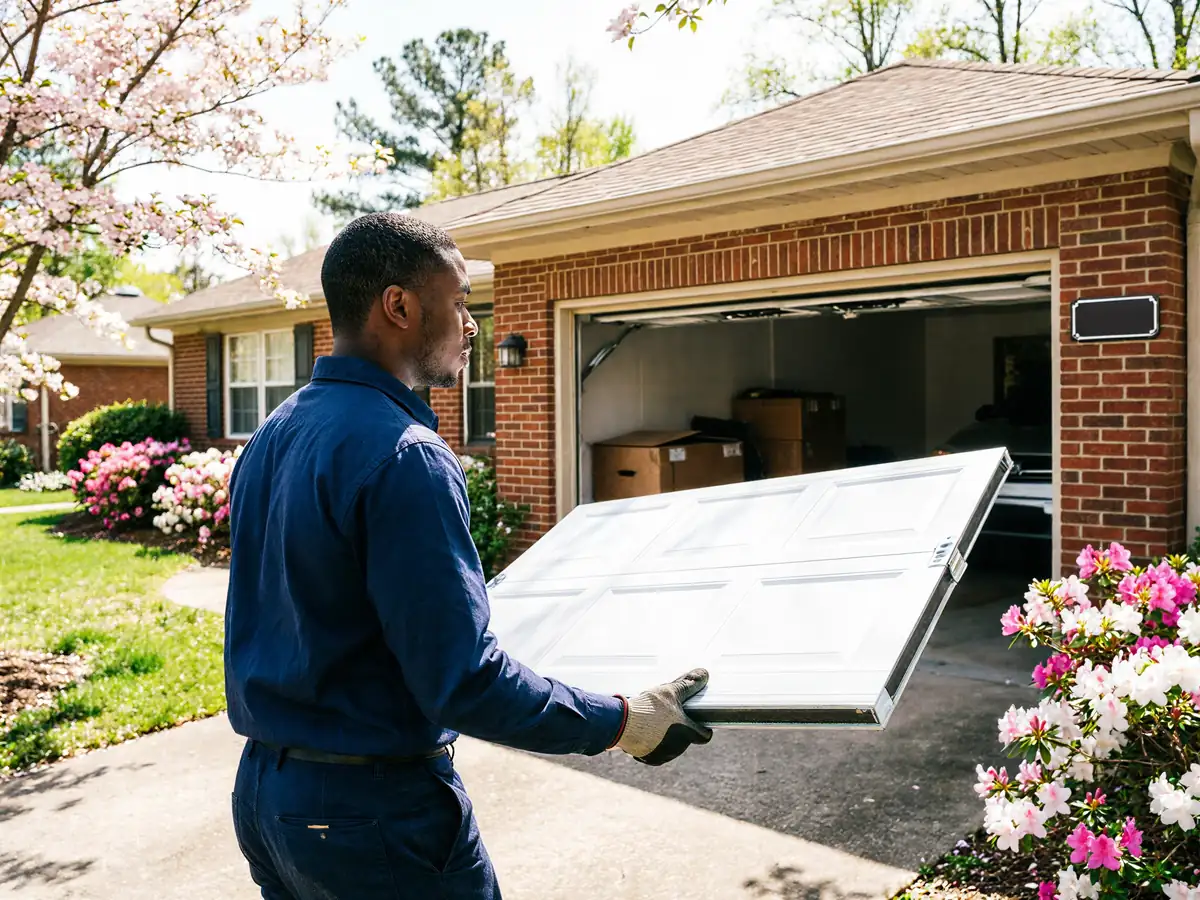
If the door came off track suddenly and hard - like it dropped or slammed partway - stop using it and don't force the opener again. Repeated attempts to run a door that's already off track usually turn a track repair into a track-and-panel repair.
Getting It Booked In
When you call, tell us what you're seeing: crooked door, roller out of the rail, grinding noise, or a door that stopped moving mid-cycle. That tells us whether we're bringing a tech for a straightforward re-seat and bracket tighten, or a tech who's ready to replace bent track and worn rollers on the spot.
We work across the High Point service area, which covers 49,173 households and roughly 28,580 owner-occupied houses spread over a wide mix of neighborhoods built mostly between the late 1970s and early 2000s. That matters for parts - a lot of these doors are still running original or first-replacement rollers and track, which is the hardware most likely to wear out and let a door walk off its rail.
One limitation worth saying plainly: if your track or rollers need parts we don't carry on the truck, we'll quote the fix on site but may need to come back for the install. We'd rather tell you that up front than have you wait at home for a truck that shows up without the part.
Why This Fails Locally
01
The housing stock across this service area runs mostly 1976 to 2002
With a median around 1987 - that's a long run of standard steel track and roller hardware that was never upgraded when the opener got swapped out. Track brackets loosen with age, and a door that's been riding slightly misaligned for years is one bump or one hard freeze away from a roller jumping the rail entirely.
02
The climate here is cold-moderate
Which means real freeze-thaw cycling through the winter months. Steel track contracts in cold weather, and a bracket that's already a little loose gets worse faster when the metal is shrinking and expanding season after season. Garage doors that face colder mornings tend to show track and roller wear sooner than the same door would in a warmer climate, simply from the extra stress on fasteners and rail alignment.
03
Put those two things together
Older original hardware plus a climate that works loose fasteners harder - and off-track doors show up more often here than they would in a newer subdivision or a milder climate. It's not bad luck, it's the combination of age and weather doing what it does to steel on a garage wall.
How it works
From “it’s stuck” to “it’s fixed”
01
Tell us what’s wrong
Describe the symptom - won’t open, loud bang, opener runs but the door won’t move.
02
On-site diagnosis
A technician tests the door under power and by hand and finds what actually failed.
03
Clear, up-front plan
You get the fix that’s needed and what drives the cost - before any work starts.
04
Repaired & tested
The repair is done, the door is set true and tested, and the work area left clean.
Not sure which repair your door needs in High Point, NC? Describe what it’s doing - every job starts with a diagnosis.
Straight answers about garage door repair in High Point. Still unsure? Ask us directly.
Why did my garage door suddenly come off track with no warning?
It's rarely sudden - usually a bracket or roller has been loosening for a while and finally let go. In houses built in the 1980s-90s range, original track hardware has often just worn past its limit. A bump from a car or a hard freeze-thaw cycle is often the final push, not the actual cause.
Is a garage door off track always a full replacement?
No. If the track is straight and the rollers and brackets are intact, it's usually a re-seat and tighten. It becomes a parts job when the track itself is bent or the rollers are worn past spec - bent track doesn't straighten back true, so that section gets replaced rather than forced back into shape.
Can cold weather really cause a garage door to go off track?
Indirectly, yes. Steel track contracts in cold weather, which puts extra stress on brackets and fasteners that are already a little loose from age. Over repeated freeze-thaw cycles through a cold-moderate winter, that stress adds up and makes an already-worn track more likely to let a roller jump the rail.