Spring Repair for Thomasville's 1980s Garage Doors
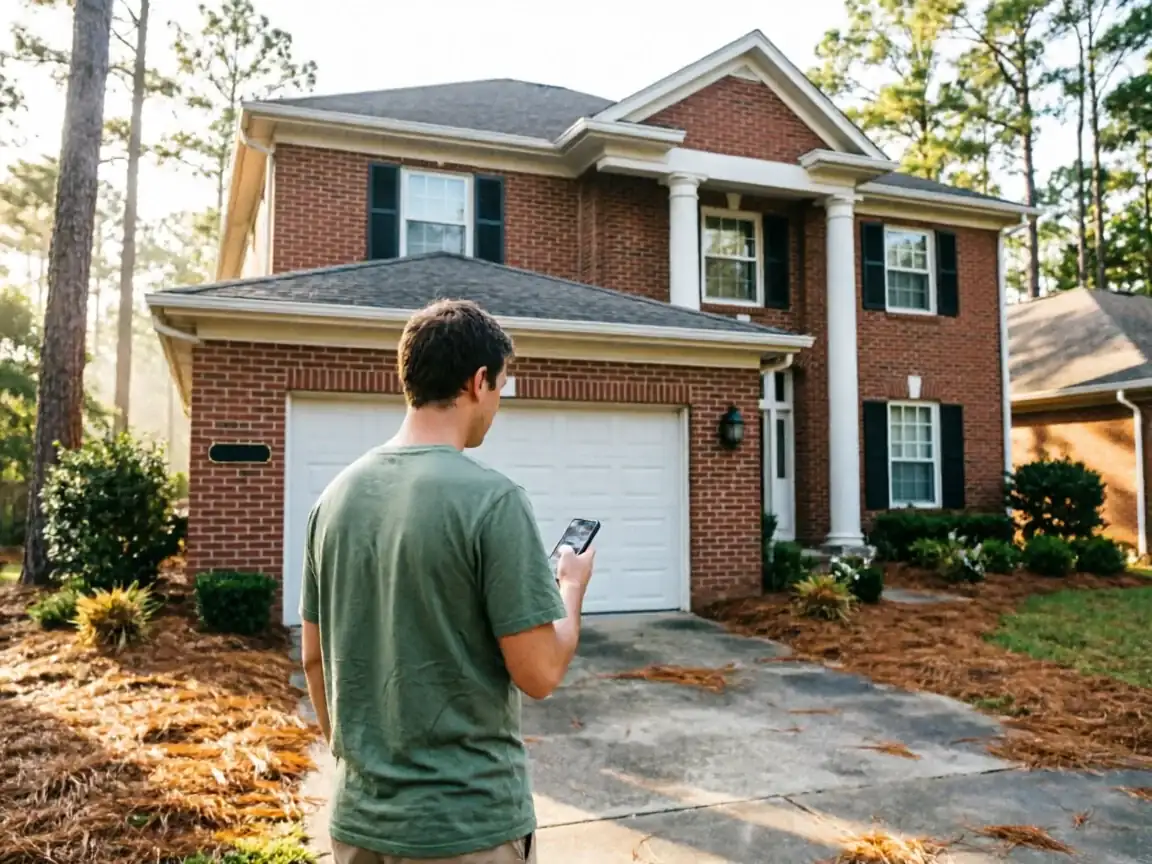
Thomasville homes went up mostly in the early 1980s - steel sectional doors on single-torsion springs. We cover the 9-mile run from High Point to fix them.
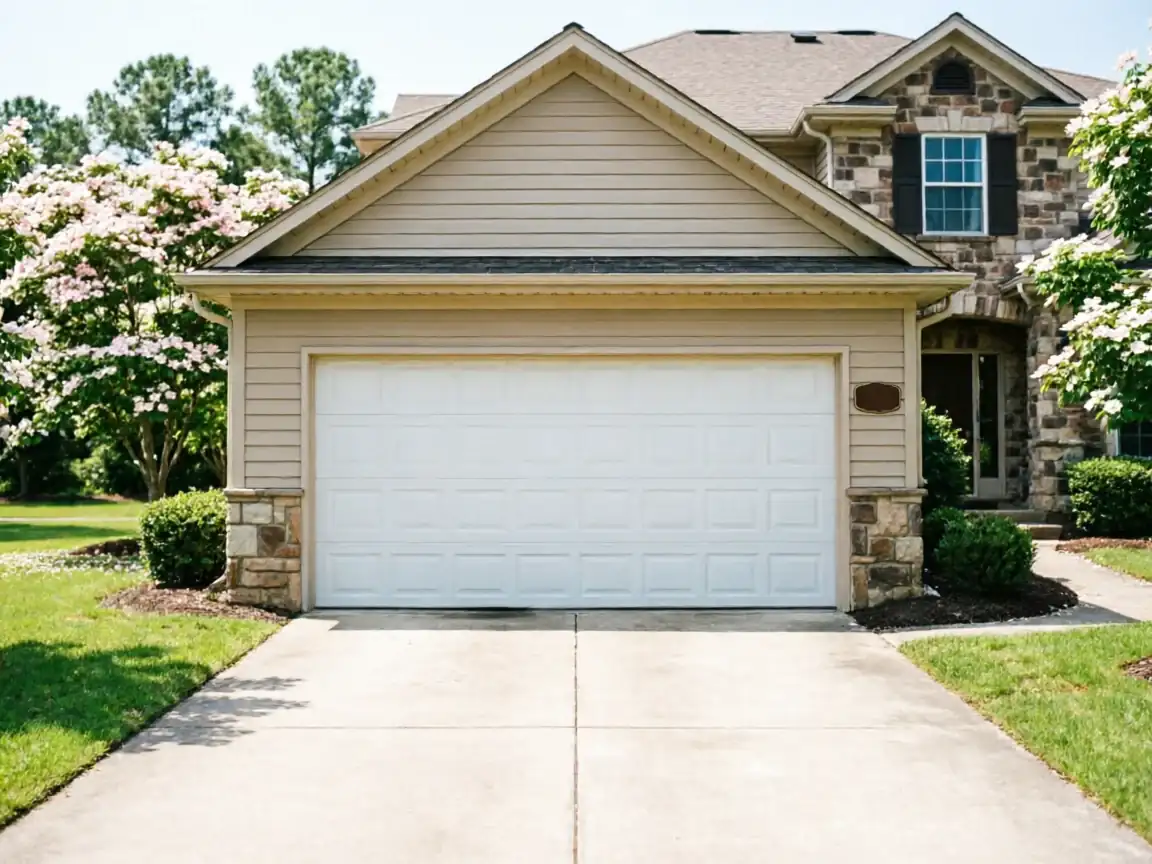
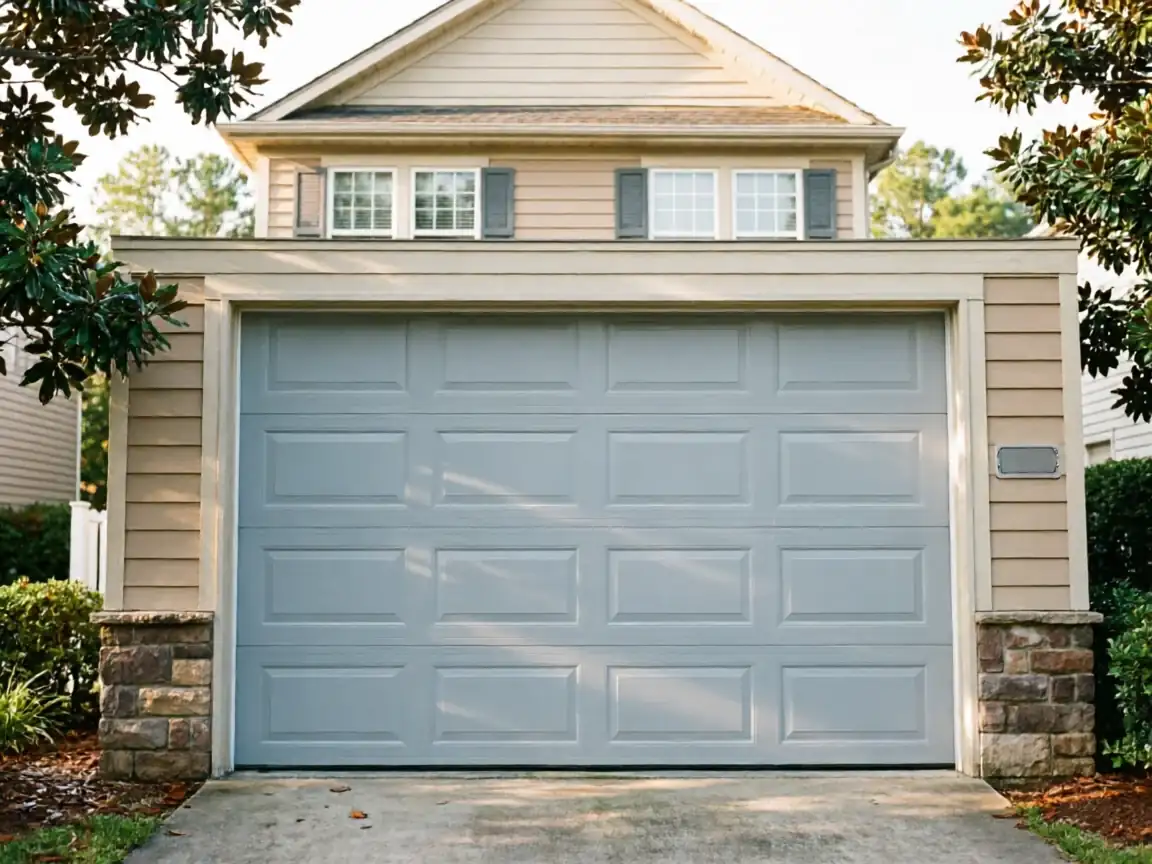
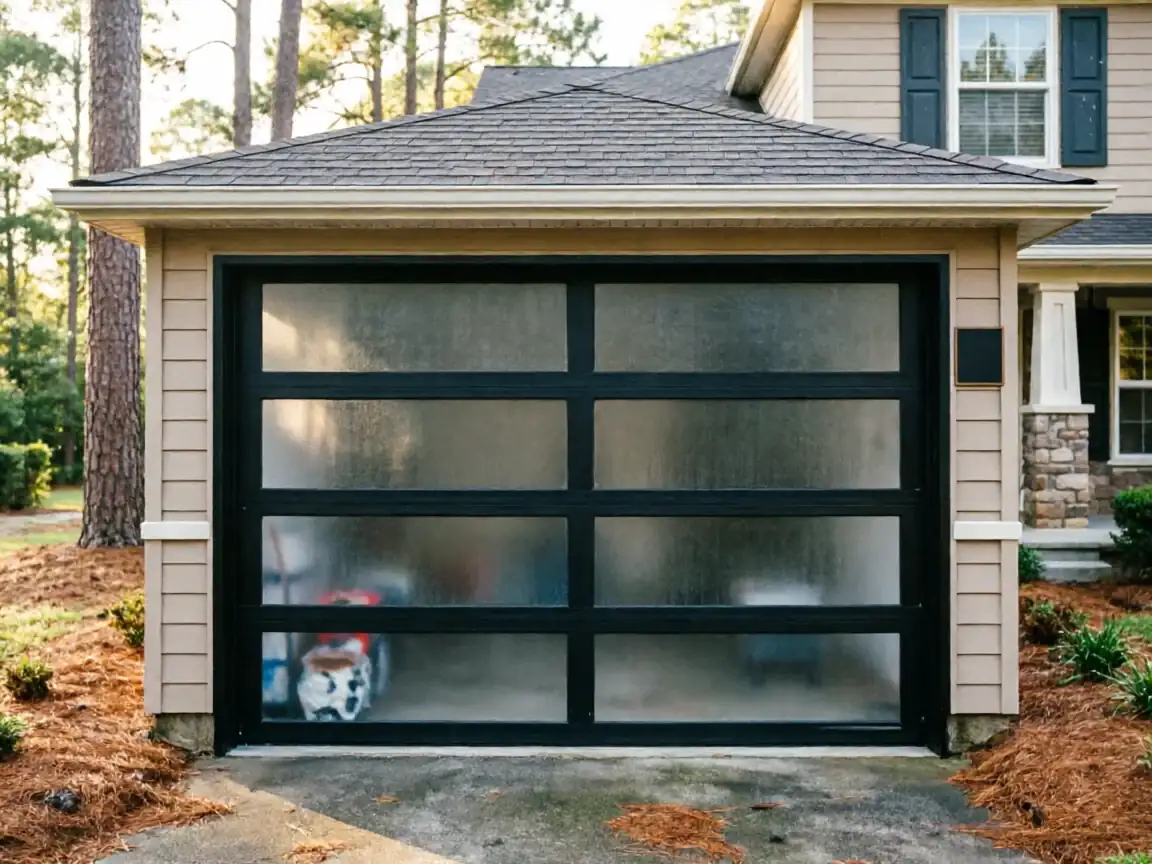
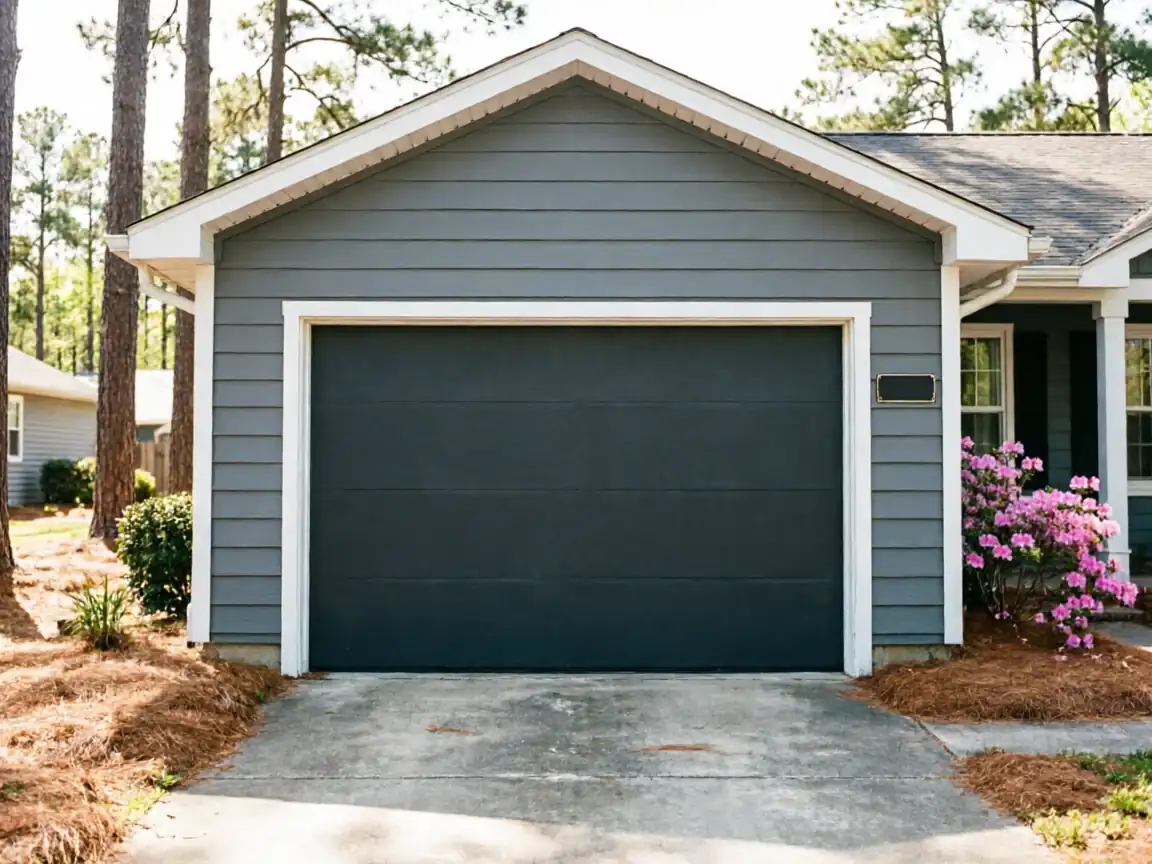
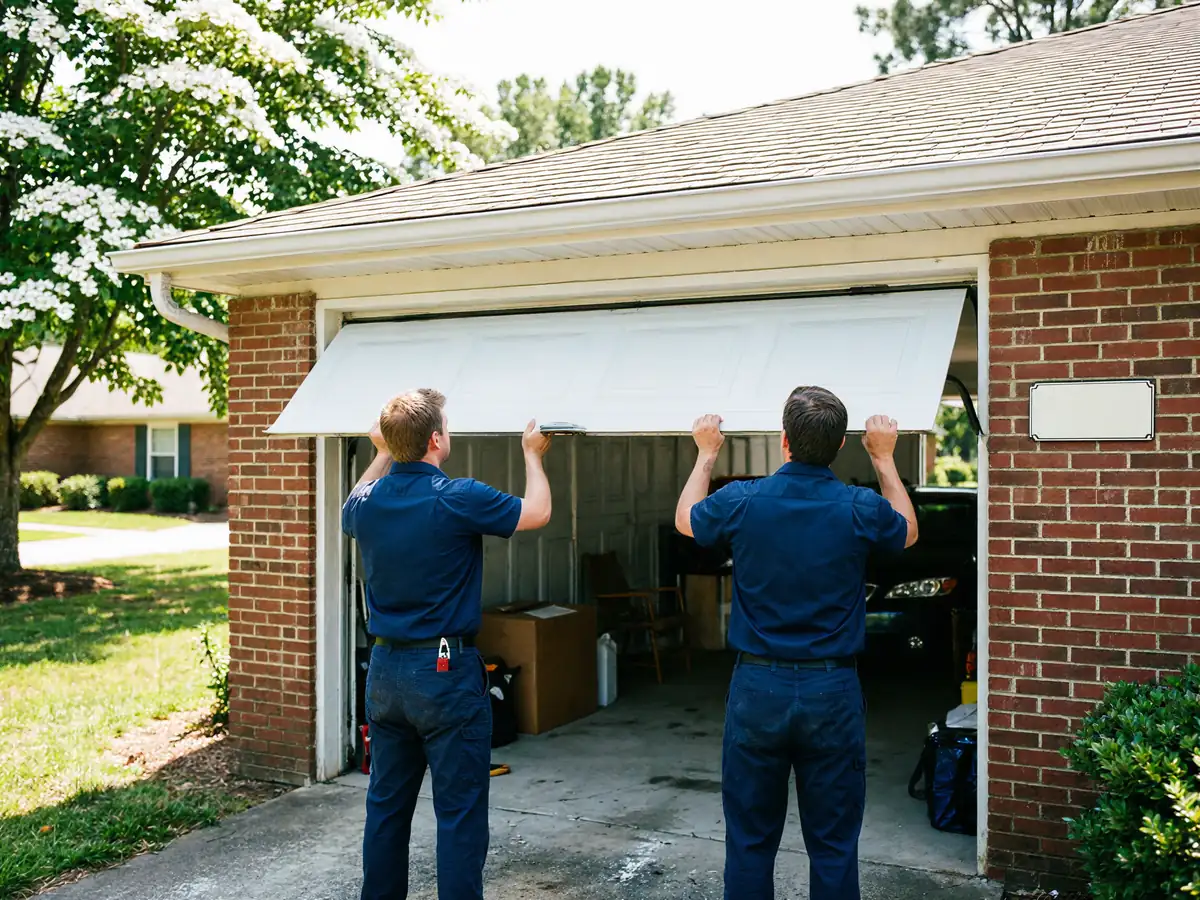
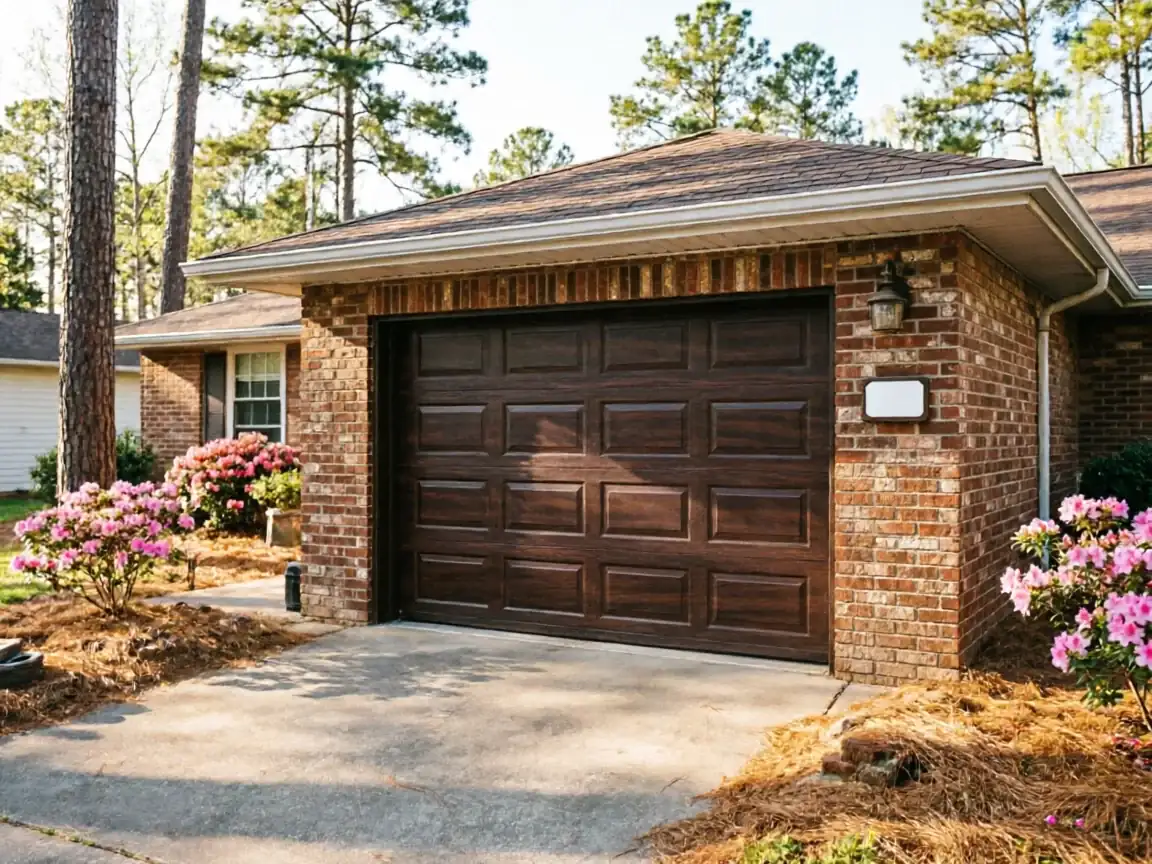
Most of the doors we see in Thomasville are steel sectional panels on standard 7-foot openings, built to match the double-car garages that went up around 1983 when this part of the county filled in. That era mostly used a single torsion spring mounted center-shaft over the header, sized for the lighter 2-inch steel panel doors of the time, not the heavier insulated doors you'd find on newer builds. We carry springs matched to that standard-door weight range, along with the shafts, cable drums, and end bearing plates that wear alongside them. We don't keep every oddball spring on the truck - if a door's been retrofitted with a heavier insulated panel somewhere along the way, or if it's a size outside the common run, that part may need to be ordered, and we'll tell you that up front rather than guess at a fix that won't hold. Most Thomasville jobs, though, are the standard setup, and those we handle from stock the same day we're out there.
The Symptom
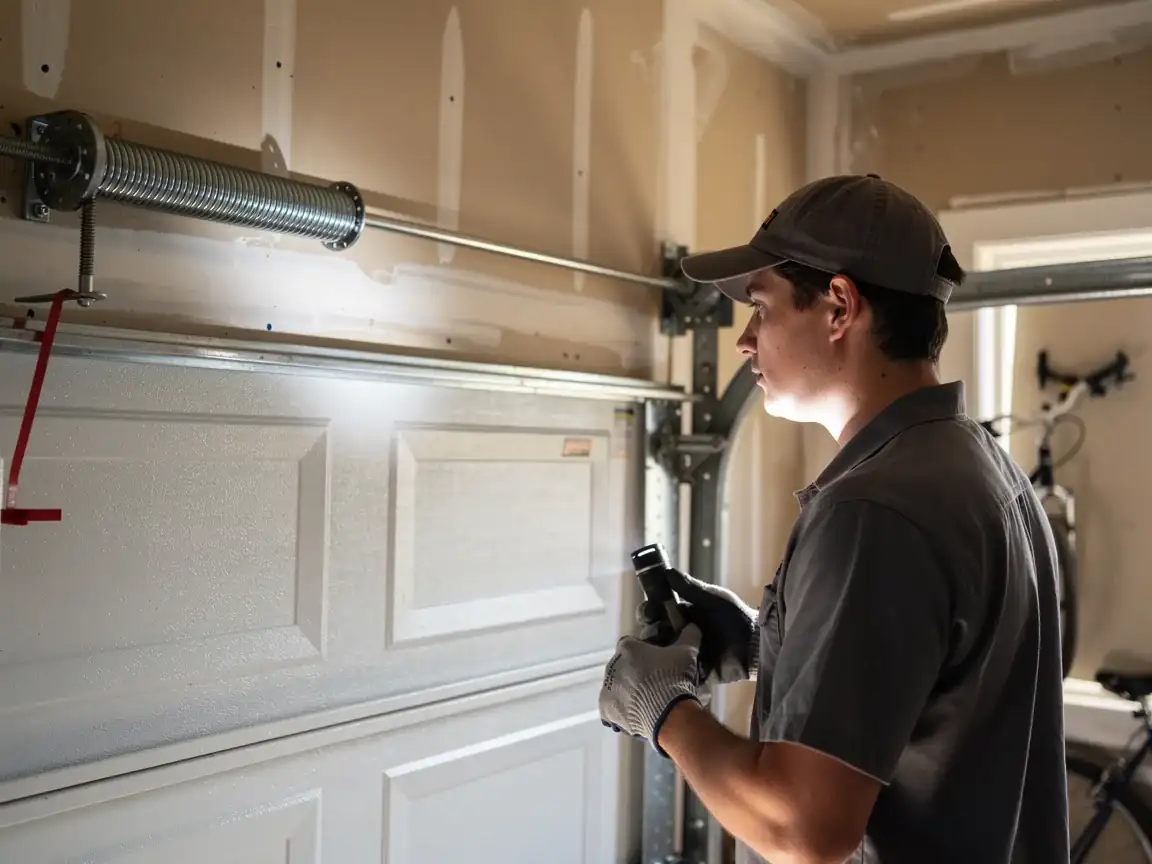
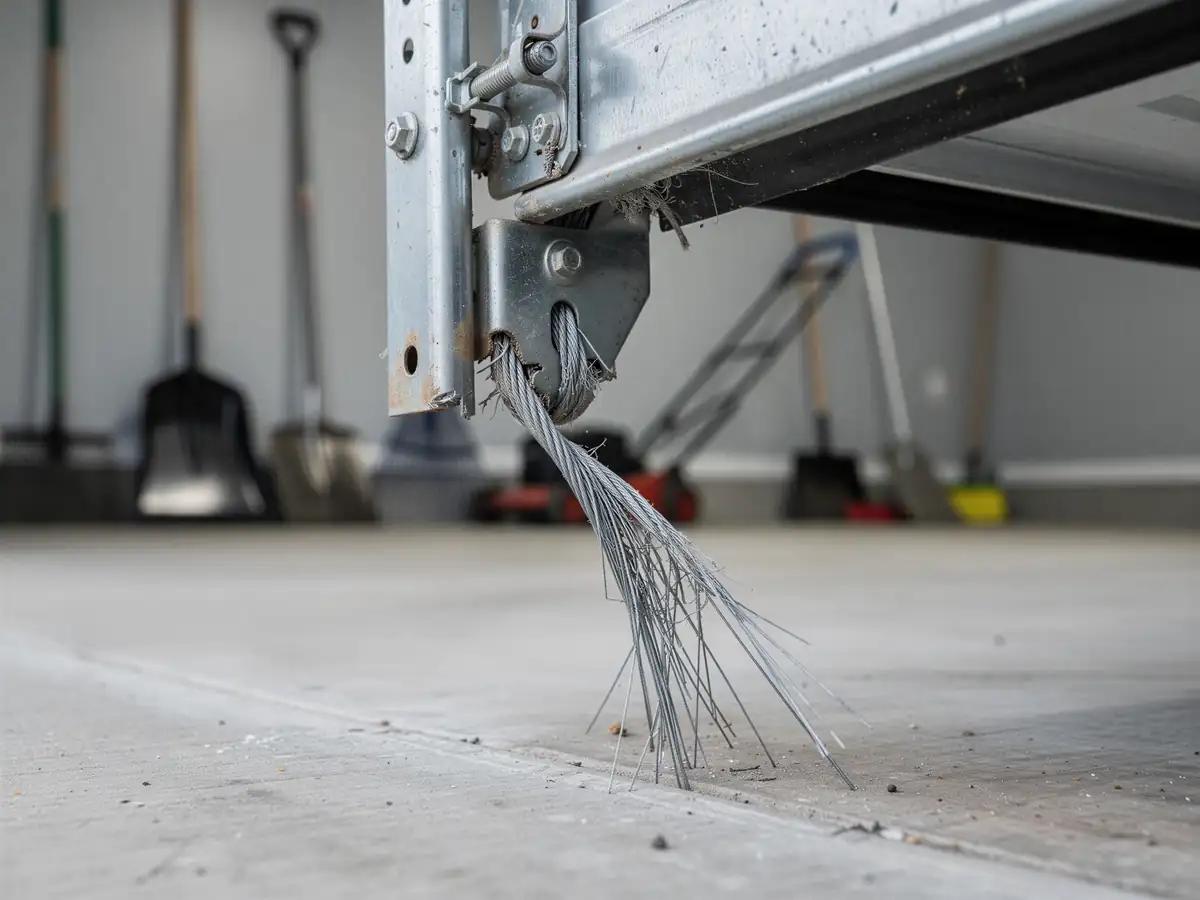
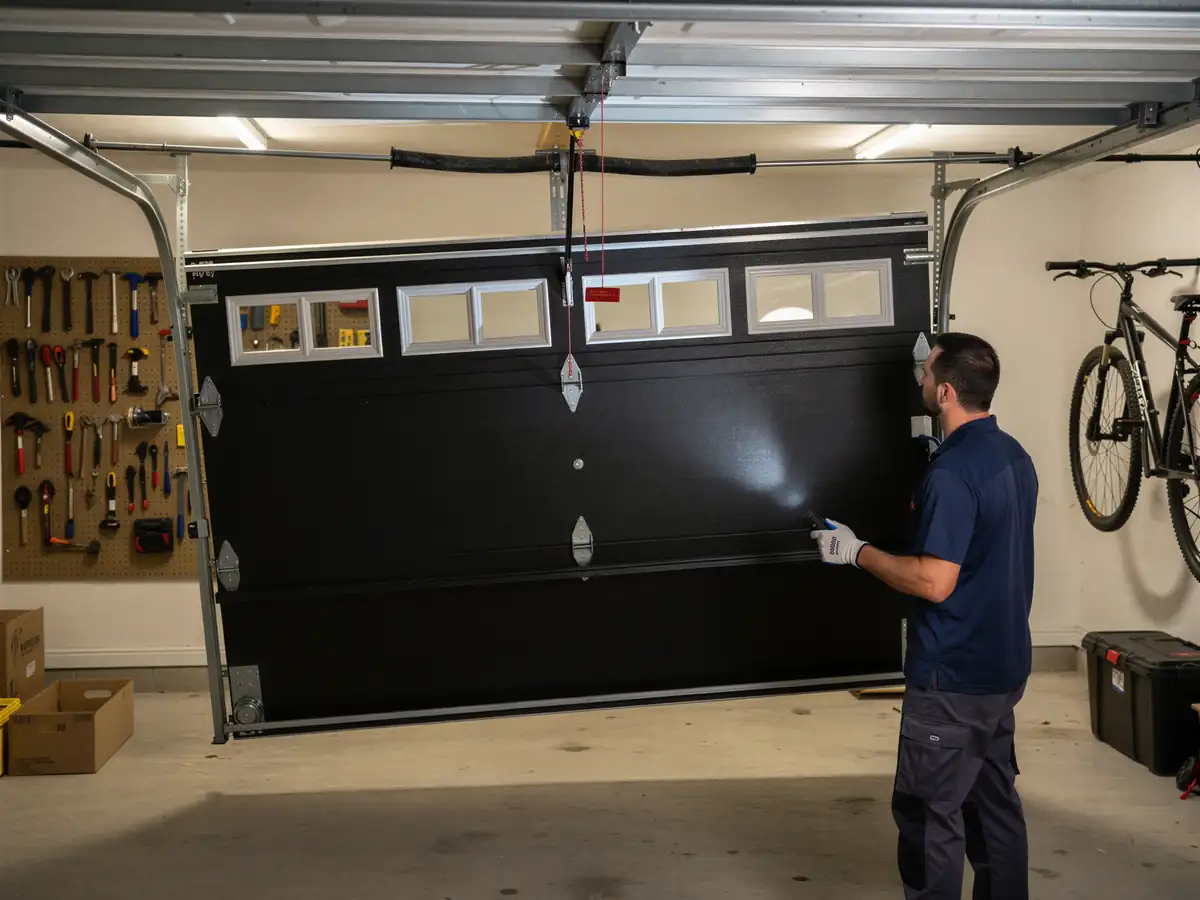
The door won't lift, or it lifts a few inches and stops like something's holding it down from inside the wall. Sometimes it's a bang from the garage first - the spring letting go under tension - followed by a door that drops hard if the opener tries to force it. On older single-spring setups like the ones common in Thomasville's 1983-era housing, there's no second spring to catch the slack, so the failure is usually sudden and total rather than a slow fade. You'll also see a cable that's gone loose on one side, or a door that hangs crooked in the track. None of these are opener problems, even though the opener usually gets blamed first since it's the part making noise when it strains against a dead spring.
What the Fix Involves
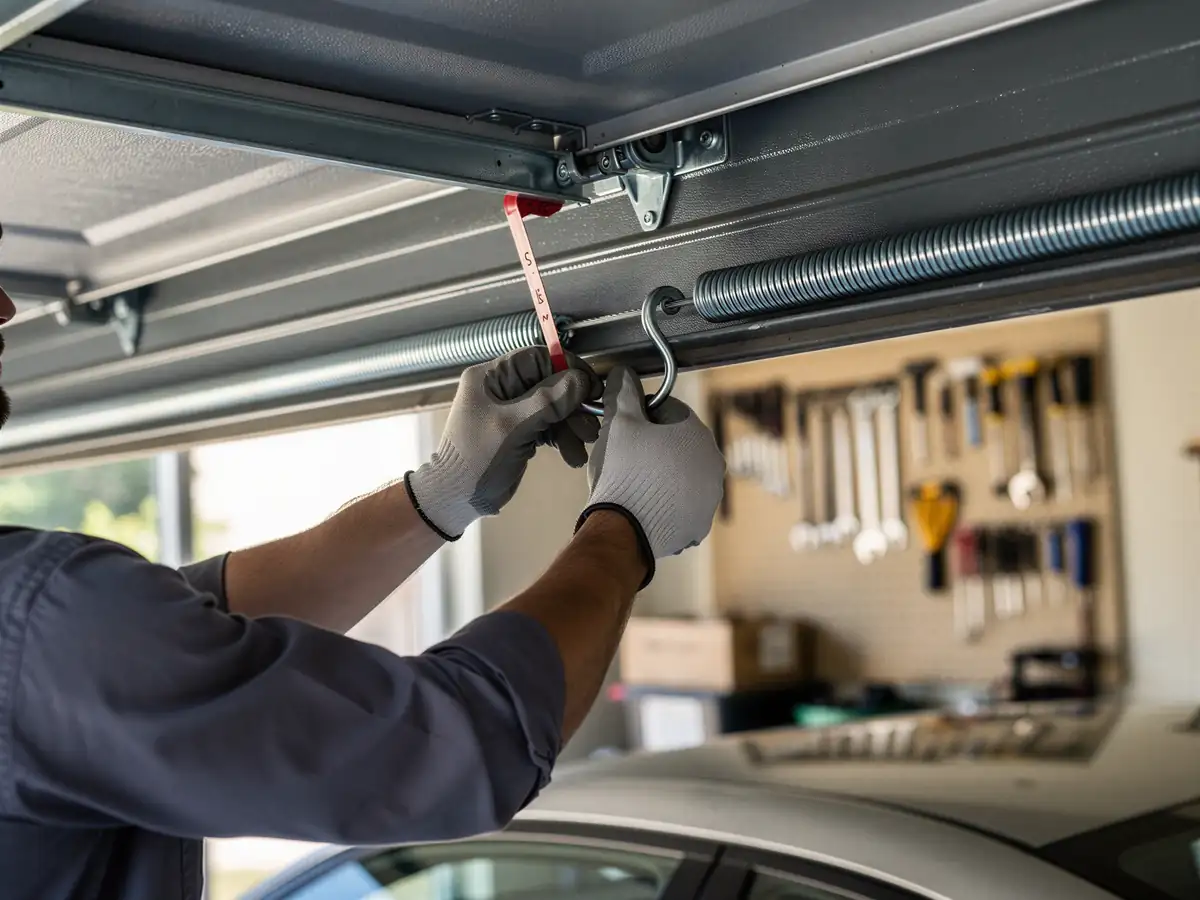
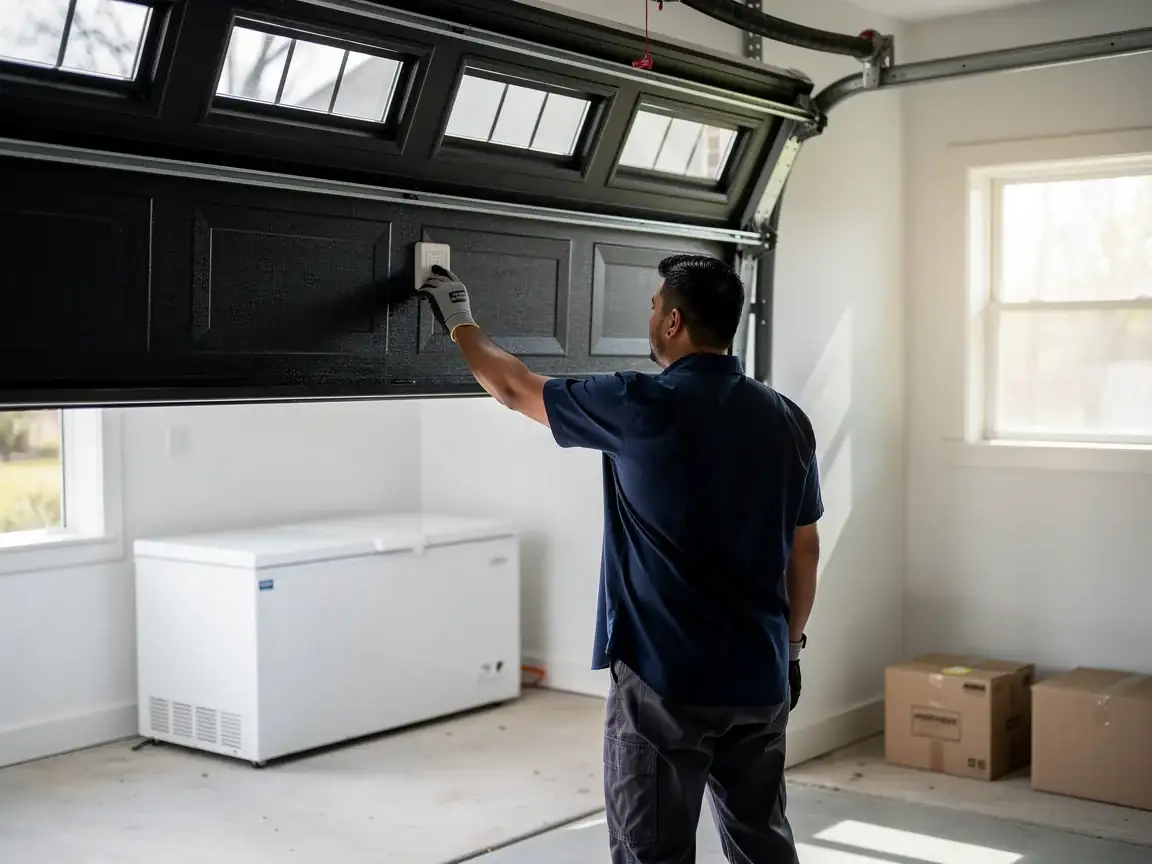
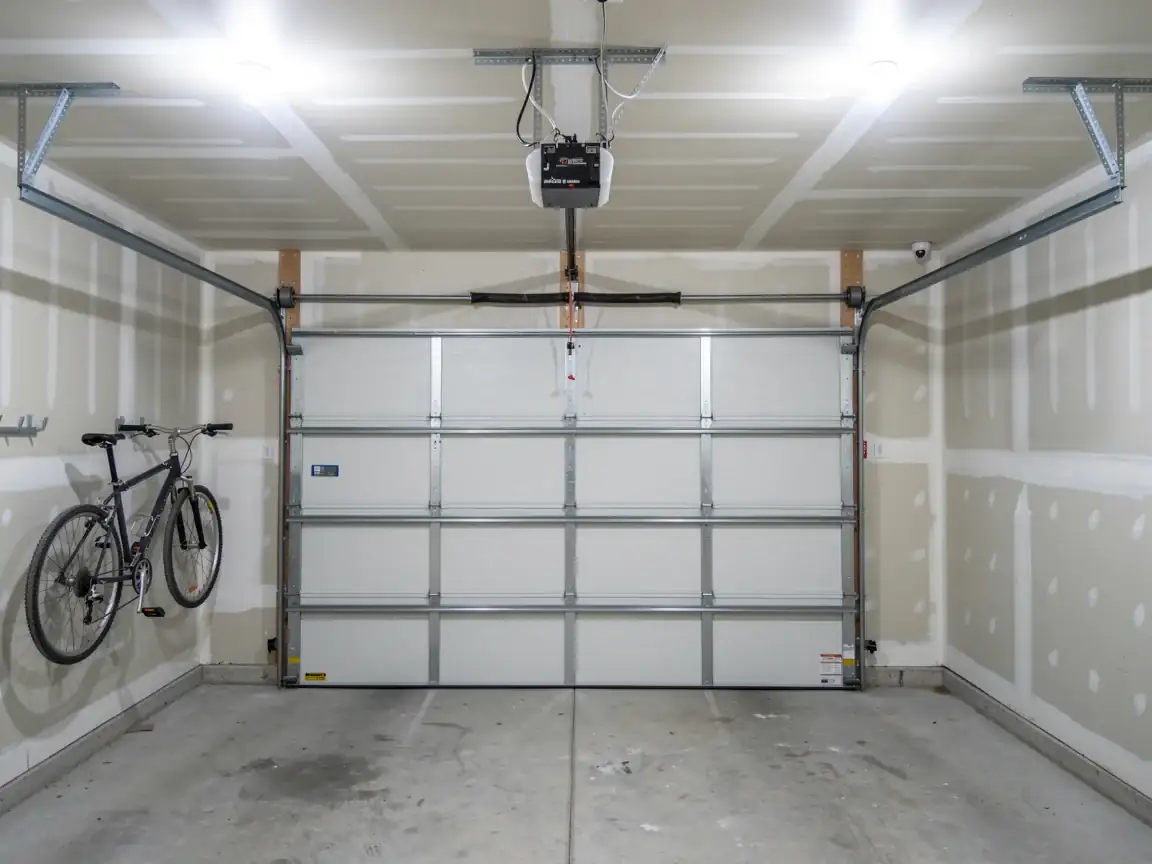
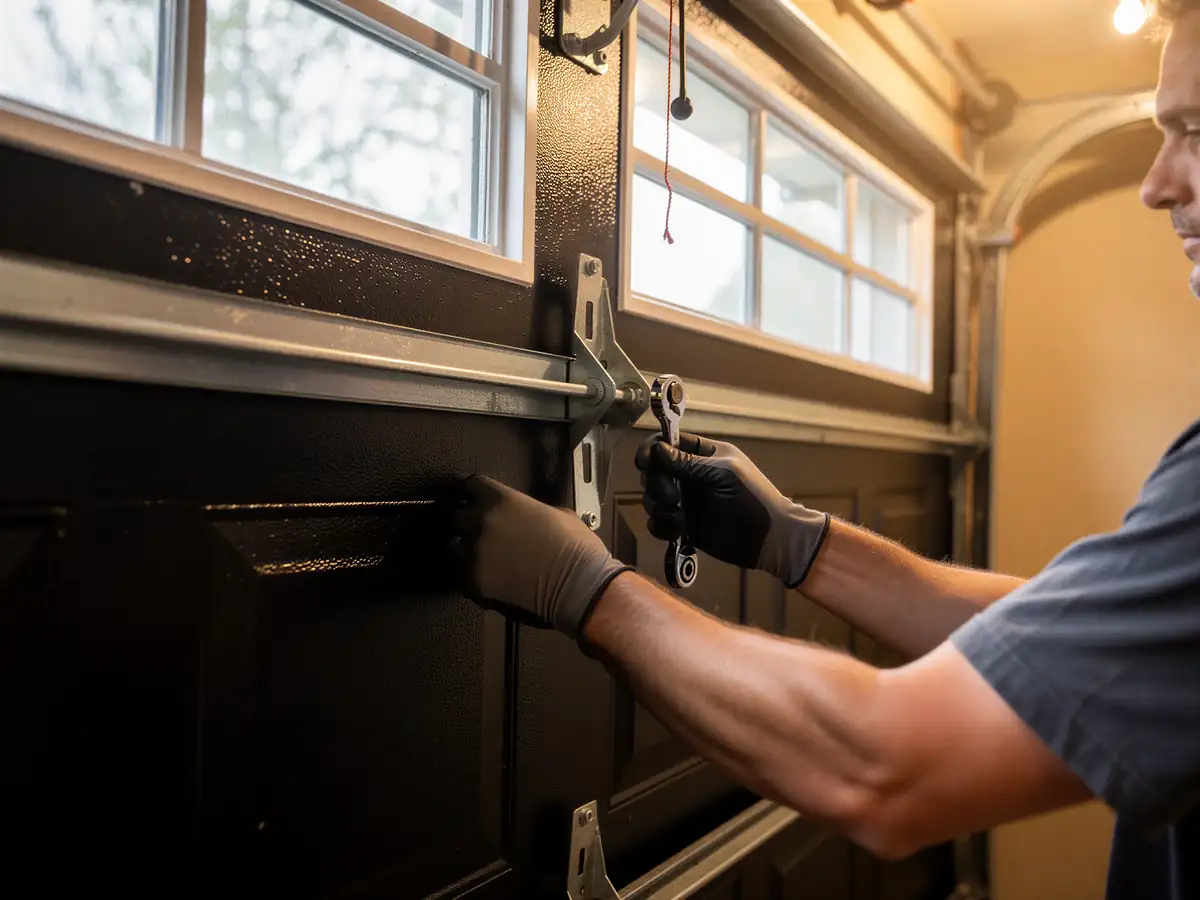
We release tension from the old spring using winding bars, pull the broken coils off the shaft, and check the drums, cable, and center bearing while the shaft's exposed - on a 40-year-old door those parts have usually taken wear too. We install a torsion spring matched to the door's actual weight, not just the slot it came out of, since some of these doors have had a panel replaced over the decades with a heavier one. We wind it to the correct turn count for that door's drum size, then run the door through a full open-close cycle by hand before testing it on the opener. Cable and drum replacement adds time if they're worn, which is common once a spring has been overdue for replacement for a while - a stretched cable on a new spring just shifts the failure point somewhere else.
Why This Fails Locally
The homes on this side of the service area center on 1983 construction, which puts Thomasville's garage doors well past the point where original hardware is still doing its job. A torsion spring is rated for a cycle count, and a door that's been opening twice a day for over four decades has usually cleared that count years ago, regardless of how it looks from outside. Add a cold-moderate climate - steel contracts in winter, and a spring already near the end of its life is more likely to snap on a cold morning than a mild one. Thomasville's household count, 11,049, means a meaningful share of the town is sitting on doors from that same build window, which is why spring failure here tends to show up in clusters of similar age rather than as a one-off.
Time on the Job
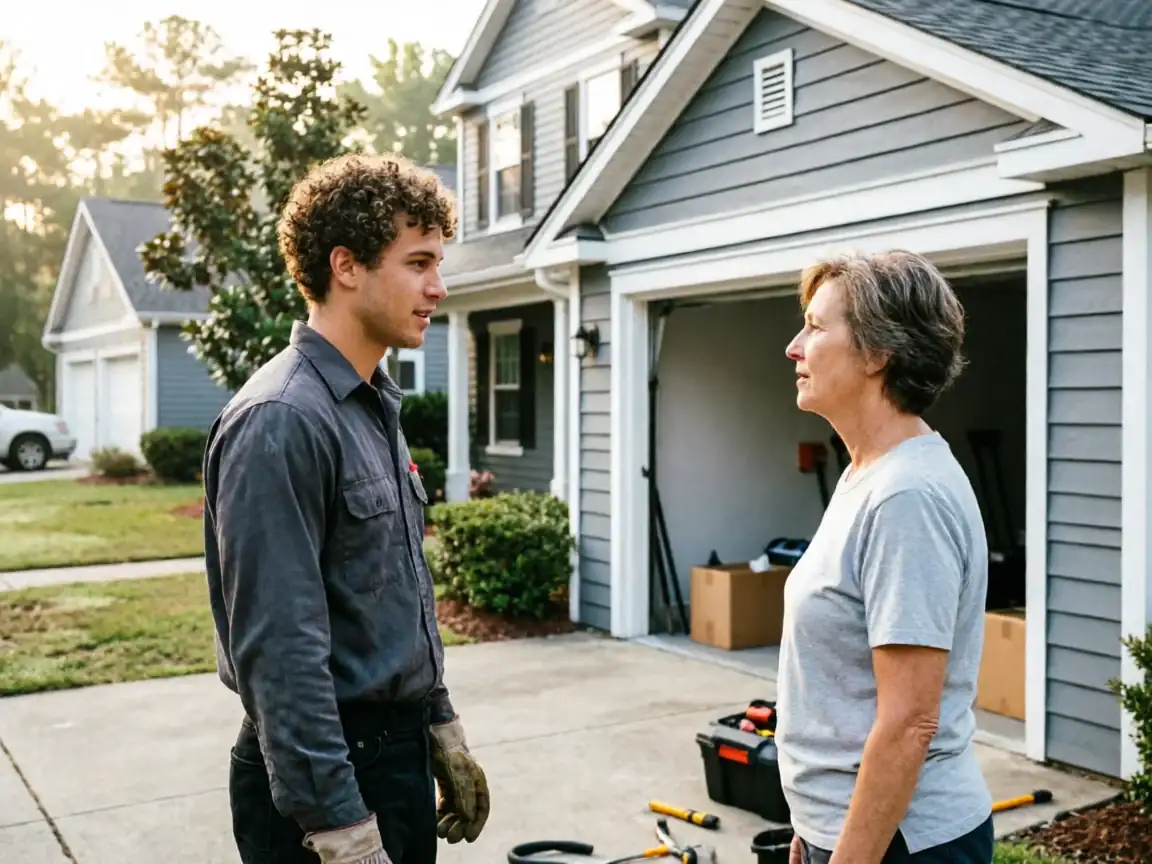
Thomasville sits about 9 miles from our High Point base, which puts it well within a single trip rather than something that needs to be bundled with other calls to make sense. A standard single-spring replacement on one of these 1980s doors is usually a same-visit job once we're on-site - it's the cable, drum, or track wear that can stretch it longer, and that's something we check before quoting rather than after. We don't treat every call the same: a straightforward spring swap on a standard door moves fast, and we're not going to pad the visit to make it look like more work than it is.
How it works
From “it’s stuck” to “it’s fixed”
01
Tell us what’s wrong
Describe the symptom - won’t open, loud bang, opener runs but the door won’t move.
02
On-site diagnosis
A technician tests the door under power and by hand and finds what actually failed.
03
Clear, up-front plan
You get the fix that’s needed and what drives the cost - before any work starts.
04
Repaired & tested
The repair is done, the door is set true and tested, and the work area left clean.
Not sure which repair your door needs in High Point, NC? Describe what it’s doing - every job starts with a diagnosis.
Straight answers about garage door repair in High Point. Still unsure? Ask us directly.
Why did my garage door spring break with no warning?
Torsion springs fail by cycle count and metal fatigue, not by looking worn first. A door built around 1983, like most in Thomasville, has usually been opening for over 40 years, so the spring is well past its rated life even if the coils look fine. Cold mornings add stress to steel that's already near the end, which is why failures often happen in winter.
Can I replace just one spring if my door has two?
If your door has two springs and one breaks, the other is usually close behind it on wear, since they cycle together. We'll look at both and tell you honestly whether the second one is worth replacing now versus waiting - but most doors from Thomasville's 1983-era housing only ever had one spring to begin with.
Do you carry the right spring size on the truck?
For the standard steel sectional doors common to Thomasville's early-80s houses, yes. If a door's had a heavier panel swapped in at some point, or it's an uncommon size, we may need to order that spring rather than carry it on every truck.