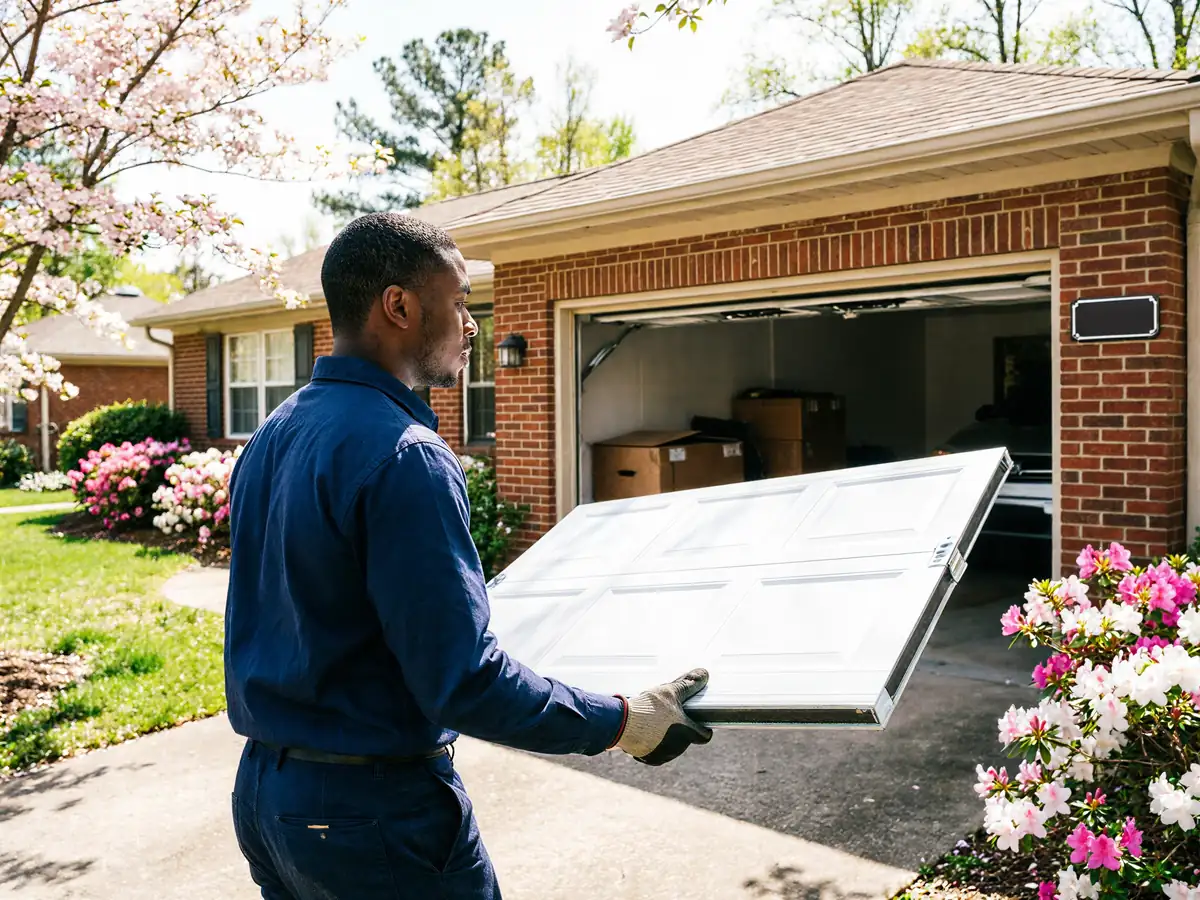
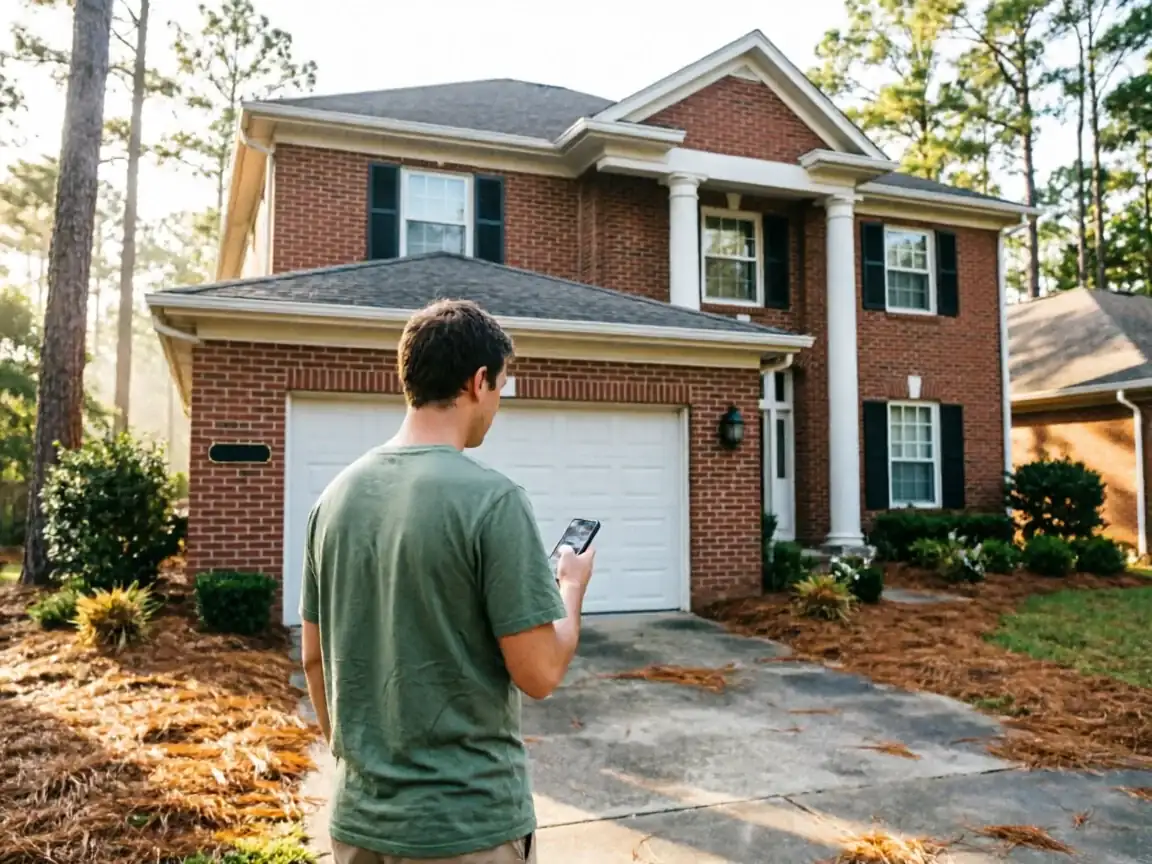
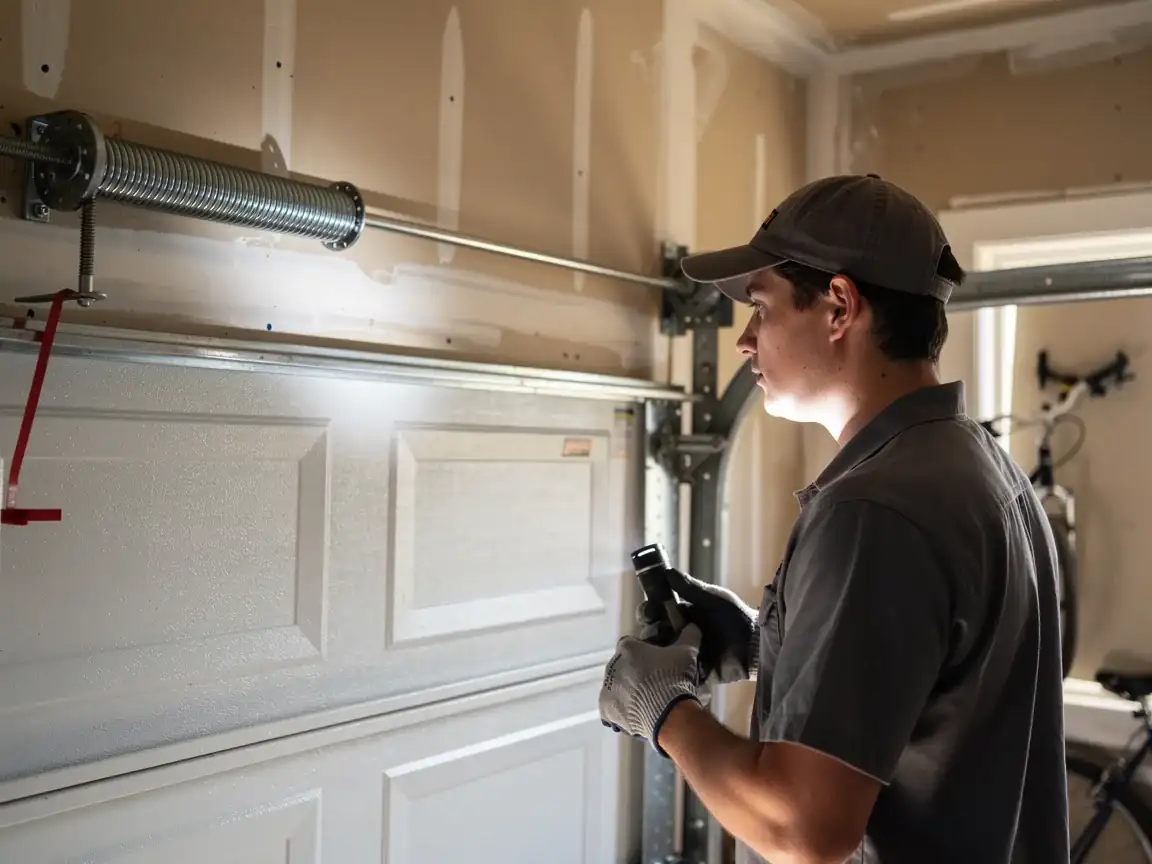
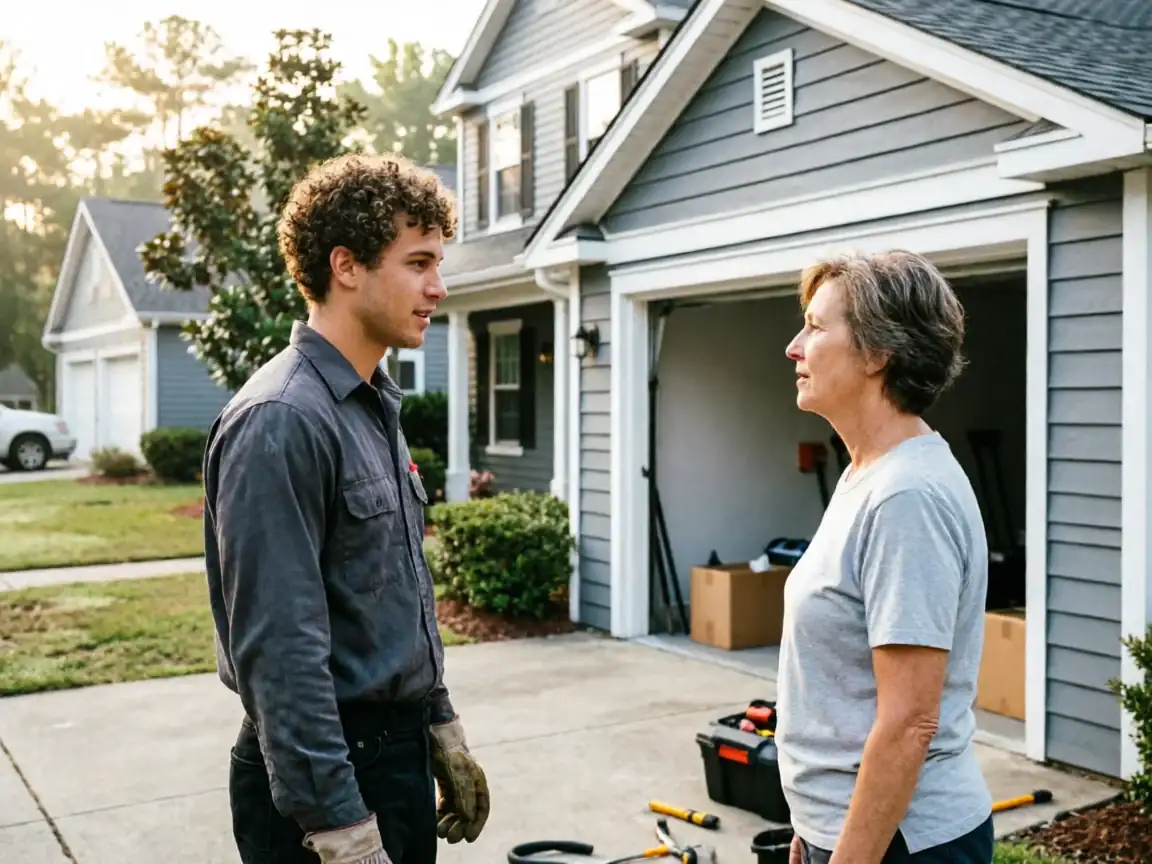
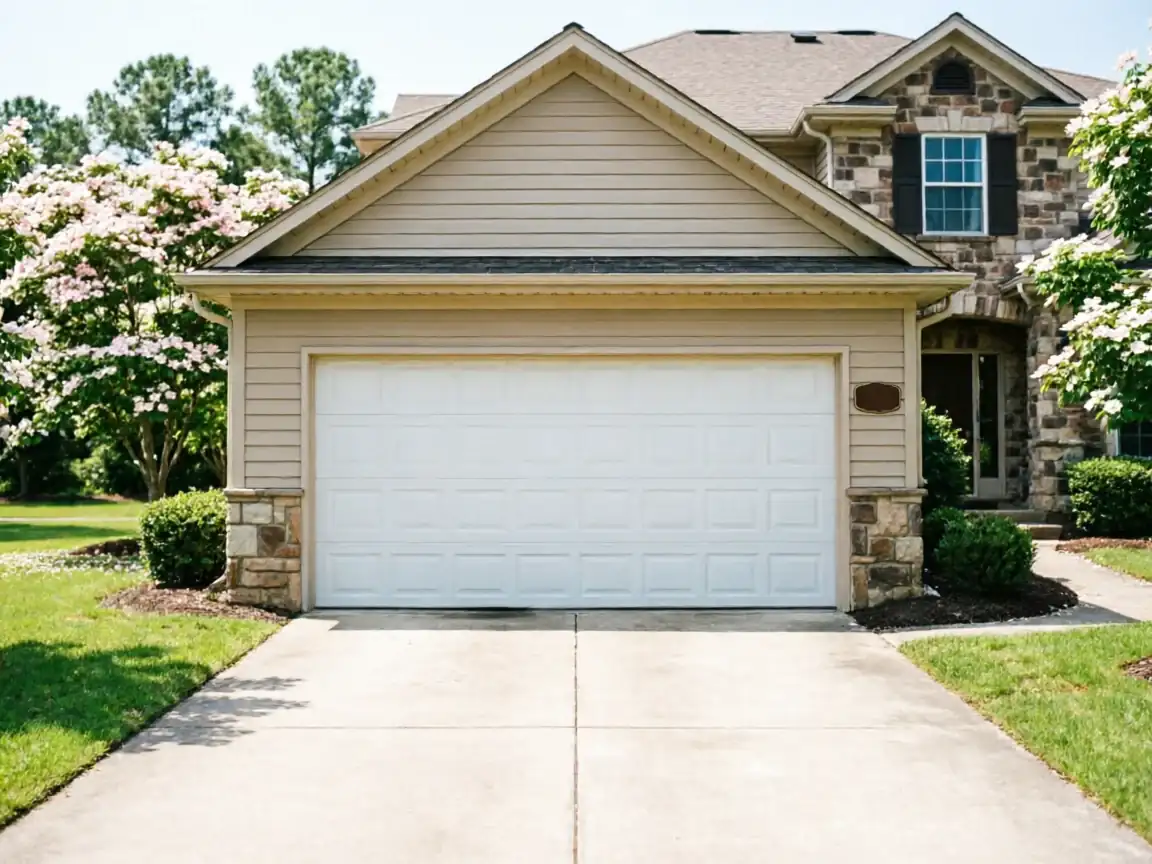
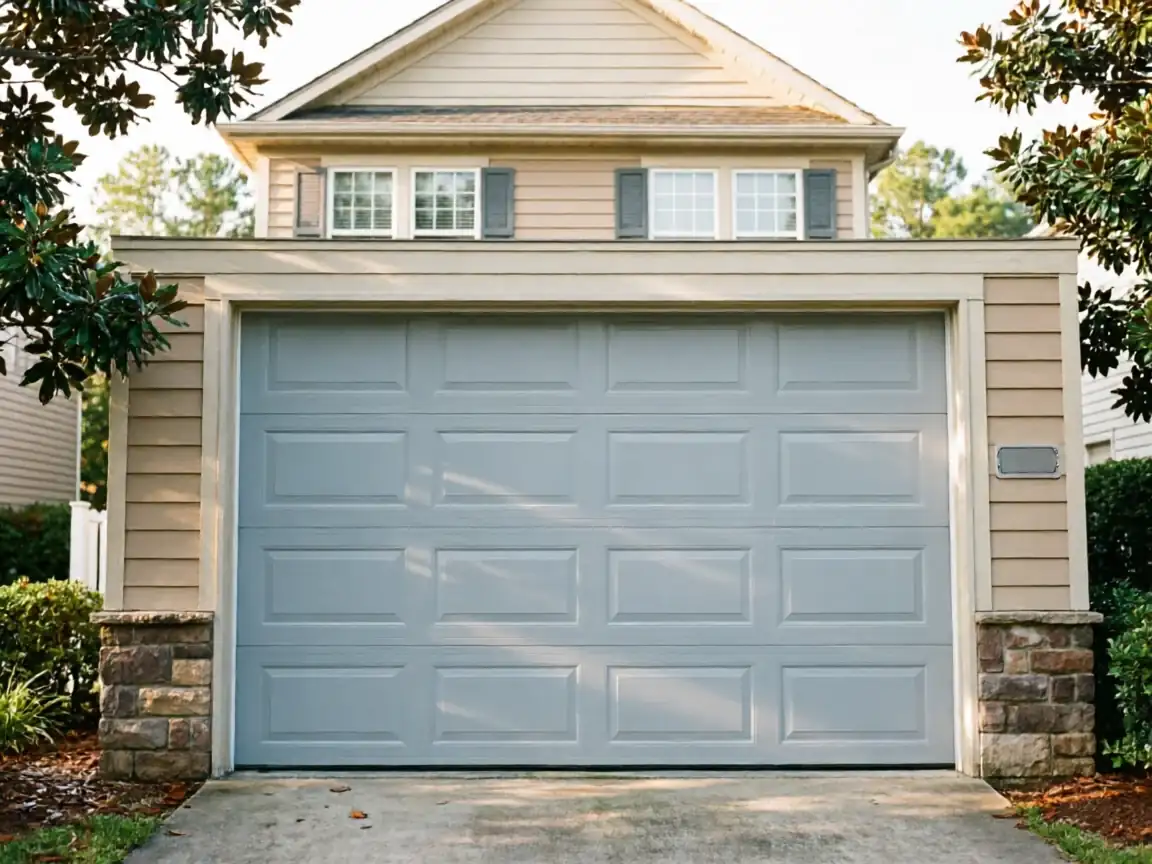
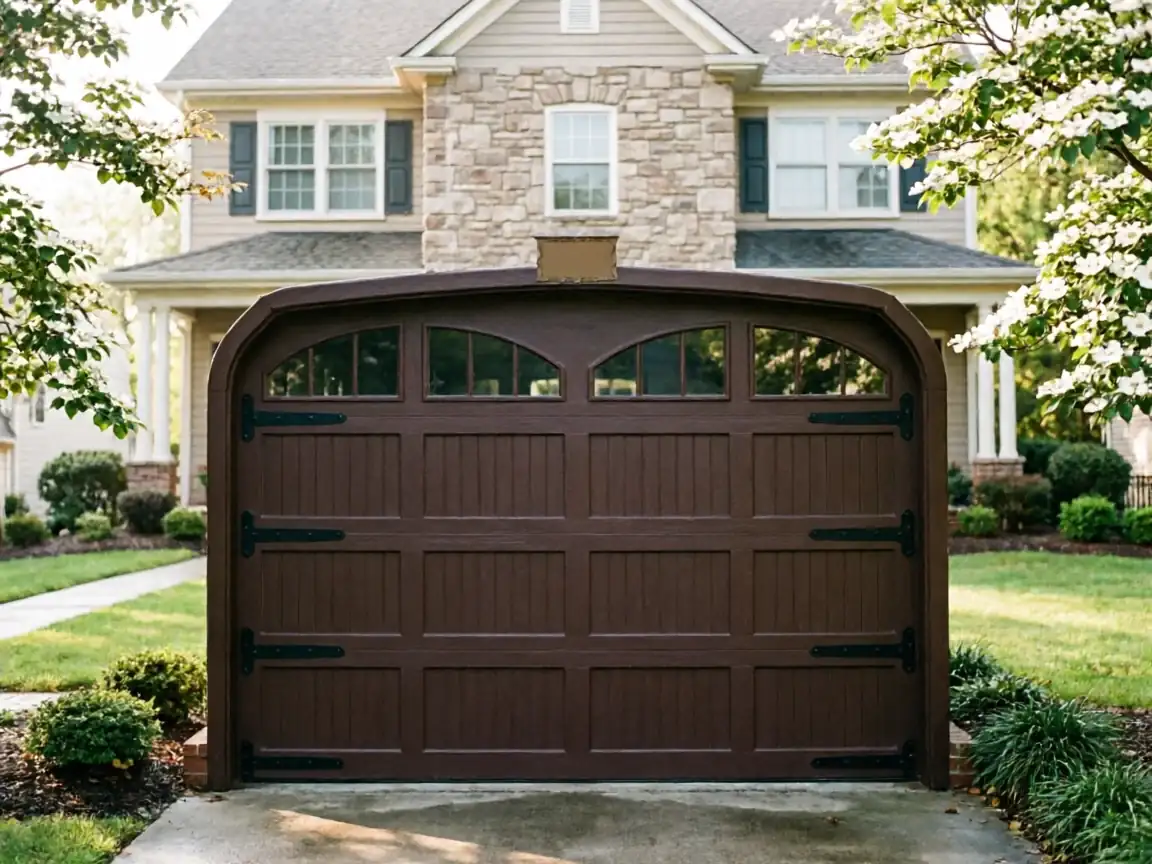
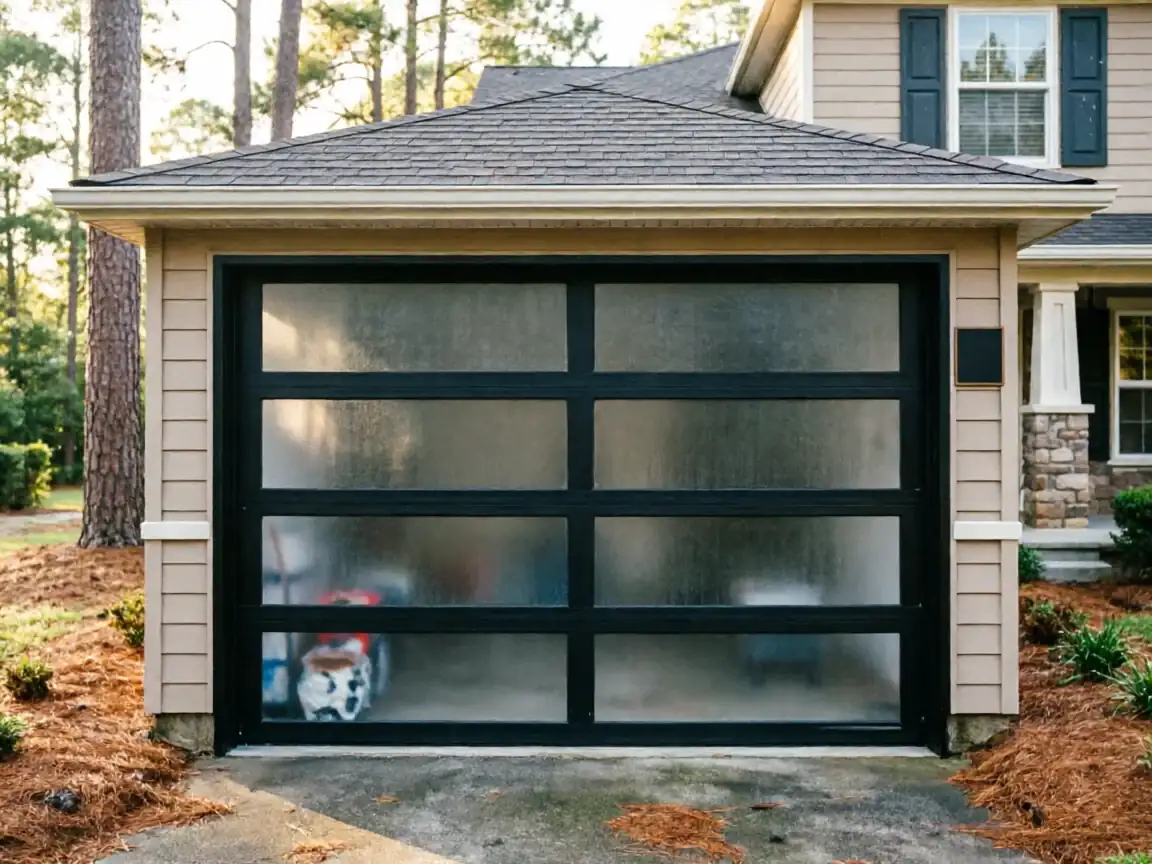
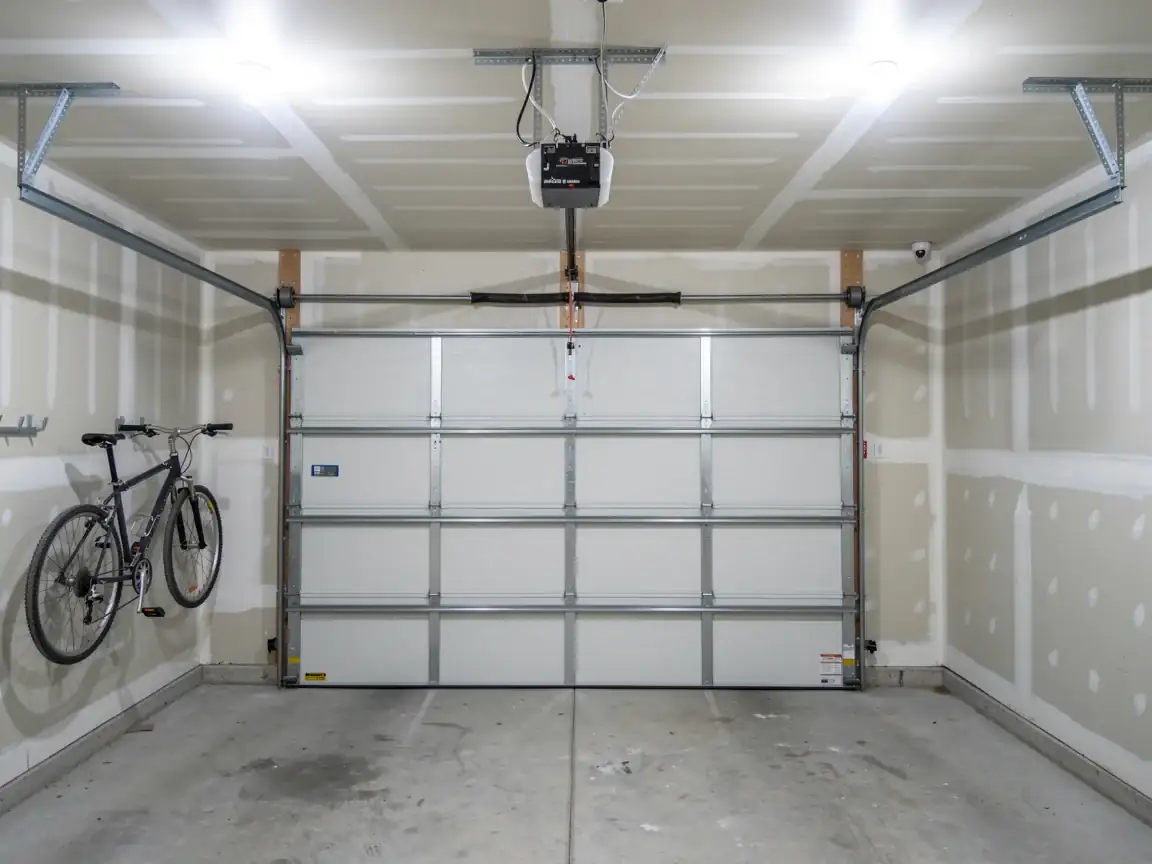
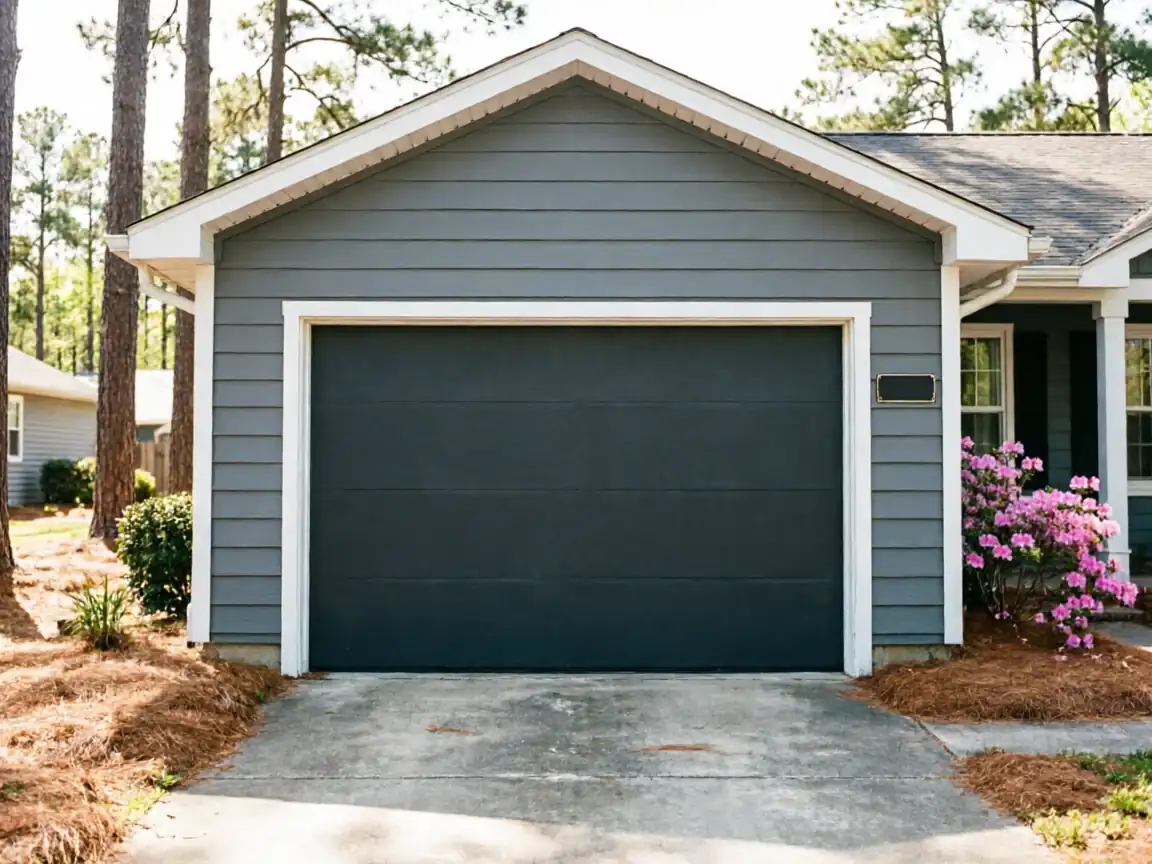
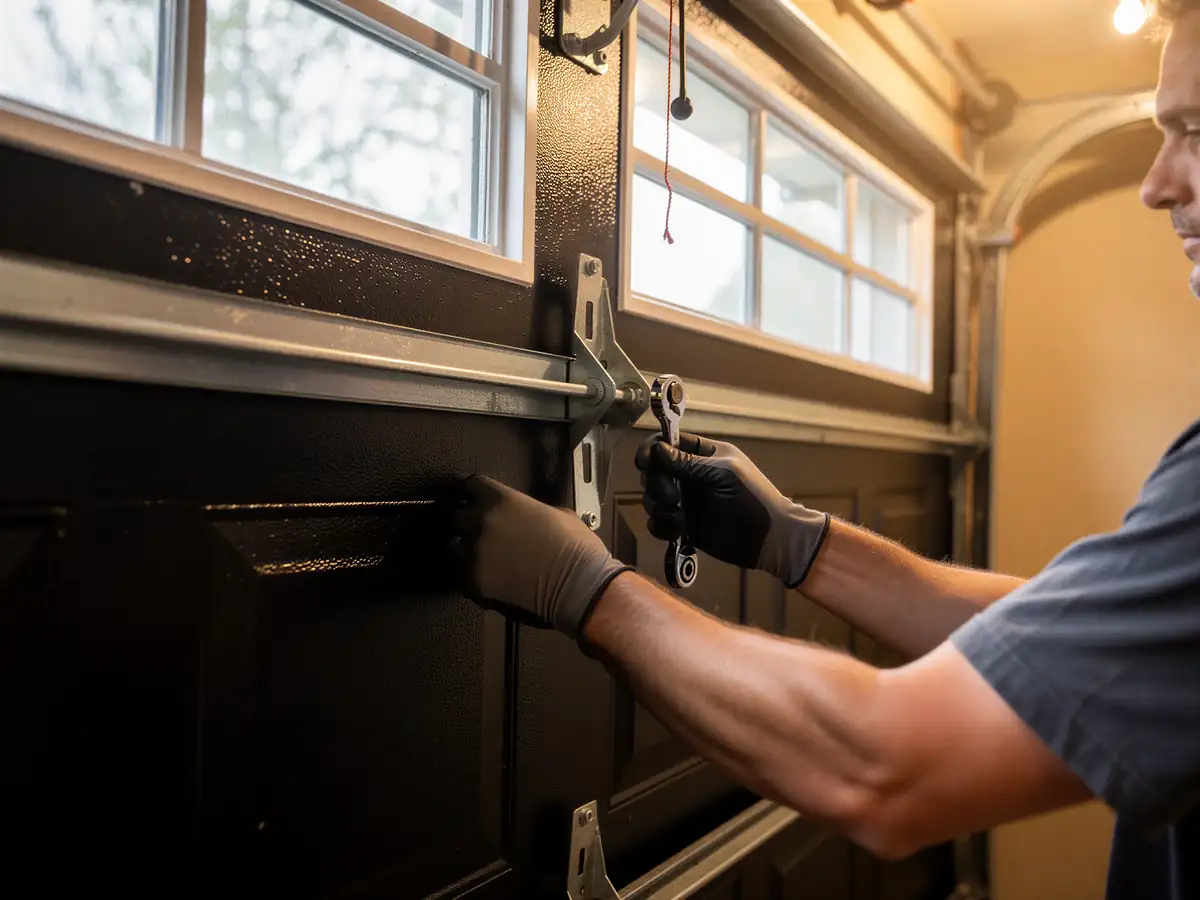
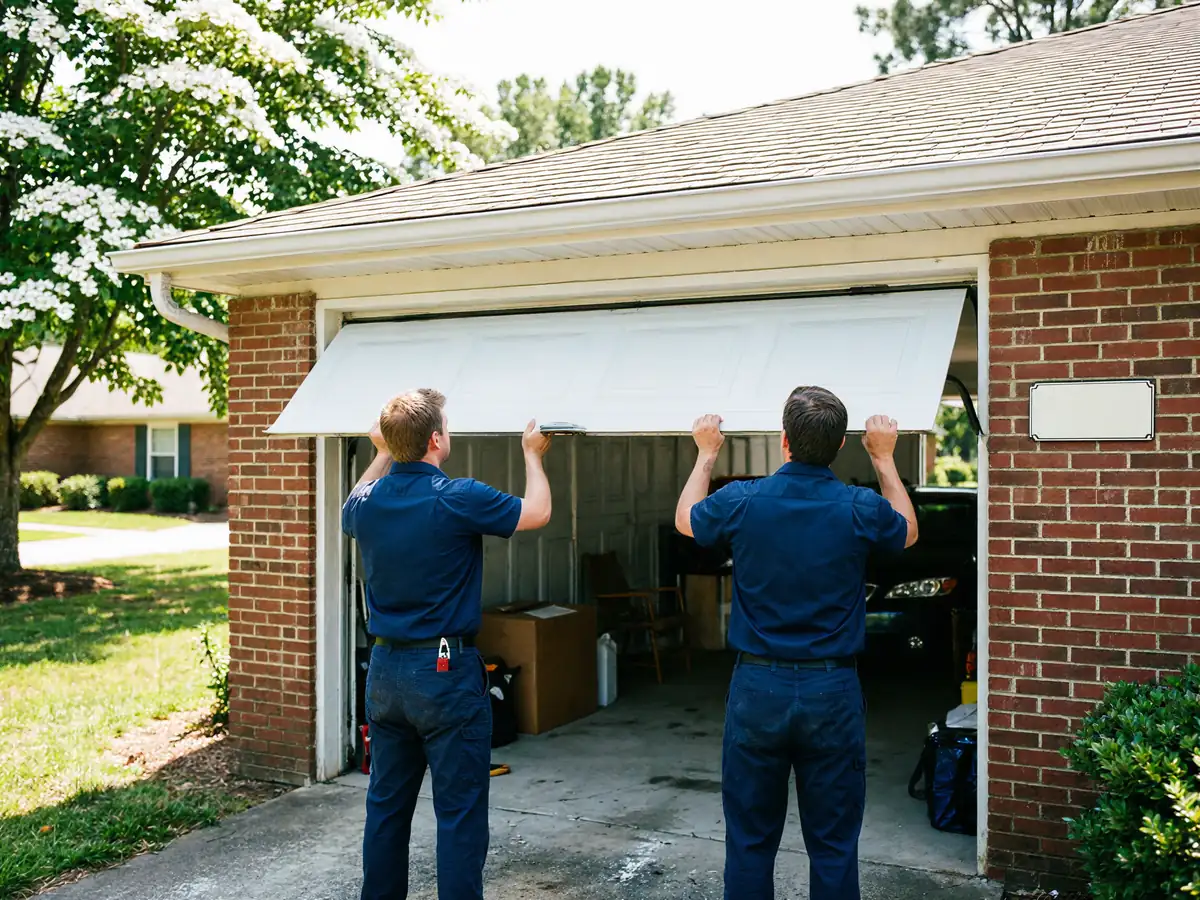
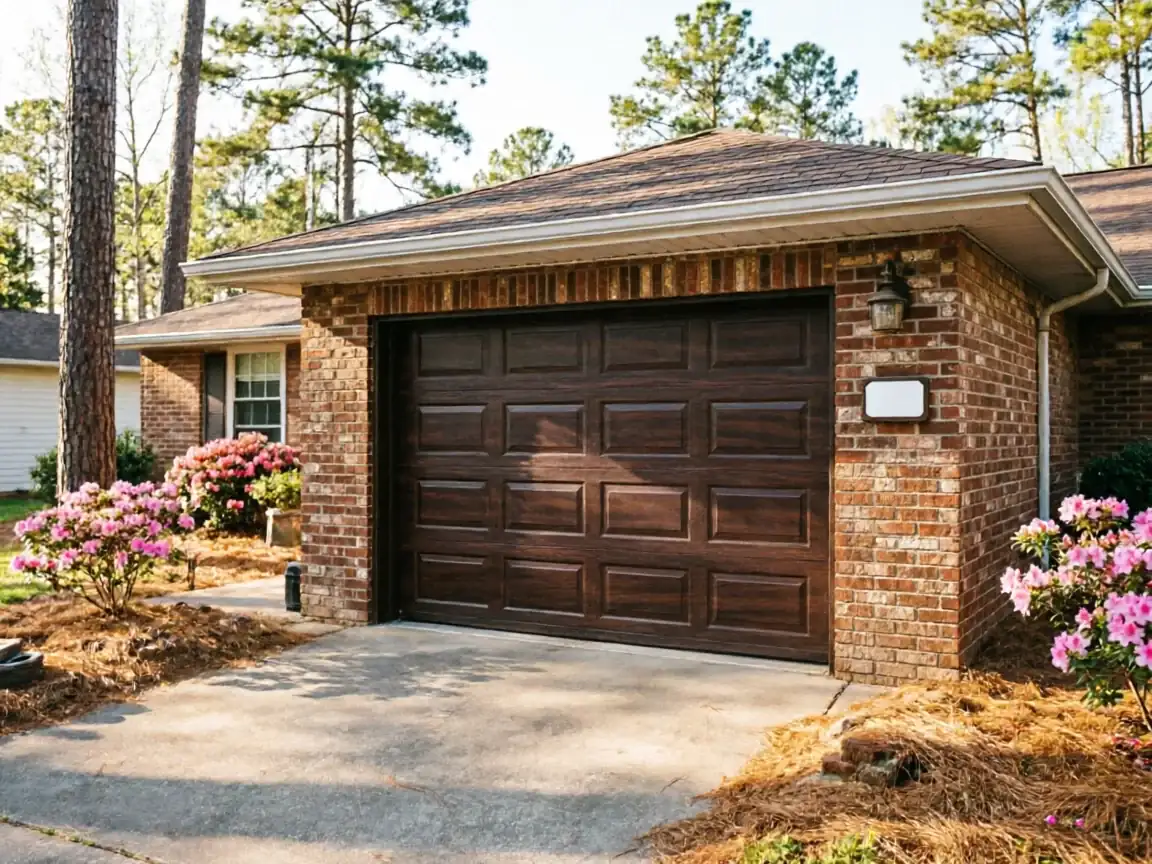
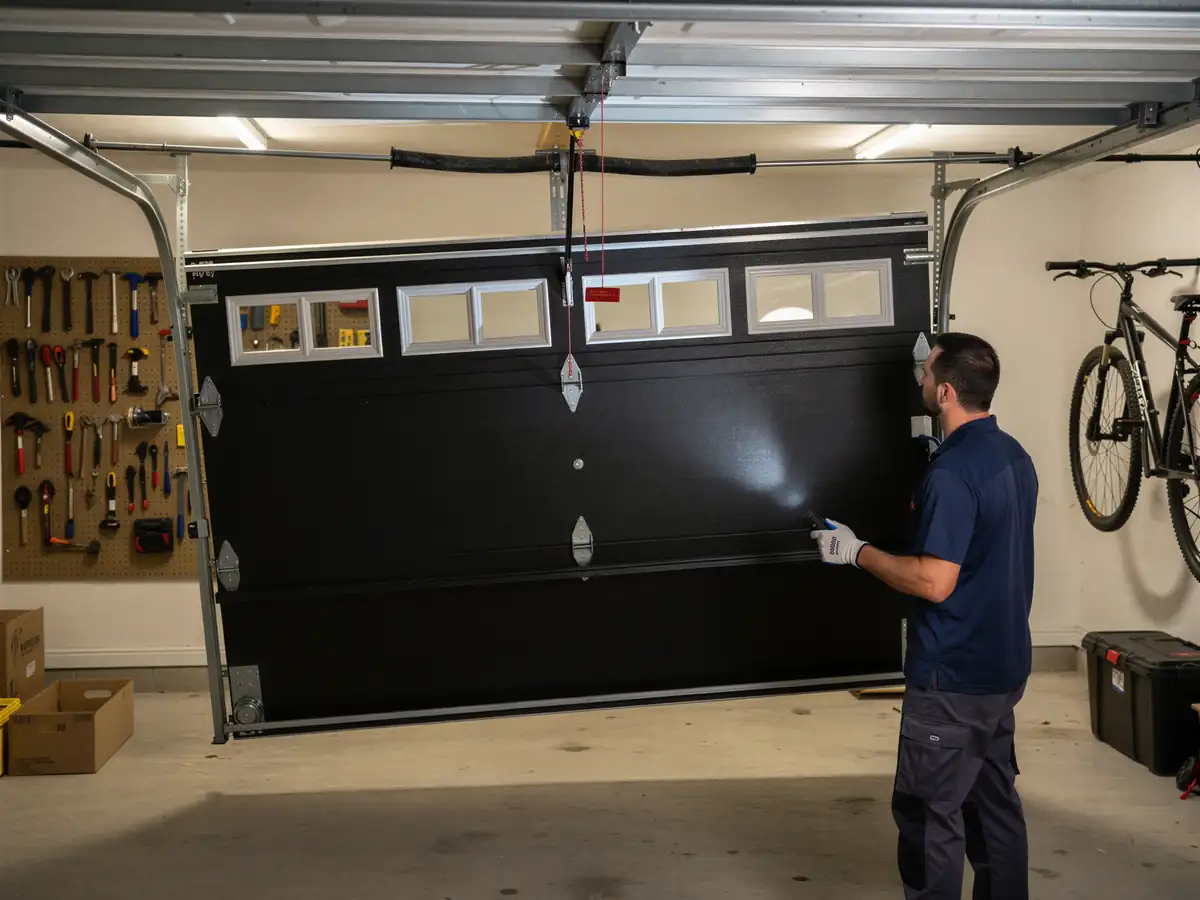
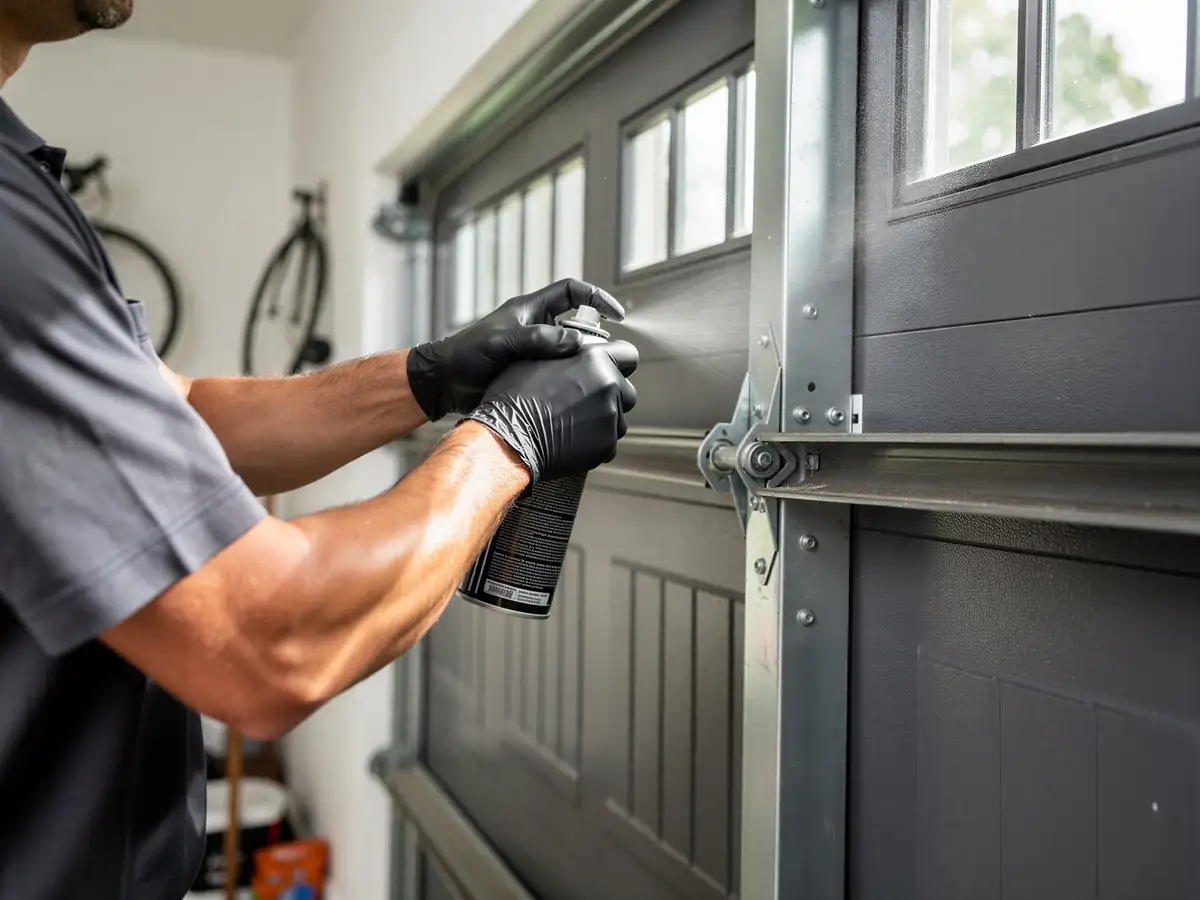
Thomasville's housing mostly dates to around 1983, and a lot of what's on those doors today is what went up with the house. We stock steel sectional panels in the widths and panel heights that match that era's construction, plus the hinges and end stiles that typically fail first. What we don't carry on the truck is every discontinued panel profile or faded color match from a 40-year-old door - if your door has a ribbed pattern or a wood-tone finish that's been out of production for decades, we may need to order the closest match or replace the section with a near-match panel rather than an exact one. We'll tell you straight if that's the case before we start, not after.\n\nFor doors from this build period, the common failure is a single bottom panel that's taken a hit from a car bumper or a basketball, with the rest of the door - track, springs, opener - still sound. That's a panel-only job, not a full door replacement, and it's the cheaper fix as long as the section is still available or close enough to match.
The Symptom
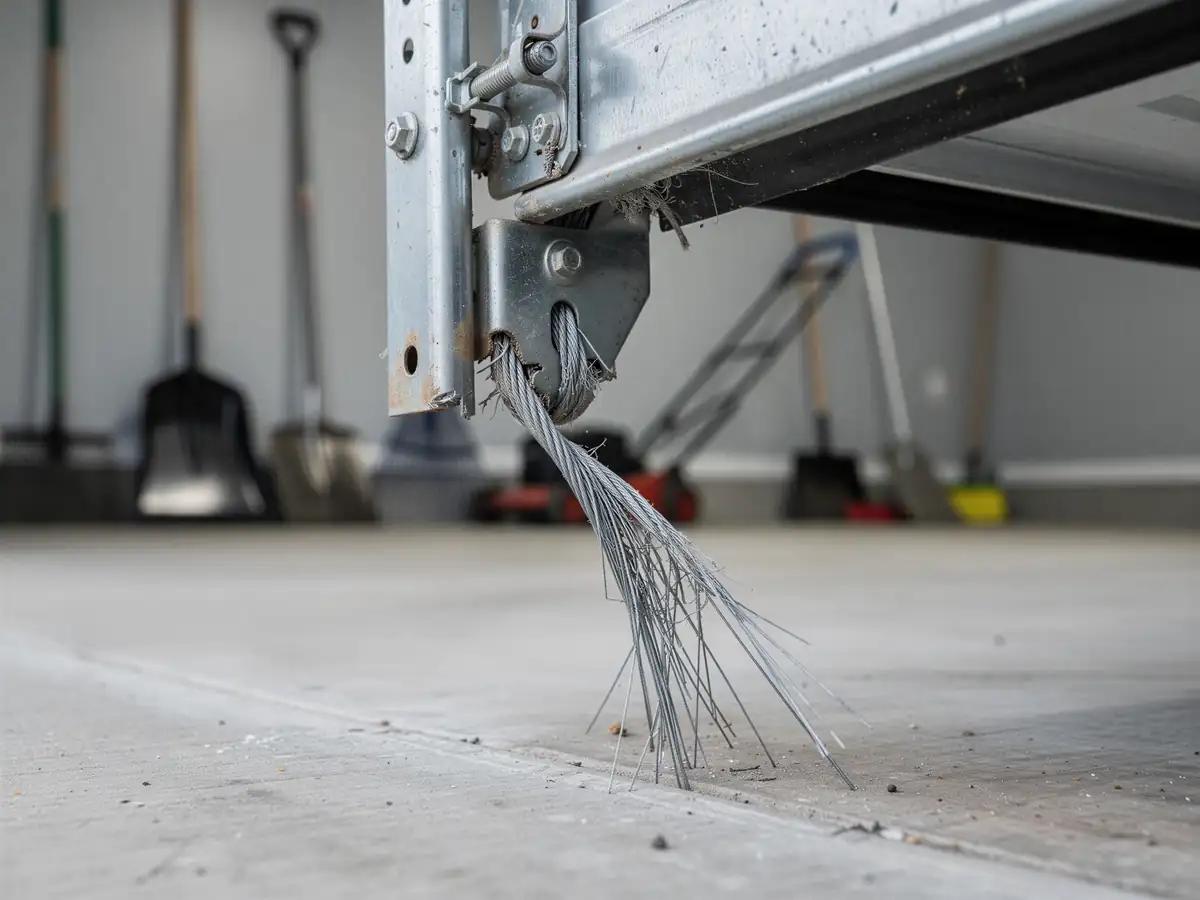
The most common call from this part of town is a dented or caved-in bottom panel, usually on the section nearest the driveway, where a bumper or a trailer hitch caught the door on the way in. On a door built around 1983, that panel is often still the original steel, thinner gauge than what's made today, and it dents rather than flexes back. You'll see the door still rolls and the opener still runs - the damage is cosmetic and structural only at that one section, not a sign the whole door needs to go.\n\nSometimes it's not a dent but a crack along a seam or rust coming through at the bottom edge, which is common on original panels that have sat close to grade for four decades. Either way, if the track is straight and the springs are holding, you're looking at a panel swap, not a full replacement.
What the Fix Involves
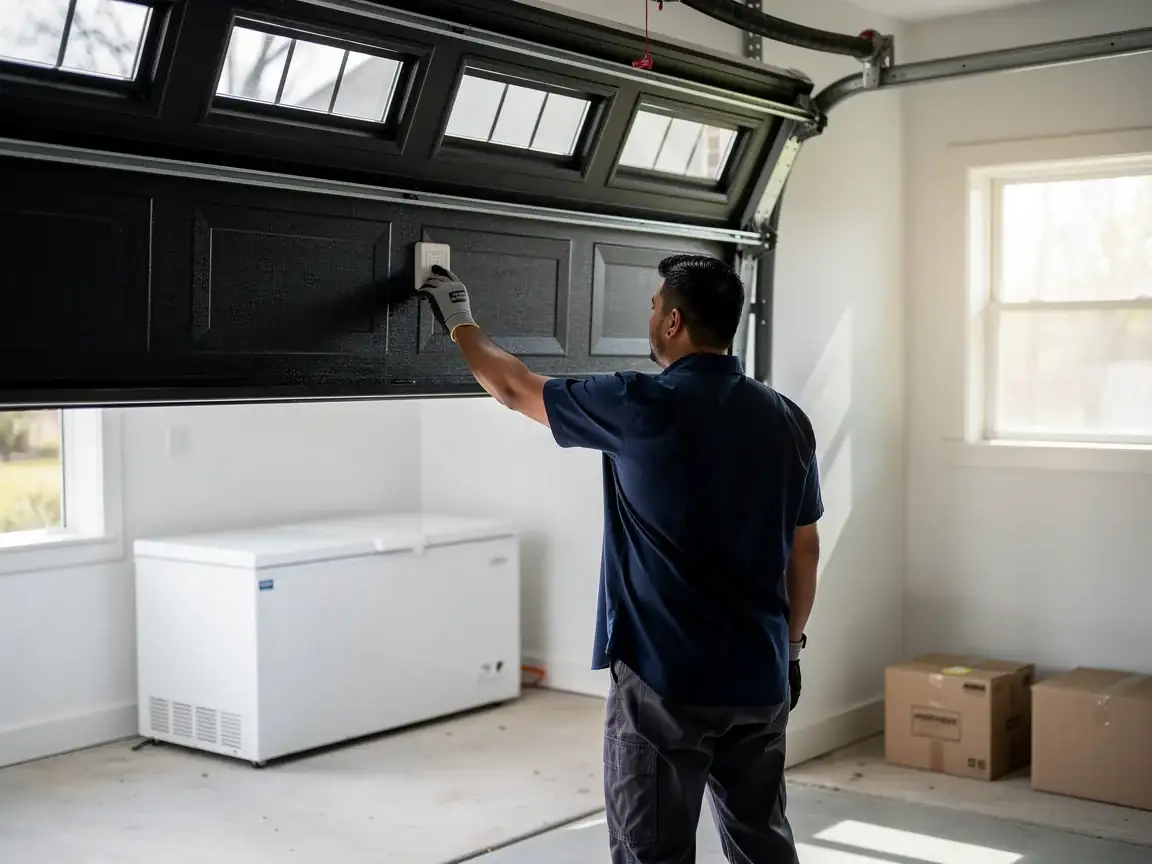
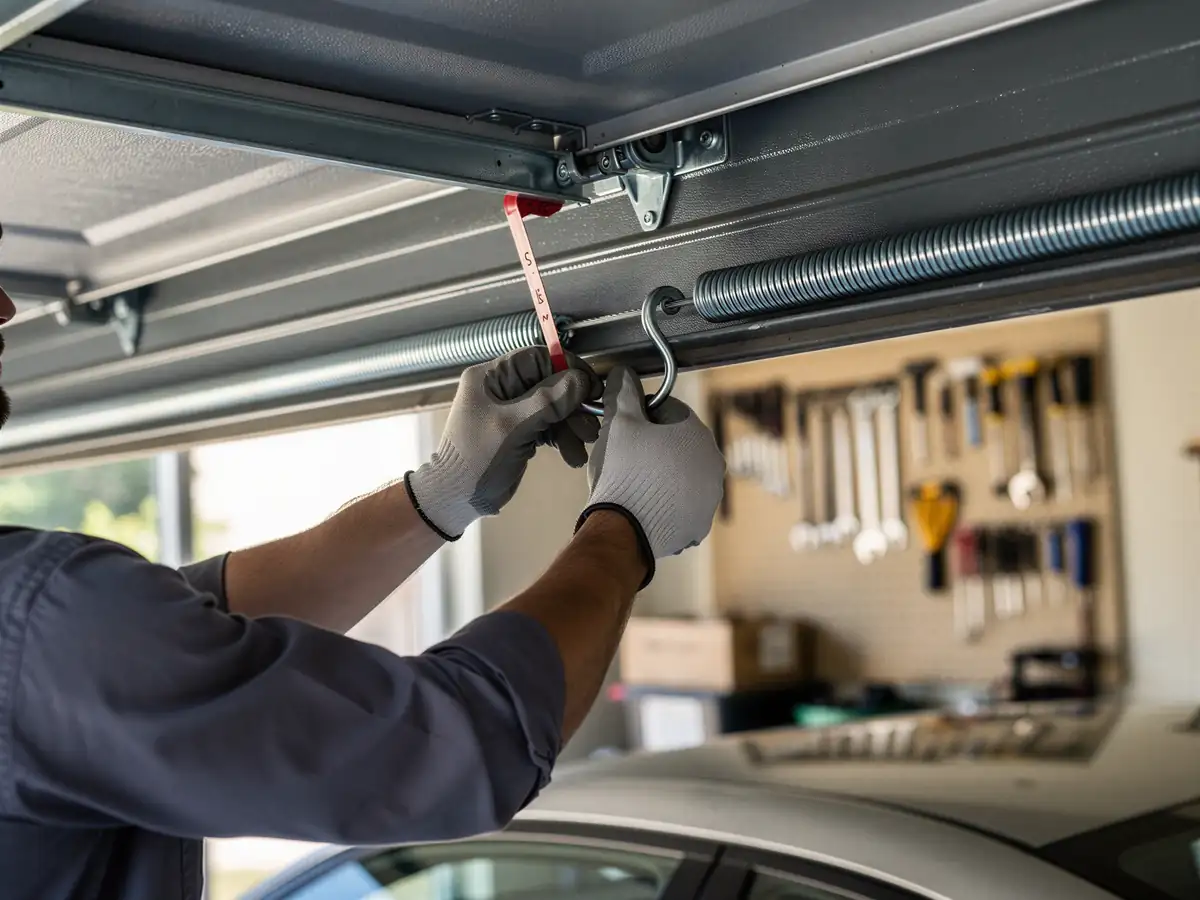
We pull the damaged section, match it to the door's panel height and width, and set the new section into the existing track without disturbing the rest of the door. On original hardware from the early 1980s, the hinges and roller brackets on the section being replaced often get swapped too, since they're the same age as the panel and usually show the same wear - rust pitting at the hinge pivot, roller stems worn oval instead of round. We don't replace hardware on sections we're not touching unless it's visibly failing; there's no reason to charge for parts that still have life in them.\n\nIf the garage door opener is original to the house, we'll check that the panel swap hasn't thrown off the travel limits or the safety reversal, since lighter or heavier replacement panels can shift the balance slightly. That's a five-minute adjustment, not a separate job, but it's one we don't skip.
Why This Fails Locally
Thomasville sits in a cold-moderate climate band, which means the steel on an original-era panel goes through a real freeze-thaw cycle every winter. Moisture gets into a dent or a seam crack, freezes, expands the gap, and by the second or third winter what was a small cosmetic dent has turned into a panel that's pulling away from its neighbor at the seam. That's the pattern we see on doors from this build period more than on newer ones - the steel gauge is thinner and the primer coat has had forty years to wear thin in spots.\n\nThomasville's median household income runs lower than some of the areas closer to High Point, and that shows up in the calls we get: more owners choosing a single panel replacement to extend a serviceable door's life rather than replacing the whole unit at the first sign of damage. That's usually the right call here, as long as the rest of the door is sound.
Time on the Job
A single panel swap on a door with a straight track and working springs is a same-visit job once the part is in hand - we're not tearing into the opener or the frame. What adds time is sourcing the panel itself. If your door's panel style is still in production, we can usually get it quickly; if it's an older profile common to houses built in the early-to-mid 1980s, matching it can take longer, and we'll give you a real timeline before we order rather than guess. We drive out from High Point for this work, about nine miles each way, and we'll tell you up front if a panel needs to be special-ordered so you're not waiting on us without knowing why.
How it works
From “it’s stuck” to “it’s fixed”
01
Tell us what’s wrong
Describe the symptom - won’t open, loud bang, opener runs but the door won’t move.
02
On-site diagnosis
A technician tests the door under power and by hand and finds what actually failed.
03
Clear, up-front plan
You get the fix that’s needed and what drives the cost - before any work starts.
04
Repaired & tested
The repair is done, the door is set true and tested, and the work area left clean.
Not sure which repair your door needs in High Point, NC? Describe what it’s doing - every job starts with a diagnosis.
Straight answers about garage door repair in High Point. Still unsure? Ask us directly.
Is it worth replacing just one panel on an older door?
Usually yes, if the track is straight and the springs and opener are working. Most of what we see on Thomasville doors from the early 1980s is one damaged bottom section with the rest of the door still sound. A single panel swap is cheaper than a full door and keeps the working hardware in place.
Will the new panel match my old one exactly?
Not always. Panel profiles from the early 1980s aren't all still in production, so we match as close as we can in width, height, and finish. We'll show you the match before we order it so there are no surprises when it goes in.
Why does my garage door panel keep rusting at the bottom?
Original steel panels from this build era sit low to the ground, and Thomasville's winters put them through repeated freeze-thaw cycles. Moisture works into any small dent or seam gap, freezes, and widens it over a few seasons. That's the most common cause of bottom-panel failure on doors this old.
Do you carry panels on the truck or do you order them?
We stock the common steel sectional sizes and panel heights used on houses built through the 1980s and 90s. Older or discontinued profiles sometimes need to be ordered, and we'll tell you that up front rather than after we've started the job.