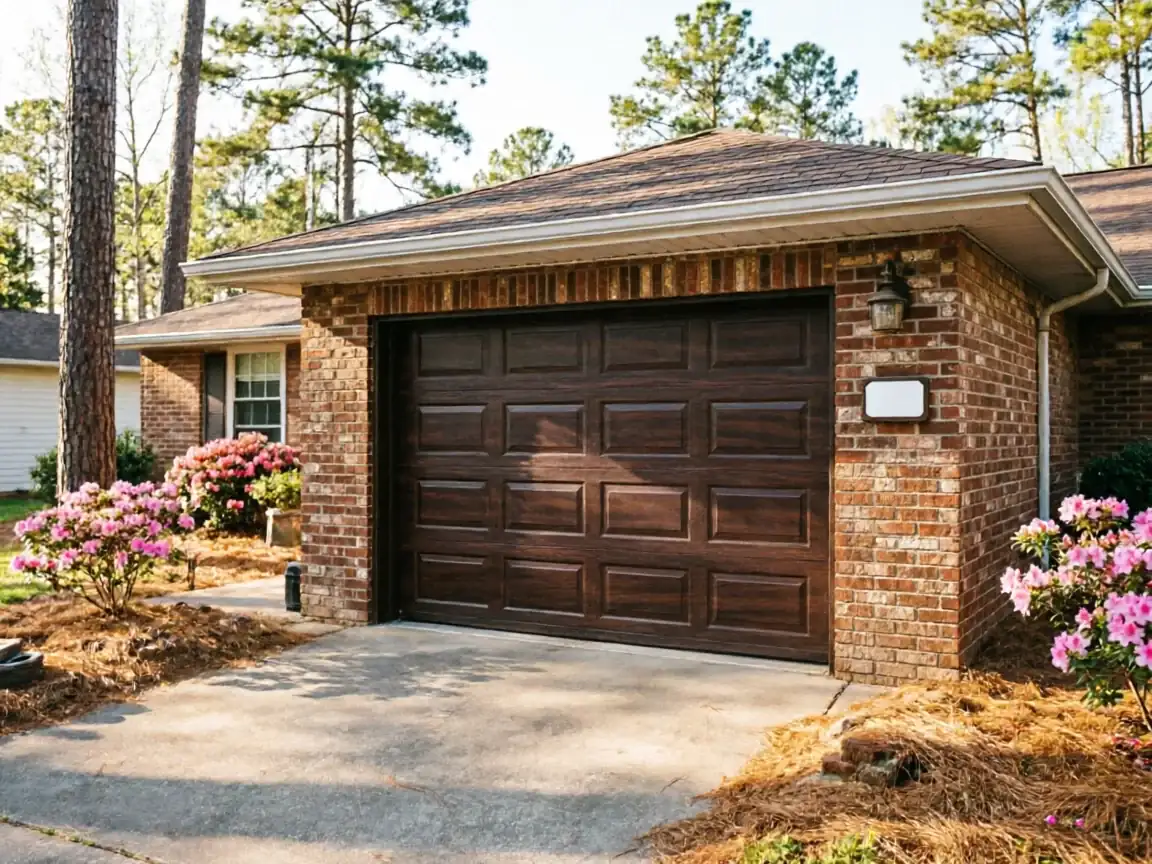
Archdale homes mostly date to 1985, which means original torsion springs and steel panels are now near or past 40 years old. We cover the 6-mile run from High Point.
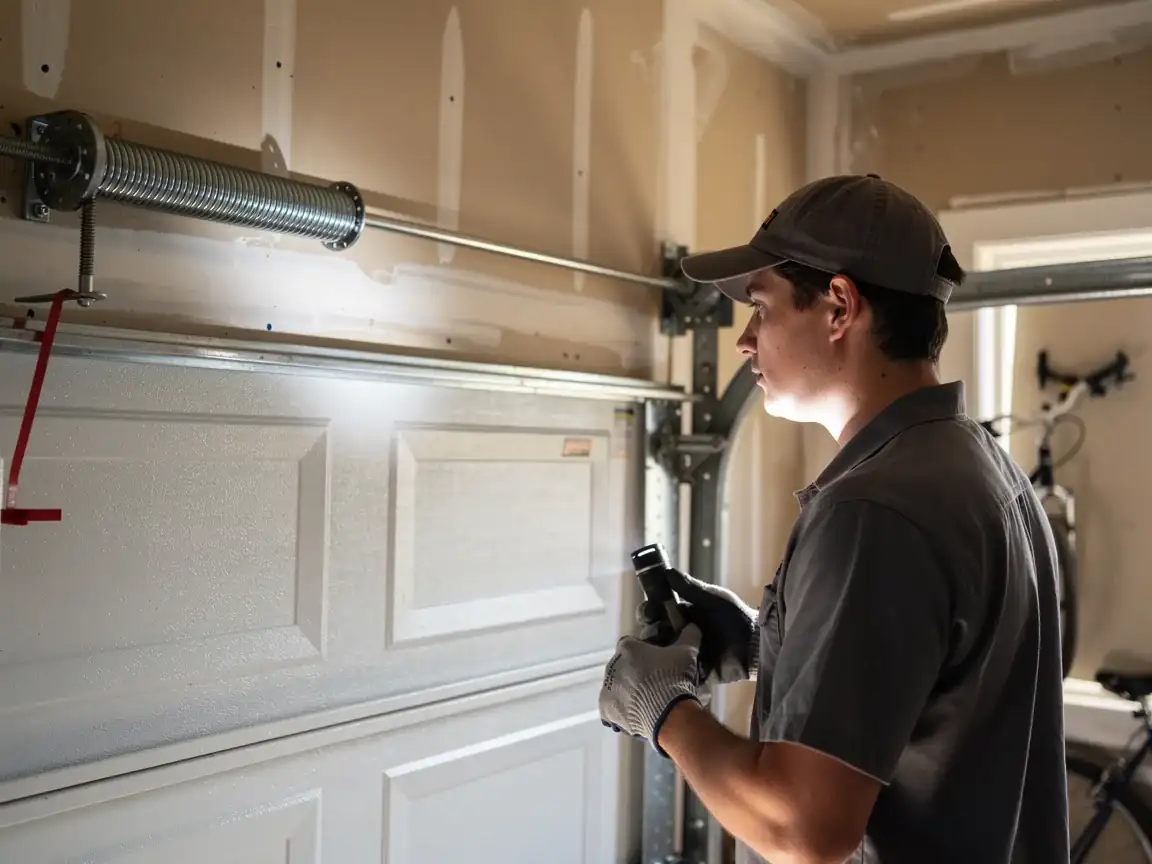
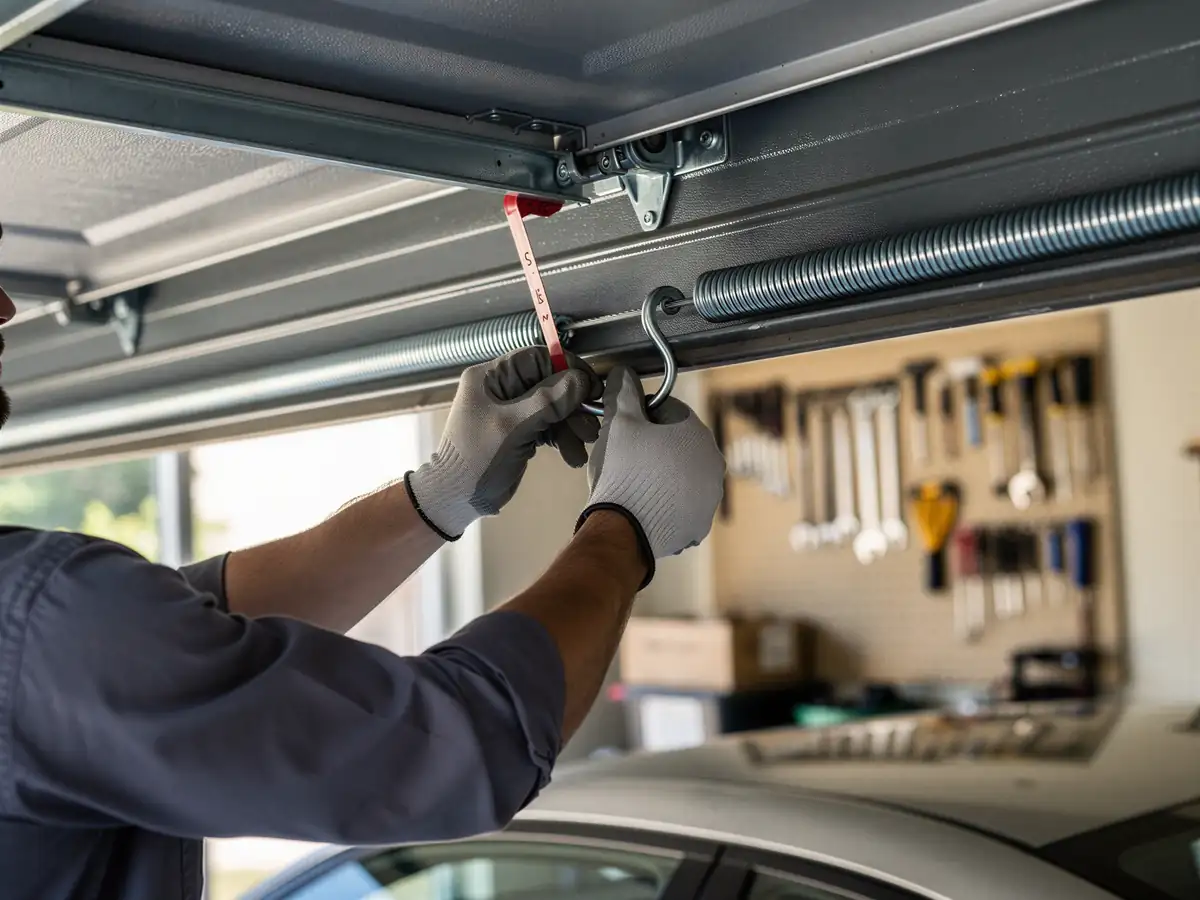
A torsion spring holds enough stored force to break a wrist or worse
And that's the part most likely to fail on an Archdale door from the mid-1980s build era - these springs were never meant to last forty years, and most of them haven't been touched since the house was framed. If your spring has already let go, or if the door won't budge, that's not a project for a Saturday afternoon and a socket set.
02
What you can safely handle
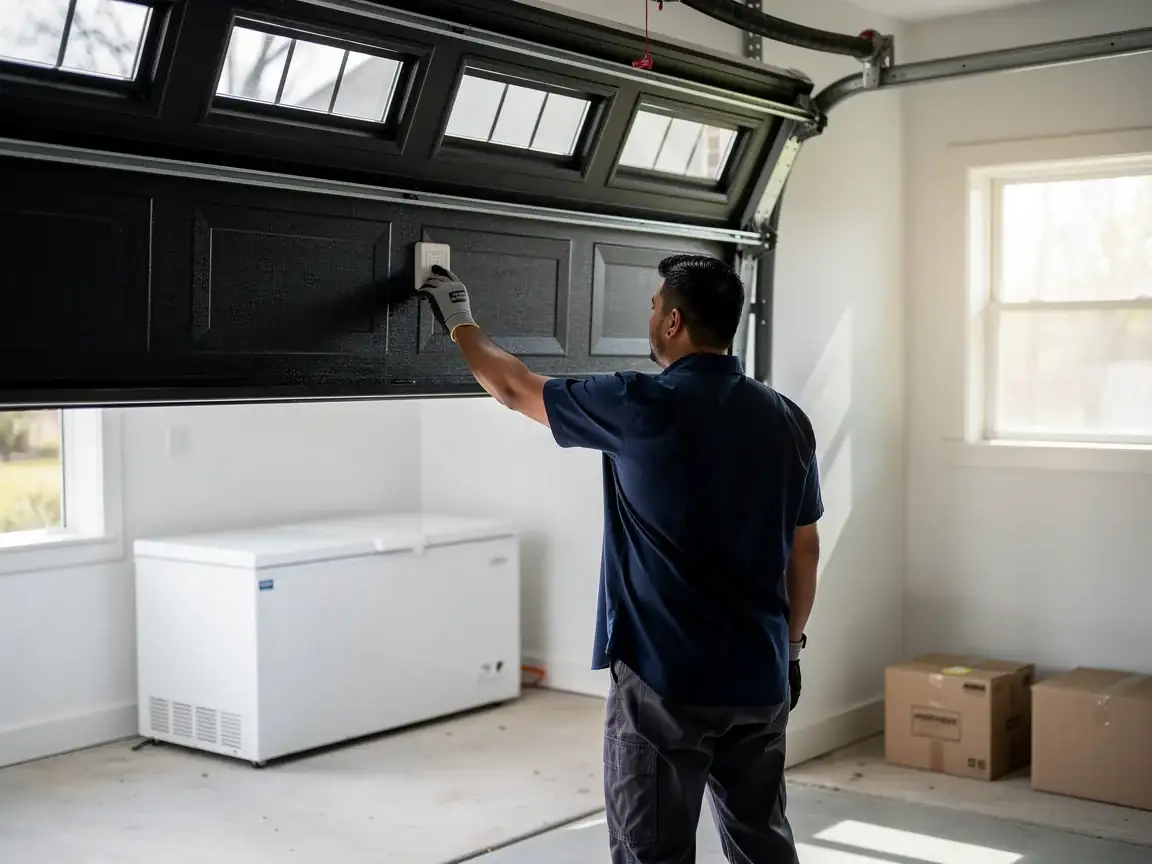
Lubricating hinges and rollers twice a year, checking that the bottom weatherstrip still seals against the slab, and testing the auto-reverse by setting a 2x4 under the door and watching it kick back. If the opener's travel limits are off or the door binds in the track, that's a sign the track itself has shifted - worth a call before you force it with the wall button.
03
We're honest about the limitation here
If your door is original to a 1985 build, repair parts for that exact spring wind and drum size are getting harder to source, and sometimes the right call is a new torsion system rather than patching the old one. We'll tell you which one it is before we quote it.
Time on the Job
We run the 6-mile stretch from High Point into Archdale, so travel isn't the long part of the visit - diagnosis and parts matching usually take longer than the drive. A straightforward spring swap on a single door runs under two hours once we're on site; a full torsion conversion on an older double door, where the original hardware has to come off a track built to a wider 1980s standard, takes most of a morning.
Opener swaps move faster than spring work because there's less tied to the house itself, but matching a new opener to an original wood-panel door - common in this housing stock - sometimes means reinforcing the top panel first, which adds time nobody enjoys explaining after the fact. We tell you the real number before the truck leaves, not after.
The Symptom
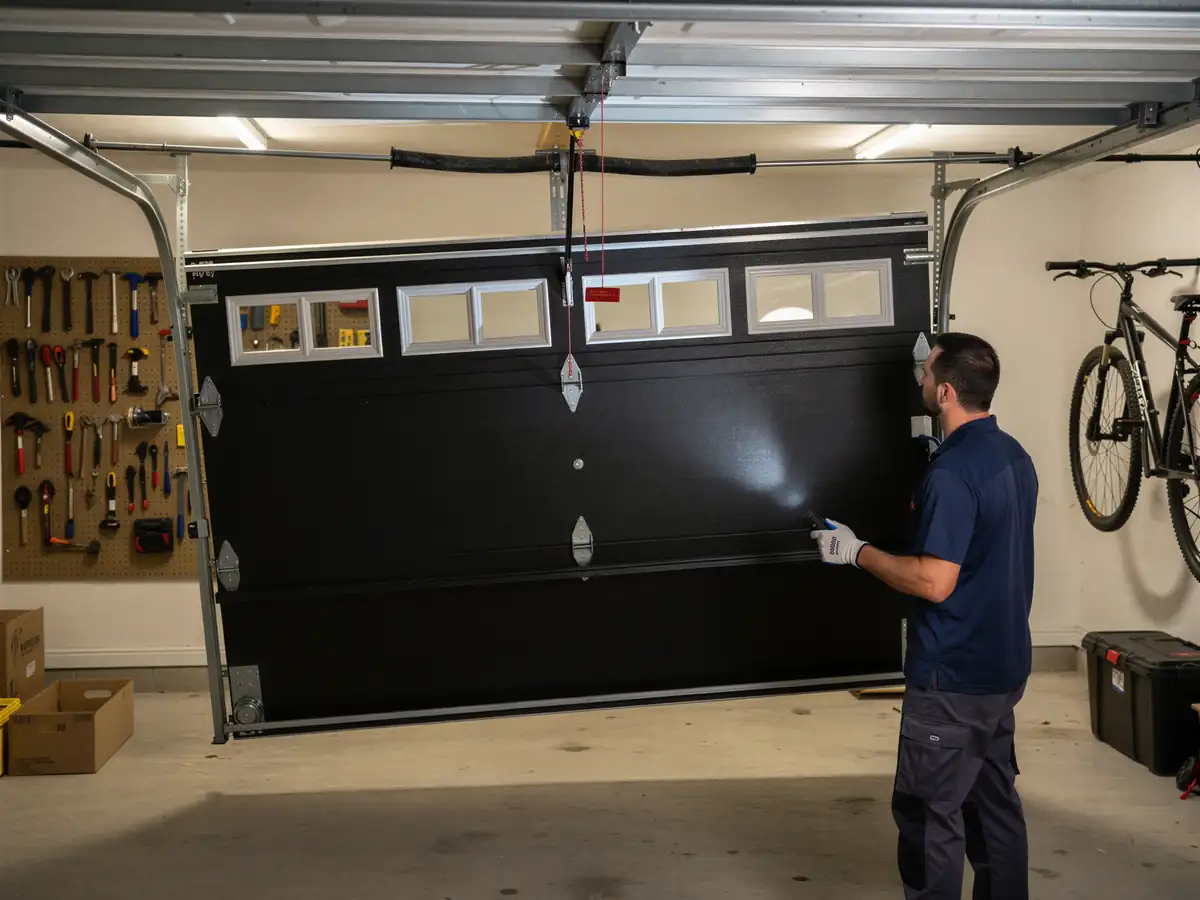
The complaint we hear most out of Archdale is a door that closes most of the way, hesitates, and reverses on its own - no 2x4 in the way, nothing obstructing the sensors. On a house built in the mid-1980s, that's almost always a spring that's lost tension gradually rather than snapped outright. The opener compensates by fighting the imbalance until the down-limit setting can't mask it anymore, and the safety reversal logic reads the resistance as an obstruction.
A second, slower symptom shows up as a grinding or popping sound right at the top of the door's travel. That's usually the original steel rollers, now four decades into daily cycles, finally worn enough that they're binding in the track rather than rolling through it. Neither of these is an emergency the day it starts, but both get worse the longer the door runs unbalanced, and an opener motor working against a bad spring burns out faster than it should.
The Complications
01
The complication specific to this housing stock is parts matching
A door and track built around 1985 doesn't always take a modern off-the-shelf spring or roller without some adjustment - drum sizes, wind direction, and track width shifted over the decades, and guessing wrong means a second trip. We measure before we quote rather than after.
02
The other complication is cost sensitivity
Median household income in Archdale runs lower than the broader High Point service area - around $64,984 here against $80,349 across the wider territory - and that's one reason we try to spec a repair instead of a full replacement whenever the door and opener are otherwise sound. Replacing a working torsion system because one roller is loud is a waste of money; replacing a spring that's already stretched past safe tension is not.
03
We don't stock every obsolete drum size on the truck
So on an older door we occasionally need a day to get the exact match rather than installing a close-enough substitute that'll strip out in a year.
How it works
From “it’s stuck” to “it’s fixed”
01
Tell us what’s wrong
Describe the symptom - won’t open, loud bang, opener runs but the door won’t move.
02
On-site diagnosis
A technician tests the door under power and by hand and finds what actually failed.
03
Clear, up-front plan
You get the fix that’s needed and what drives the cost - before any work starts.
04
Repaired & tested
The repair is done, the door is set true and tested, and the work area left clean.
Not sure which repair your door needs in High Point, NC? Describe what it’s doing - every job starts with a diagnosis.
Straight answers about garage door repair in High Point. Still unsure? Ask us directly.
How old are most garage doors in Archdale likely to be?
Most houses in this part of the service area went up in the mid-1980s, with a median build year of 1985. That means the original torsion spring, steel rollers, and in many cases the original door panel are now close to forty years old - well past the design life of the spring even if nothing looks visibly worn.
Do you have a shop in Archdale?
No. We're based in High Point and cover Archdale as part of our service area, about a 6-mile drive. We don't have a branch or depot here, and we're upfront that any visit starts with that drive, not a local dispatch.
Is it worth replacing an opener from the 1980s or just the door?
It depends on what's actually failing. If the opener's motor is still strong but the door is unbalanced because of a tired spring, we'd fix the spring first - reinforcing a mismatched opener onto a worn door wastes money. We look at the whole system before recommending either.
Why does my door reverse partway down for no reason?
On older torsion setups, a spring that's lost tension gradually makes the opener work harder than it should, and the safety reversal reads that resistance as an obstruction. It's a common complaint on doors built around the mid-1980s and it gets worse the longer it runs unaddressed.